"Cyberspace is not built for those like me, yet I thrive inside it."
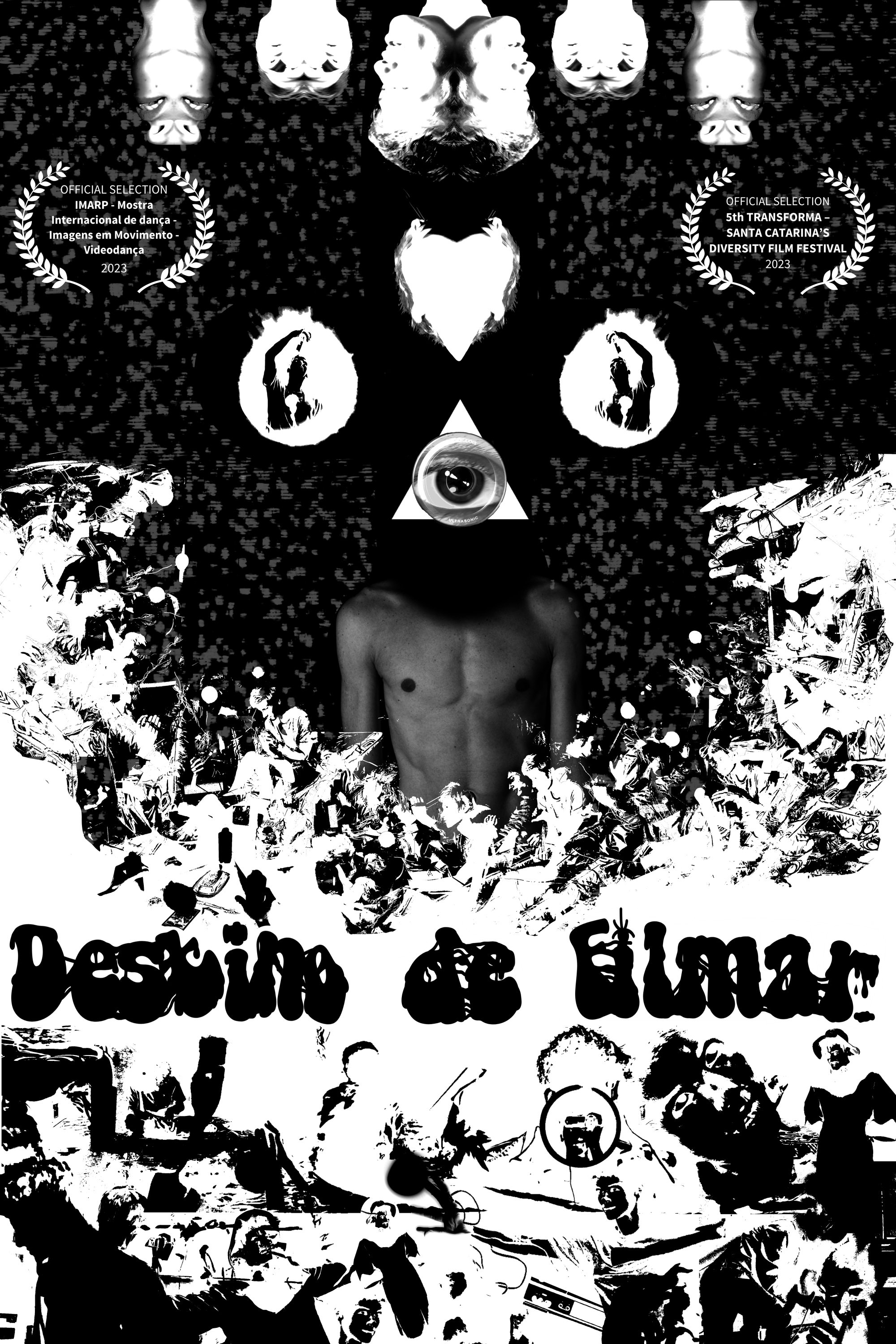
A video work which reflects on the conflicting natures of gender, bodies, queerness, algorithms, glitches, and data.
Social & External
Sofia was forced to leave her home and is now homeless. The young woman spends her days wandering the alleys of the University of São Paulo campus, where she offers her services as a tattoo artist. One ethereal night, her wanderings mingle with memories of an unfulfilled love. Wrapped in a dark, melancholy atmosphere, the film contemplates the fragility of a youth left behind. In a story that transcends borders, the life of an impenetrable fictional Sofia is imbued with the experiences of the actress of the same name who plays her. As enigmatic as an oracle, the original Portuguese title evokes the impermanence and ambiguity that haunt Sofia. She is carried away by perpetual motion, her future forever unknown.

Mana, a Japanese-American woman who arrives in Tokyo seeking to find a break from her life as an artist, meets Haru, a Japanese woman from the countryside who dreams of becoming an artist herself one day.
A displaced black queer boy finds refuge in his city's underground Kiki Ballroom scene.
A girl discovers her mother’s memory box, revealing all her mother’s bittersweet recollection of her old friend, Amor.
A down-on-her-luck delivery driver inherits a Hollywood Hills mansion with strings attached. As she fills her new home with quirky queer tenants to make ends meet, she navigates viral fame, past celebrity, and an unexpected love interest.
Whilst camping, Ian and Callum encounter something ancient.
Dani has always felt that he is different from boys his age and that, for some reason, he had to keep it a secret. Now, at 16, he begins to understand the feelings that run through him, and with them come new fears that torment him. With the arrival of Lucas from the city, he finally finds a mirror in which to look at himself and thus gather the necessary strength to accept what he is: a gay boy in rural Spain in 1990.
After his father's death, Mauro, a farmer from the countryside, finds himself facing an unexpected freedom. Torn between guilt and desire, he confronts his fears to love another man for the first time.
Cowboy, a young transgender man, flees his hometown in search of a new beginning but the shadows of his past trail closely behind him.
uNomalanga and the Witch, which follows newlywed Nomalanga, who moves into a new neighborhood with her husband and finds herself intrigued by a mysterious widow who everyone suspects killed her late husband
A hypochondriac irks his partner by embracing the advice of an eccentric healer.
Peter Alexander, interviewed in Sydney, born and brought up as Mavis Higgins in New Zealand, speaks of his sex change from female to male. He discusses the aspects of his personality when younger which influenced his decision, his view of women in society and his plans for the future. Although Peter talks about shaving it is not clear if any medical intervention had assisted his sex change. The predominant voice in this clip is that of Alexander, dressed in jacket and tie, talking cheerily about his interest in sport, his awareness that his "male side and personality" were always dominant, his desire to marry and continue with his musical career. The story was sensationalised in the tabloid newspaper of the day "The Truth".
A reserved student wrestles with hidden feelings for his teacher. When he seeks closure, he faces the challenge of unreturned love and accepting difficult truths.
Ninja is famous around the world for her fierce ballroom performances, but she is not as well-known in her native country of French Guyana. But a trip home to teach a workshop might change that.
Bruno, a misunderstood teenager, has developed an obsession with burning objects, recording them, and uploading videos to the internet to deal with his father’s death. When his lonely mother starts dating another man, Bruno escapes from home. He goes to another town to live with Daniela, a young pyromaniac he met online and with whom he has an epistolary relationship. During the painful separation from his mother and his best friend Ian, he begins to question his sexuality and capacity to overcome his father’s loss.
A collectively made filmic opera in 35 parts. The Black and predominantly queer art collective, an evolving line up of poets and artists from across the world, abstracts and reimagines opera in any traditional conception. Set to hip-hop, blues, noise, R&B and electronica, the piece uses the voice (chanting, singing, screaming; written by poet and activist Dawn Lundy Martin) as its primary tool, verbalising centuries of alienation, vulnerability and protest in the global African diaspora through its disruptive libretto.
The confluence of words and movement propels this multi-layered collaboration by Atlas, choreographer Douglas Dunn, and poets Anne Waldman and Reed Bye. Dunn's athletic choreography is performed to the rhythms, cadences, and associative meanings of the poets' "cascade of words," which function as music. Atlas introduces narrative references, ironically staging the dance in unexpected locations, including domestic interiors and vehicles. In a self-referential deconstruction that punctures the theatrical illusion, the poets are seen reading their texts and interacting as self-conscious performers within the dance. Atlas and his collaborators intersect the language of words with the language of the body.
In an apartment, a party is in full swing. Sitting on a sofa, Perez is hypnotized by a group of four girls facing him.
"Barriers" is a documentary in which three women over 60 and a group of young women participate in a game that exposes the prejudices surrounding sexuality in later life. Through these letters, the young women ask the older women about their intimate lives. This creates a space that sheds light on both the taboos and the discomfort that persist around the topic. A space open to silence and deep conversations. At the same time, we discover the stories that characterize these social figures.
A promiscuous girl falls in love with a woman after a series of random hook-ups.
Al Pacino's deeply-felt rumination on Shakespeare's significance and relevance to the modern world through interviews and an in-depth analysis of "Richard III."
An uptight insurance man and his film-censor wife become a kinky couple's landlords.
An investigation of how Hollywood's fabled stories have deeply influenced how Americans feel about transgender people, and how transgender people have been taught to feel about themselves.
Paul, a 20 year old midwesterner, arrives at the central bus station and quickly catches eyes with Wye, a 22 year old girl voguing on the sidewalk. After Paul seeks her out in secret, an intense love between them blossoms. But when Paul discovers Wye is trans, he is forced to confront his own identity and what it means to belong.
A teenage girl gets diagnosed with a reproductive condition that upends her plans to have sex and propels her into exploring unusual methods to have a sex life, challenging her relationships with everyone in her life, but most importantly, herself.
Matt Walsh's controversial doc challenges radical gender ideology through provocative interviews and humor.
The life of Mr. Spock, as well as that of Leonard Nimoy, the actor who played him for almost fifty years, written and directed by his son: Adam.
A deliciously scandalous portrait of unsung Hollywood legend Scotty Bowers, whose bestselling memoir chronicled his decades spent as sexual procurer to the stars.
This searing investigative work shadows a group of activists risking unimaginable peril to confront the ongoing anti-LGBTQ program raging in the repressive and closed Russian republic. Unfettered access and a remarkable approach to protecting anonymity exposes this under-reported atrocity–and an extraordinary group of people confronting evil.
The life and career of one of comedy's most inimitable modern voices, Mr. Gilbert Gottfried.
Not long after moving into her own place, Maggie finds herself with two unsolicited roommates: her recently divorced mother, Lila, and her young brother. The timing is especially bad, considering Maggie has fallen hard for an attractive woman, Kim, only hours before they move in. What could be a nonissue becomes increasingly complicated -- since Maggie's family is unaware of her sexual orientation, and Maggie is not open to sharing that information.
Exuberant, eye-opening movie that serves up a dazzling hundred-year history of the role of gay men and lesbians have had on the silver screen. Film contains fabulous footage from 120 films showing the changing face of cinema sexuality, from cruel stereotypes to covert love to the activist triumphs of the 1990s.
Against a plain, unchanging blue screen, a densely interwoven soundtrack of voices, sound effects and music attempt to convey a portrait of Derek Jarman's experiences with AIDS, both literally and allegorically, together with an exploration of the meanings associated with the colour blue.
A trio of interweaved transgressive tales, telling a bizarre stories of suburban patricide and a miraculous flight from justice, a mad sex experiment which unleashes a disfiguring plague, and the obsessive sexual relationship between two prison inmates.
Shirin is struggling to become an ideal Persian daughter, politically correct bisexual and hip young Brooklynite but fails miserably in her attempt at all identities.
The second "visual album" (a collection of short films) by Beyoncé, this time around she takes a piercing look at racial issues and feminist concepts through a sexualized, satirical, and solemn tone.
Though legendary lyricist Howard Ashman died far too young, his impact on Broadway, movies, and the culture at large were incalculable. Told entirely through rare archival footage and interviews with Ashman’s family, friends, associates, and longtime partner Bill Lauch, Howard is an intimate tribute to a once-in-a-generation talent and a rousing celebration of musical storytelling itself.
A sexual wellness company gains fame and followers, then members come forward with shocking allegations.
David Hyde Pierce, playing an alien (credited as infinity-cubed in the opening credits), narrates a courtship in a late-20th century American city as an extraterrestrial nature documentary. The relationship "footage" is played straight, while the voice-over (with its most often wildly inaccurate theories) and elaborate visual metaphors add comedy.
The story of the discovery of the AIDS epidemic and the political infighting of the scientific community hampering the early fight with it.