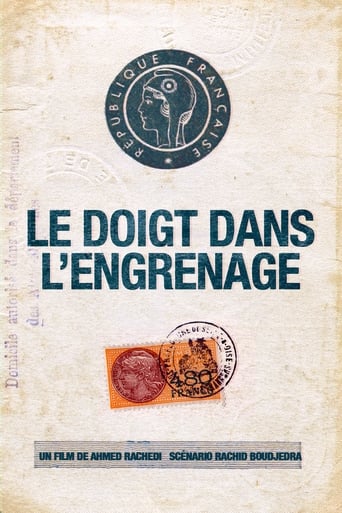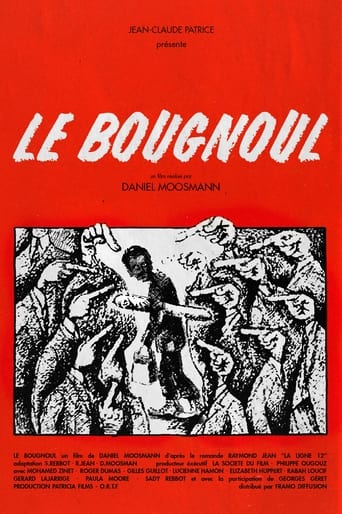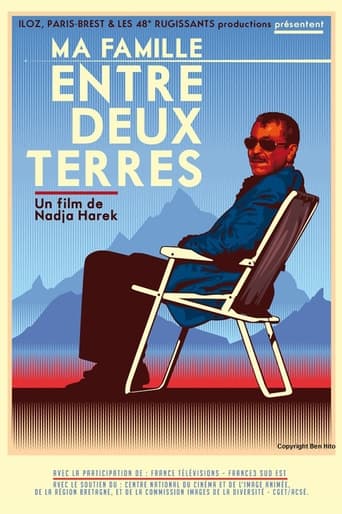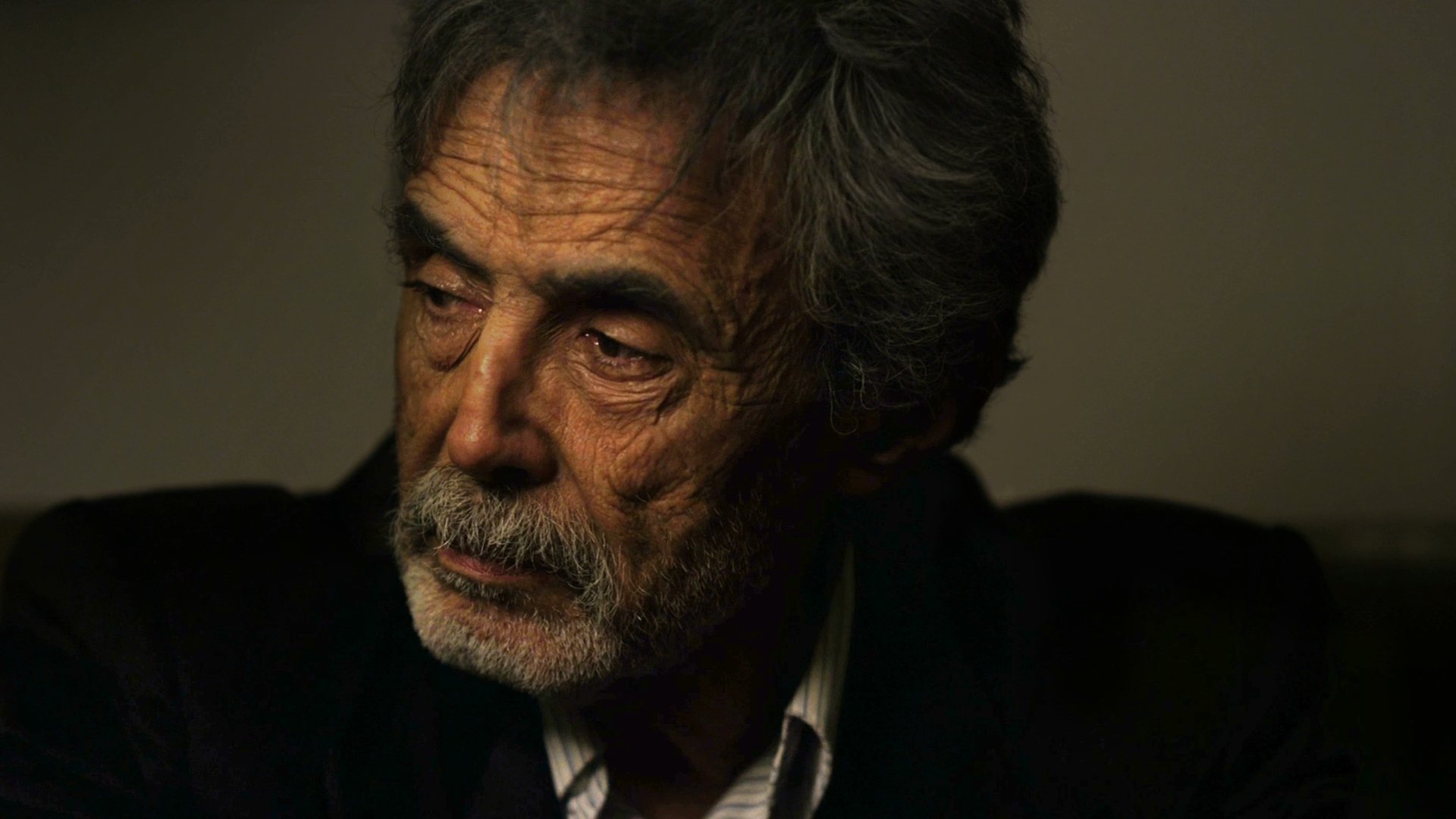
An old North African man, sitting in an Algerian bar, remembers his life spent in France.
Social & External
Unknown Role
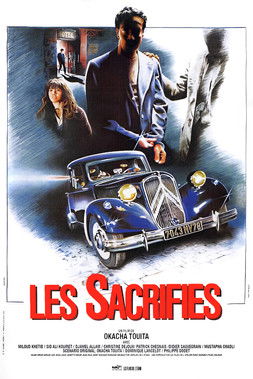
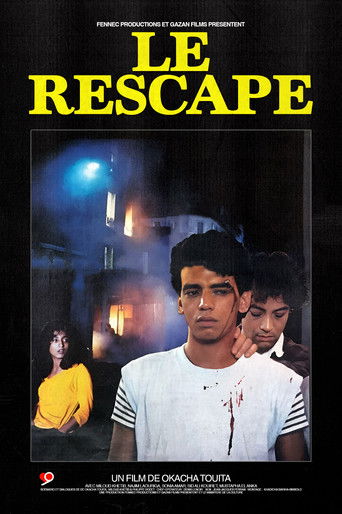
In a working-class immigrant neighborhood slated for demolition, Jo, the son of Ali, known as the Rescuer from the Algerian war, lives idle and delinquent, committing small assaults to pay for his drugs. One day, while attacking Slim's bar, he is arrested by Ben, a young beur cop torn between his roots and the imperatives of his mission to maintain public order. Giving in to the respect and friendship he feels for Ali, Ben agrees to release his son. But alas, far from calming down, Jo drifts deeper into violence, until the inevitable drama.
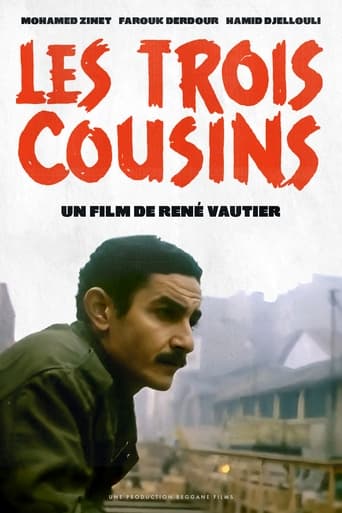
The Three Cousins is a comedy-drama by René Vautier released in 1970 about the living conditions of three Algerian immigrant cousins looking for work in Paris. Housed in a narrow construction shed, the coal stove will cause them to suffocate. The Three Cousins won the Best Human Rights Film Award in Strasbourg in 1970.
In 1971, the Algerian government nationalized hydrocarbons. The consequences of this decision on the community of Algerians in France are numerous. The Galti family is prey to these economic problems. The father, Khaled, former member of the F.L.N. in France, does not escape the sentence. Sharazade, his wife and comrade in combat, finds herself torn between her role as wife, mother and nostalgia for a country and a bygone past. As for his son Karim, a victim of socio-cultural division, all he has left is refusal.
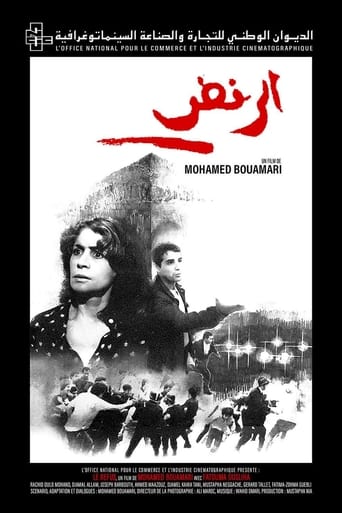
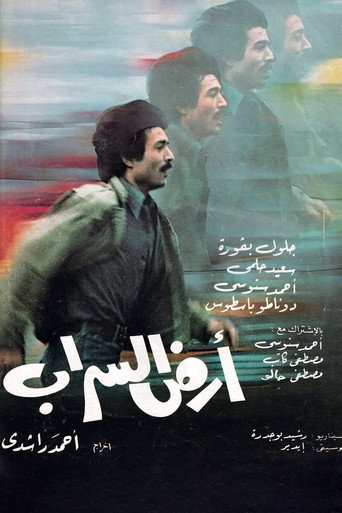
In 1955, a year after the birth of the National Liberation Front (FLN), Mahmoud was expelled from Algeria by the colonial authorities who feared his revolutionary speeches. At the age of 27, he arrived in the Algerian slum of Nanterre. Roughly questioned by FLN activists, in disagreement with the Algerian Nationalist Movement (MNA) who wanted to recognize theirs, he was then accepted as the local hairdresser and shoemaker. Subsequently, he became a driver during anti-MNA expeditions. Accepting increasingly dangerous missions, he is imprisoned by the French police and once again undergoes interrogations and special treatment by the police which will definitively undermine his sanity. One day, he no longer recognized his companions, and when joy broke out among the FLN militants, at the announcement of the signing of the Evian Accords, Mahmoud remained alone, frozen in an attitude of refusal, walled in his madness. Algeria has just won its independence.
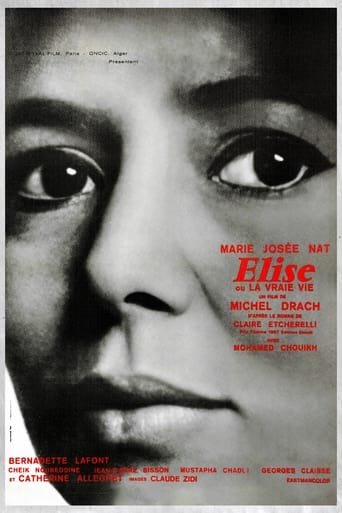
In the middle of the Algerian war, Elise, from Bordeaux, “goes” to Paris to join her brother to earn her living in an automobile factory. There she meets Arezki, an Algerian nationalist activist with whom she falls in love. A chronicle of working life at the time and which highlights the extent of police repression against Algerians.
The film mixes fiction, filmed documents and interviews which recounts the arrival in Paris of an Algerian immigrant lost in the metro. On December 27, 1968, France and Algeria signed an agreement which admitted each year 35,000 Algerian workers to French territory in the France of the Trente Glorieuses where the annual growth rate reached 5% and where factories lacked workers. Candidates obtain a residence permit valid for 5 years for themselves and their families. Paris is committed to improving professional training and housing conditions for immigrants, too often confined to the most thankless jobs and often housed in slums. A testimony on the living conditions of emigrant workers "economic cannon fodder" of neocolonialism which simultaneously develops its alter ego, institutionalized racism, as a tool of social stagnation and division of the proletarian class.
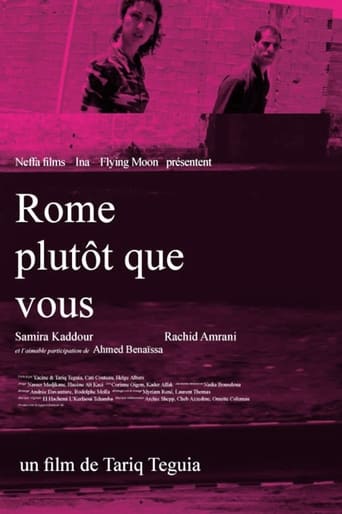
"For more than ten years, Algeria has been living a slow war, a war without a front line but having caused more than 100,000 deaths. It is this desert that Zina and Kamel – two young Algerians sometimes hallucinated and joyful, sometimes dejected and serene – will want to travel one last time before leaving it for elsewhere. Road Movie on the territories of a city, Algiers whose construction sites are in decline. Roma wa la n'touma will show that fleeing abroad is not is not a refusal of combat, but an obscure struggle against assignment. Tariq Teguia
A construction worker on a construction site in the Paris suburbs, Mehdi takes the bus to return home after work. Wishing to get off while the vehicle is stationary in a traffic jam, the driver refuses: while restarting, the bus hits the car in front of it. The bus driver attacks Mehdi whom he holds responsible for the incident, claiming that it is forbidden to “talk to the stagehand”. Mehdi is implicated in court and his lawyer tries to draw attention to the living conditions of immigrant workers.
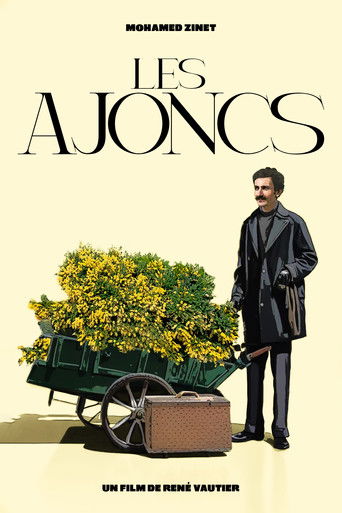
An unemployed Algerian worker leaves Paris by hitchhiking. He soon found himself in Brittany and, seduced by the beauty of wild gorse, eventually established himself as a gorse merchant. But for problems with parking his little cart, he had a rough explanation with a law enforcement officer. The happy intervention of factory workers, the eager kindness they showed him, saved him from despair. This film is part of a trilogy "Them And Us" with the films "Les 3 Cousins" and "Techniquement Si Simple".
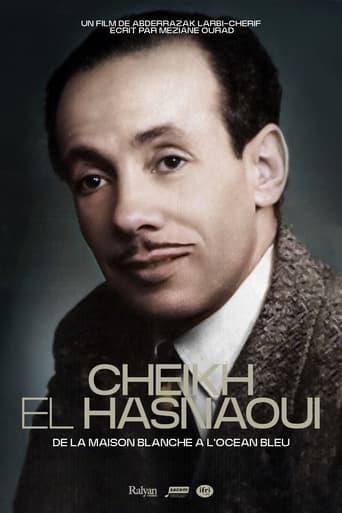
Cheikh El-Hasnaoui is an Algerian singer who left his country in 1937 without ever setting foot there again. Between 1939 and 1968 he composed most of his repertoire in France. For many years the Algerian cafes of Paris were the stages of his shows. With a handful of artists of his generation, he laid the foundations of modern Algerian song. A fervent defender of women's rights, he claims, as a pioneer, the fight for identity for a plural Algeria. At the end of the Sixties, he ended his artistic career. On July 6, 2002 he died in Saint-Pierre de la Réunion, where he is buried to this day. This 80-minute documentary follows in the footsteps of this extraordinary character. From Kabylia to Saint-Pierre de a Réunion via the Casbah of Algiers and the belly of Paris.
Ali in Wonderland unveils the condition of immigrant workers in Paris in the 1970s. It is a cry of anger against exploitation and racism, uncompromisingly raising the role of the French state, the media, capitalism, and colonization in this system of domination that crushes those who suffer it. In this experimental essay on the condition of Algerian migrants in Giscard's France in the mid-1970s, every aesthetic choice has a precise and legible political motivation and gives body and voice to a figure completely absent from the experimental cinema of the time: that of the immigrant worker. Abouda is one of the children of immigrants seen in the film, and not a simple activist serving a cause, which is why the emotion of her experimental gesture, which she throws in the viewer's face, springs from a ferocity inscribed in her body, from an insatiable anger that inhabits her gaze.
The artistic journey of Dahmane El Harrachi, born in 1925 in Algiers, bears the mark of his experience. An attentive and vigilant observer of the environment of immigrant workers, Dahmane has always avoided falling into the ambient miserabilism. From the Algerian Chaâbi, he has kept certain melodic lines and a clear propensity for sayings drawn from the oral poetic tradition. El Harrachi uses simple language, understandable by all popular sectors of the Maghreb, which partly explains its wide success. In 1949, he went to France and it was in cafes, springboard places where people come to breathe the air of the country, that he performed regularly. Elegant, with his beautiful atmosphere, the “bluesman” of the suburbs seduces, upsets and stirs consciences. Discovered late by the new generation, the creator of Ya Rayah met a tragic end, on August 31, 1980, in a car accident, on the Algiers coast which he sublimated above all else.
OUT is an odyssey about 50 year old family man Agoston wandering through East Europe. After loosing his lifelong job in a power plant of small Slovak village Agoston takes the shady but alluring opportunity to work as a welder in a shipyard in Latvia. The journey in hopes of a new job in reality turns into a accelerating whirlwind of absurd events of short encounters, newly found-and-lost-again friendships subtracting from Agoston all his possessions and everything he once believed to be his whole life. However Agoston doesn't give up his search for income and decides to persuade his dream of catching a big sea fish.
An invisible and disrespected sound mixer becomes infatuated with the lead actress.
Angela is a successful writer, widowed and wealthy. Her son Sean was born in London where he attends university, while she lives in a small town in northern Italy. Fatima is Maghreb like her husband but her children Nadia and Tarik were born in Italy: Nadia married an Italian Catholic against the wishes of her Muslim father and Tarik studies in England. The English university is the place where the destinies of Sean and Tarik meet because they both fall under the influence of Omar, a recruiter on behalf of the Jihad. Sean and Tarik, inflamed by the man's words, will enlist to fight in Syria, throwing their respective mothers into despair. Angela and Fatima's paths cross at a psychological support group run by Dr. Diana. The group also includes Israeli Sam, who killed a terrorist before he carried out a massacre, Claire, whose husband and son died in a jihadist air strike, and Eric, whose daughter Sofia joined the freedom fighters, coincidentally as Omar's concubine.
Naomi is a young aspiring artist known to her Bohemian friends as "The Nut." Naomi's alleged nuttiness does not in any way impede the efforts by wealthy Frederick Harmon to make the unworldly heroine his bride. When their first baby is born, Naomi becomes so obsessed with motherhood that she completely ignores poor Harmon, who, to offset his loneliness, begins squiring the vampish Helen Carew. Helen manages to convince Harmon that Naomi has been unfaithful, leading inevitably to divorce-court litigation.
Algeria today. Past and present collide in the lives of a newly wealthy property developer, a young woman torn between the path of reason and sentiment and an ambitious neurologist impeded by wartime wrongdoings. Three stories that plunge us into the human soul of a contemporary Arab society.
A dramatic portrayal of a young married couple that are living with issues of trust and betrayal, in a world that tempts with seduction at every turn.
A 1916 film directed by Chester M. Franklin.
A woman has a close bond with her beloved Algeriann grandfather, who protected her from a toxic home life as a child; his death triggers a deep identity crisis as tensions between her extended family members escalate, revealing new depths of resentment and bitterness.
In 1930s Algeria, the daily life of an indifferent Frenchman is shaken by the death of his mother and a fateful encounter on a beach.
A shady Parisian tries to take advantage of a family of French-descended Algerians forced to move to France.
Back from a tour of duty, Kelli struggles to find her place in her family and the rust-belt town she no longer recognizes.
Daniel lives with his grandmother and, after a year of high school, goes to live with his mother in the south of France; a harsher environment which rapidly changes his perception of friends, work, and women.
Algeria, the 1930s. Younes is nine years old when he is put in his uncle's care in Oran. Rebaptized Jonas, he grows up among the Rio Salado youths, with whom he becomes friends. Emilie is one of the gang; everyone is in love with her. A great love story develops between Jonas and Emilie, which is soon unsettled by the conflicts troubling the country.
It’s Christmastime and the far-flung members of the Rodriguez family are converging at their parents’ home in Chicago to celebrate the season and rejoice in their youngest brother’s safe return from combat overseas.
Despite his lack of political convictions, photojournalist Bruno Forestier is roped into a paramilitary group waging a shadow war in Geneva against the Algerian independence movement.
Fatima, 17, the youngest daughter of a French-Algerian family in a Paris suburb, leaves school for a prestigious prep class. She plays football, has a secret boyfriend, but hides that she loves women. In Paris, new freedoms clash with family tradition and faith, forcing her to find her own path.
An American in Paris lives by sponging off his working friends, and throws a party using borrowed money when his rich American aunt dies, believing firmly in his horoscope.
Omar, better known as Omar the Strawberry, is an old-fashioned bandit. Forced to flee to Algeria, he makes a living out of petty crime, accompanied by his famous sidekick Roger. After decades of ruling the French criminal underworld, they must come to terms with their new life together, which until now has been one of debauchery and violence.
Set in France during the struggle for Algerian independence, Messaoud's mother is terminally ill and his father, needing to work long hours in the factory, can't look after him, so decides to put him and his older brother Abdel in foster care. Sent to the countryside, Abdel has to work on a farm, but Messaoud is taken in by a childless woman, who conceals his Arab origins from her fiercely Gaullist ex-army husband. Re-named Michel/Michou, and with his hair comically dyed blond, the young boy quickly steals the hearts of both foster-parents, and eventually is instrumental in saving their troubled marriage.
The legendary Roberto Duran and his equally legendary trainer Ray Arcel change each other's lives.
Jamie Fitzpatrick and Nona Alberts are two women from opposites sides of the social and economic track, but they have one thing in common: a mission to fix their community's broken school and ensure a bright future for their children. The two women refuse to let any obstacles stand in their way as they battle a bureaucracy that's hopelessly mired in traditional thinking, and they seek to re-energize a faculty that has lost its passion for teaching.
Waking up in an unfamiliar city, a man with no memory must confront the mysteries of his own identity. However, his desperate search to uncover the past pits him against a powerful enemy, leading to a showdown that ultimately reveals the truth.
Agnès Varda eloquently captures Paris in the sixties with this real-time portrait of a singer set adrift in the city as she awaits test results of a biopsy. A chronicle of the minutes of one woman’s life, Cléo from 5 to 7 is a spirited mix of vivid vérité and melodrama, featuring a score by Michel Legrand and cameos by Jean-Luc Godard and Anna Karina.
United by the unexpected inheritance of a house in Normandy, four estranged cousins discover their family history by retracing their ancestor's steps.
Aurore has separated, just lost her job, and learns that she is going to be a grandmother.
Three friends begin a dangerous three-way relationship that spirals out of control, leading to dire consequences that haunt them ten years later.
On the French island of Mont Saint-Michel, Jack, a failed presidential candidate, Tom, his ex-speechwriter and Sonia, a physicist, engage in an intellectual conversation about politics, philosophy and life over the course of a single day.