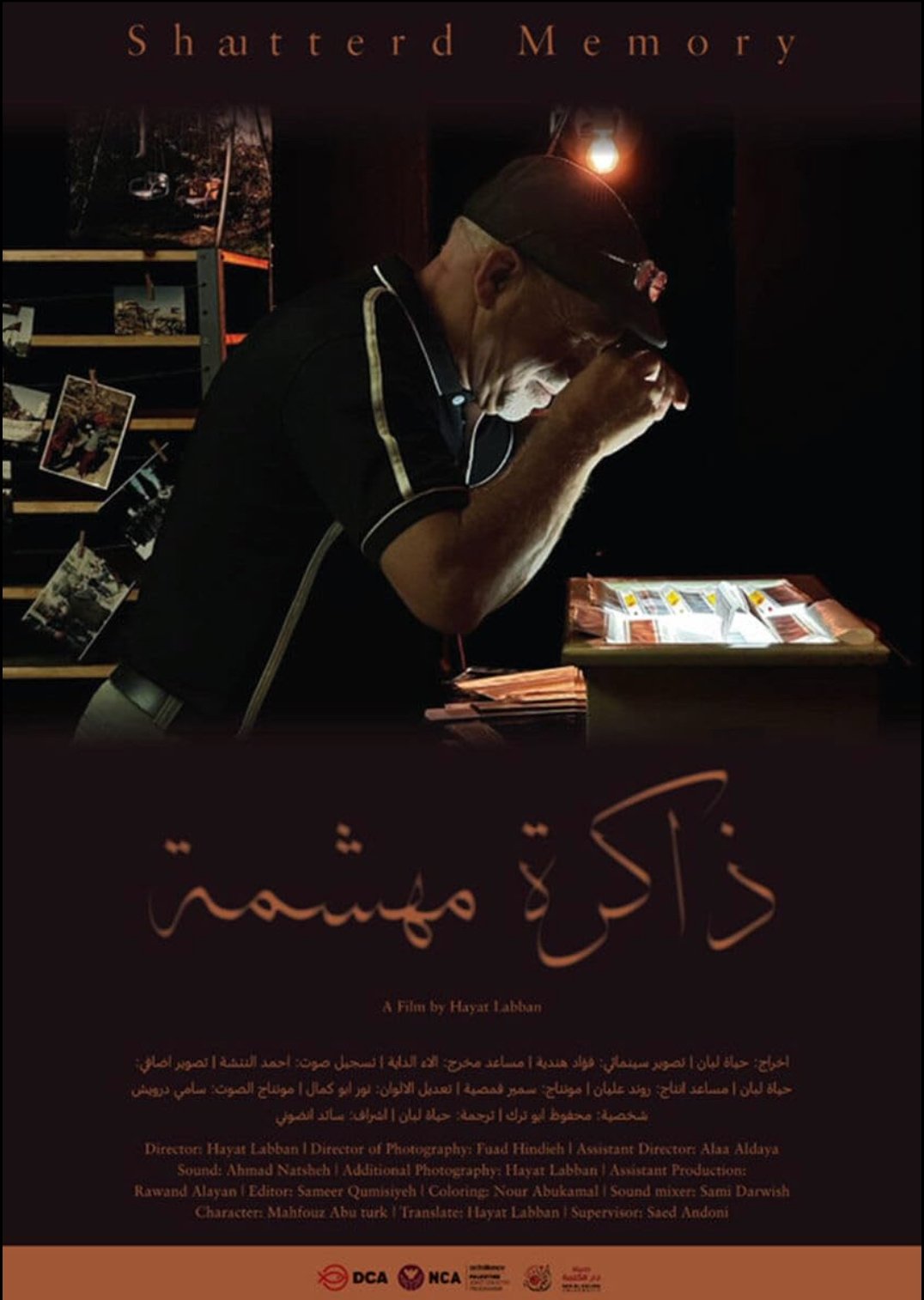
Dig through photojournalist Mahfouz Abu Turk’s memories and archives, where he thoroughly documented his experiences in Jerusalem and the West Bank from the First Intifada in 1987 throughout the next decade.
Social & External
self
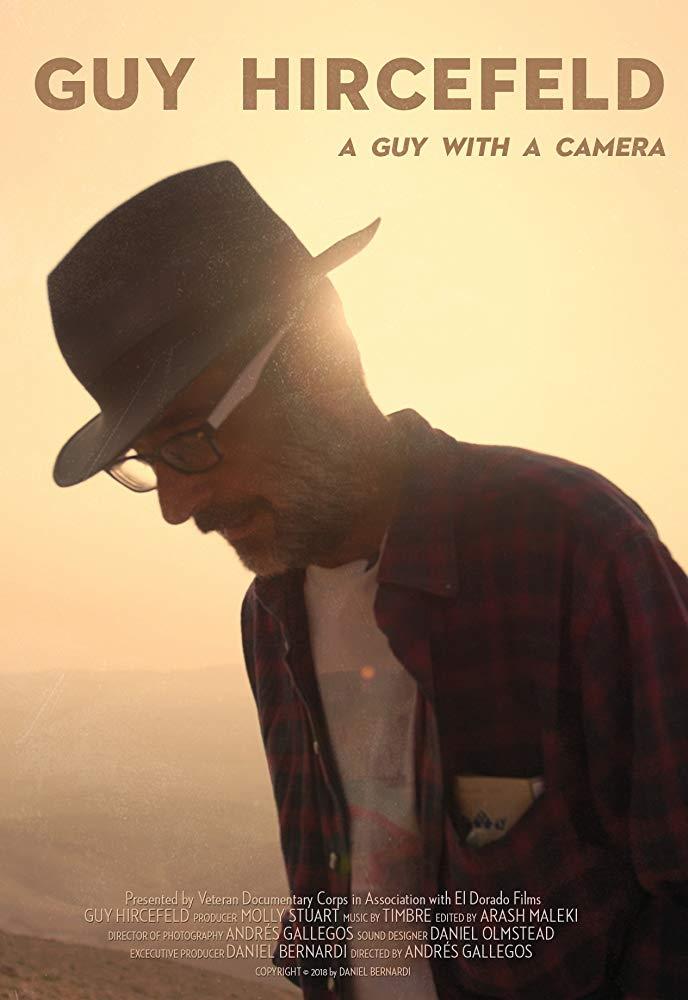
Guy Hircefeld, a veteran who served in the Israeli military at the start of its occupation of Palestine in the 1980s, now fights against the Israeli occupation. His only weapon is a camera.
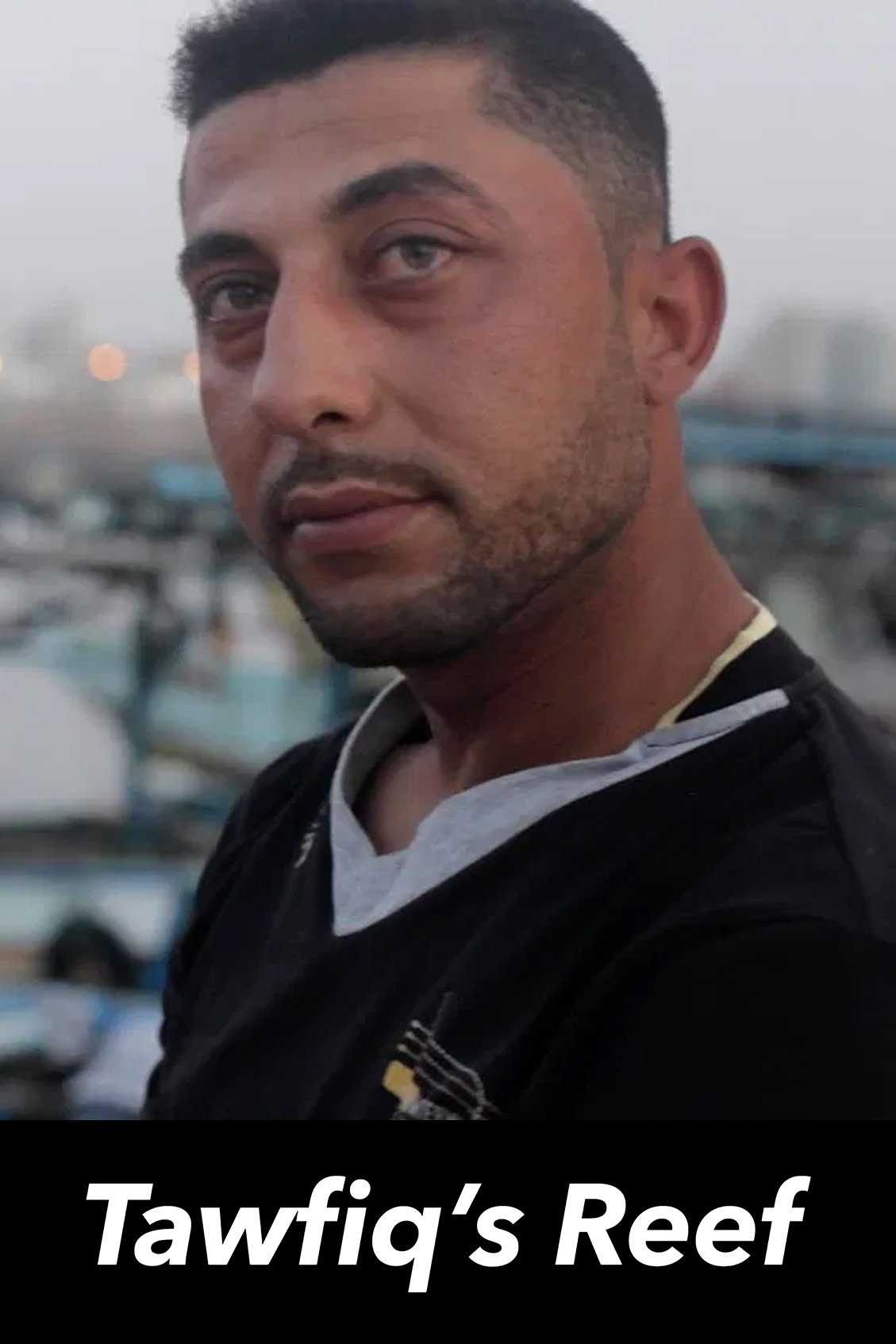
Tawfiq’s Reef chronicles the plight of Palestinian fishermen in Gaza, heavily restricted in the area in which they can fish, often indebted, shot at, harassed or imprisoned by the Israeli Navy on the narrow sliver of fishing waters available to them off the Gaza coastline, making this one of the most dangerous professions in the world.
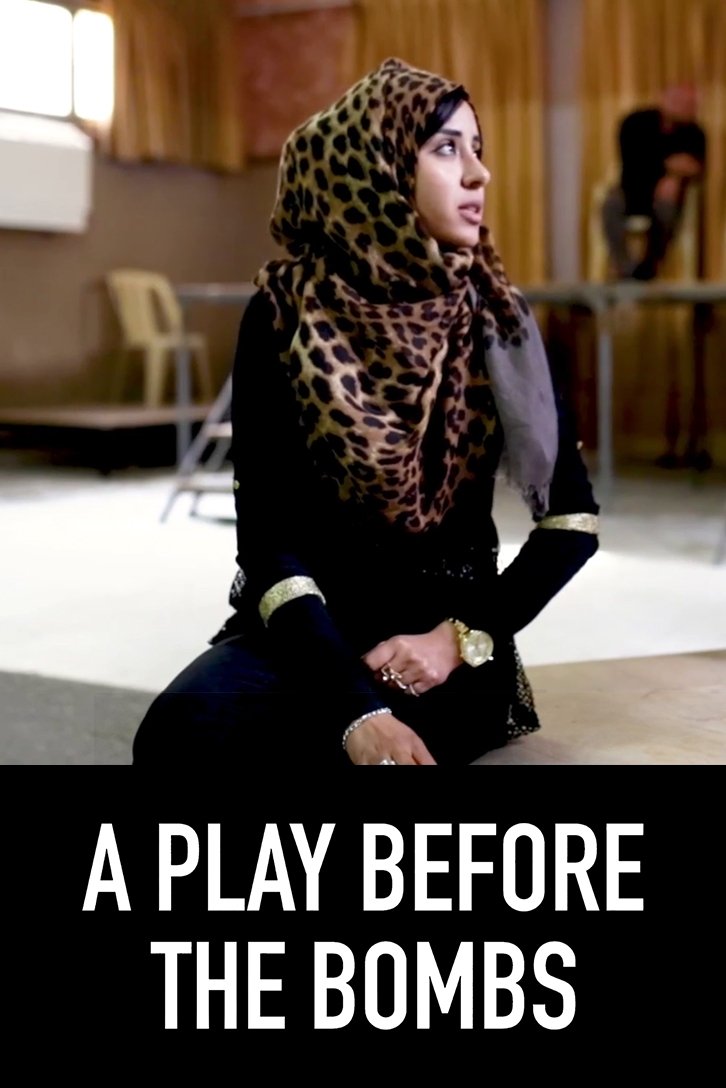
Set in the al-Mishal Cultural Center in Gaza before it was destroyed by an Israeli air strike on August 9, 2018, A Play Before The Bombs is a story that unfolds over a 4 year period. The film follows Abeer Ahmed, a young woman growing up in the Jabaliya Refugee Camp, the largest refugee camp in Gaza, as she and the other members of her cast and crew prepare to put on a play that focuses on a Palestinian woman’s right to receive inheritance. While the content of the play is tailored towards fostering a cultural discussion among Palestinians, neither the play nor the playhouse can escape the omnipresence of the Israeli siege on Gaza. A siege that shatters literal buildings as well as the hopes and dreams of the performers and community members who take refuge within the walls of al-Mishal in search of artistic fulfillment.
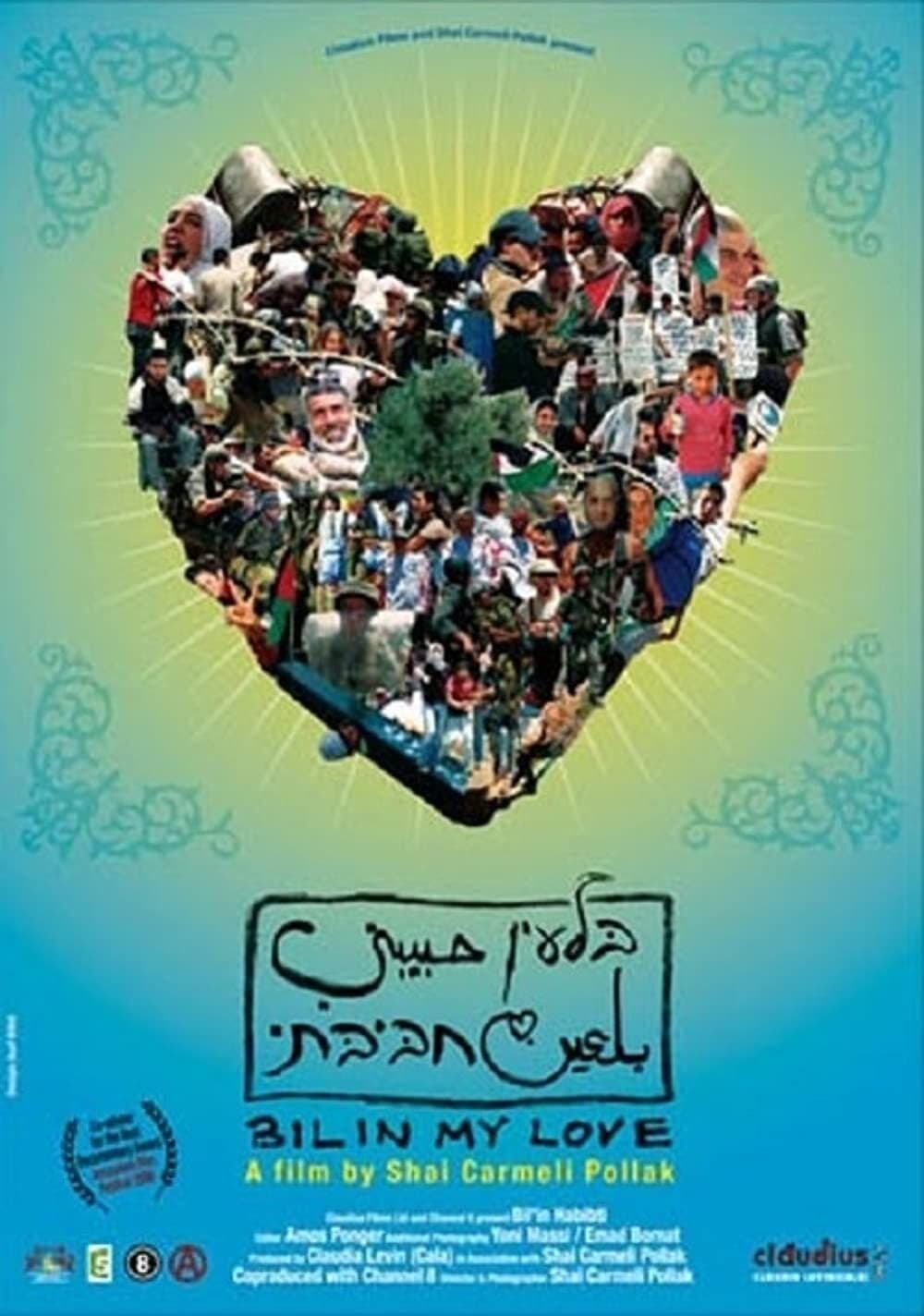
The Israeli filmmaker Shai Corneli Polak records the building of the 'security wall' through Palestinian territory at the village of Bil'in. The villagers protest mostly peacefully, while the Israeli army doesn't react peacefully. By now the Israeli High Court has ruled that the building of the wall was illegal.
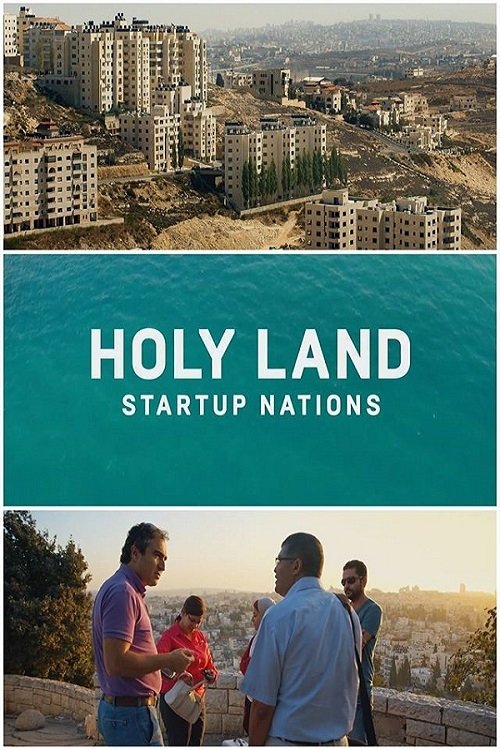
With the most tech startups and venture capital per capita in the world, Israel has long been hailed as The Startup Nation. WIRED’s feature-length documentary looks beyond Tel Aviv’s vibrant, liberal tech epicenter to the wider Holy Land region – the Palestinian territories, where a parallel Startup Nation story is emerging in East Jerusalem, Nazareth, Ramallah and other parts of the West Bank, as well as in the Israeli cybersecurity hub of Be’er Sheva. And we will learn how the fertile innovation ecosystem of Silicon Wadi has evolved as a result of its unique political, geographical and cultural situation and explore the future challenges – and solutions – these nations are facing.
This film made by a Palestinian-Israeli collective shows the destruction of the occupied West Bank's Masafer Yatta by Israeli soldiers and the alliance which develops between the Palestinian activist Basel and Israeli journalist Yuval.
An Israeli film director interviews fellow veterans of the 1982 invasion of Lebanon to reconstruct his own memories of his term of service in that conflict.
The film explores the first Palestinian Intifada against the Israeli Occupation in the West Bank and the Gaza Strip. It shows moving images of resistance against the Israeli occupation, while exploring the steadfast determination of the Palestinian People, confronting a modern army with stones. The film highlights the active and important role of women in the intifada.
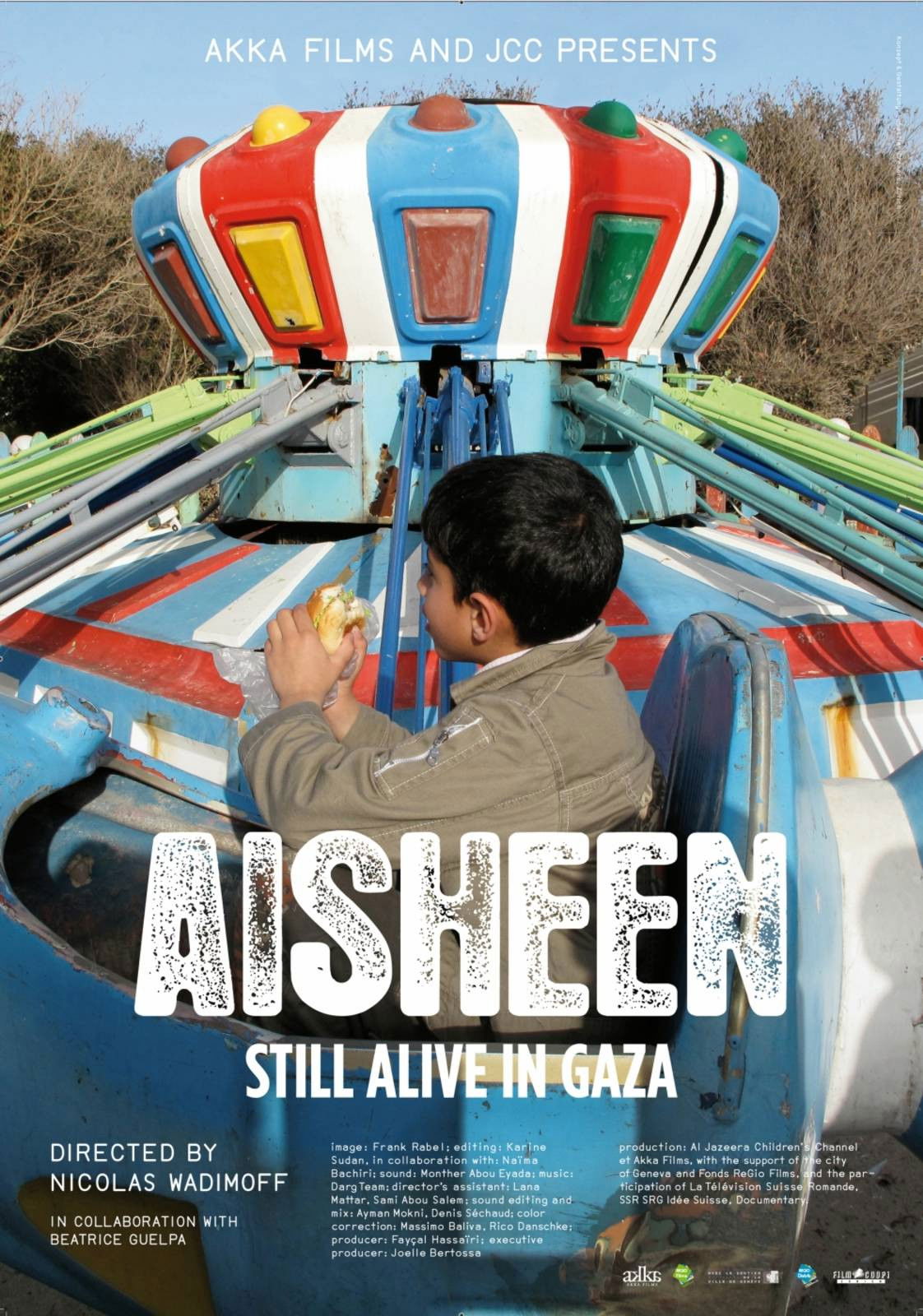
Going behind the usual images of war-torn Gaza, Swiss documentarian Nicolas Wadimoff offers this look at how people survive despite constant threat of danger. Children still play, rappers still create music and families still love one another. In addition to visiting the United Nations Food Distribution Center, Wadimoff films at a derelict amusement park and profiles the DARG TeaM rappers, whose politically charged music proclaims their defiance.
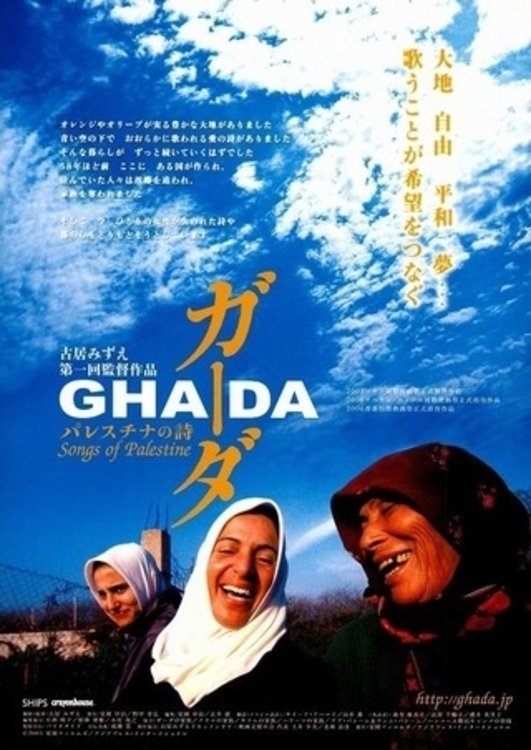
In July 1988, Mizue Furui was in the Gaza Strip and West Bank with her camera as a rookie freelance journalist. Covering the Palestinian condition, she became acquainted with Ghada Ageel, a 23-year-old teacher at an elementary school, in November 1993 and started shooting her life up to when she turned 35. The 12 years Furui spent shooting still and video images has borne fruit in a documentary titled "Ghada -- Songs of Palestine," which will be released in Uplink Theater in Shibuya Ward, Tokyo, in May as a rare report on women in the traditionally male-oriented Palestinian society.
A portrait of two Palestinian women whose individual struggles both define and transcend the politics that have torn apart their homes and their lives. Farah Hatoum, a widow living with her children and grandchildren, and Sahar Khalifeh, a novelist from the West Bank.
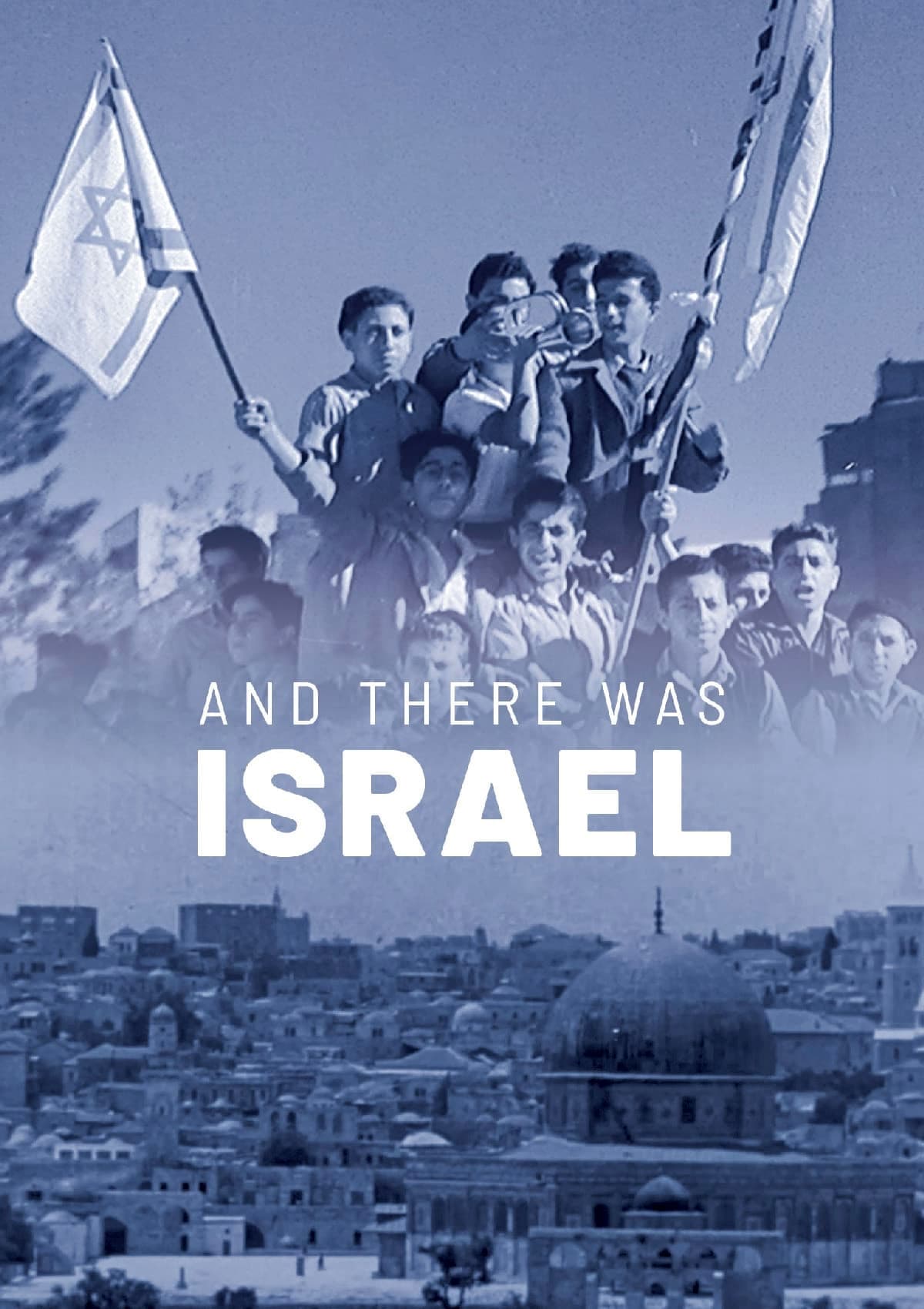
The film returns to the origins of the creation of the State of Israel (from 1896 to 1948) and highlights the responsibility of the Western World.
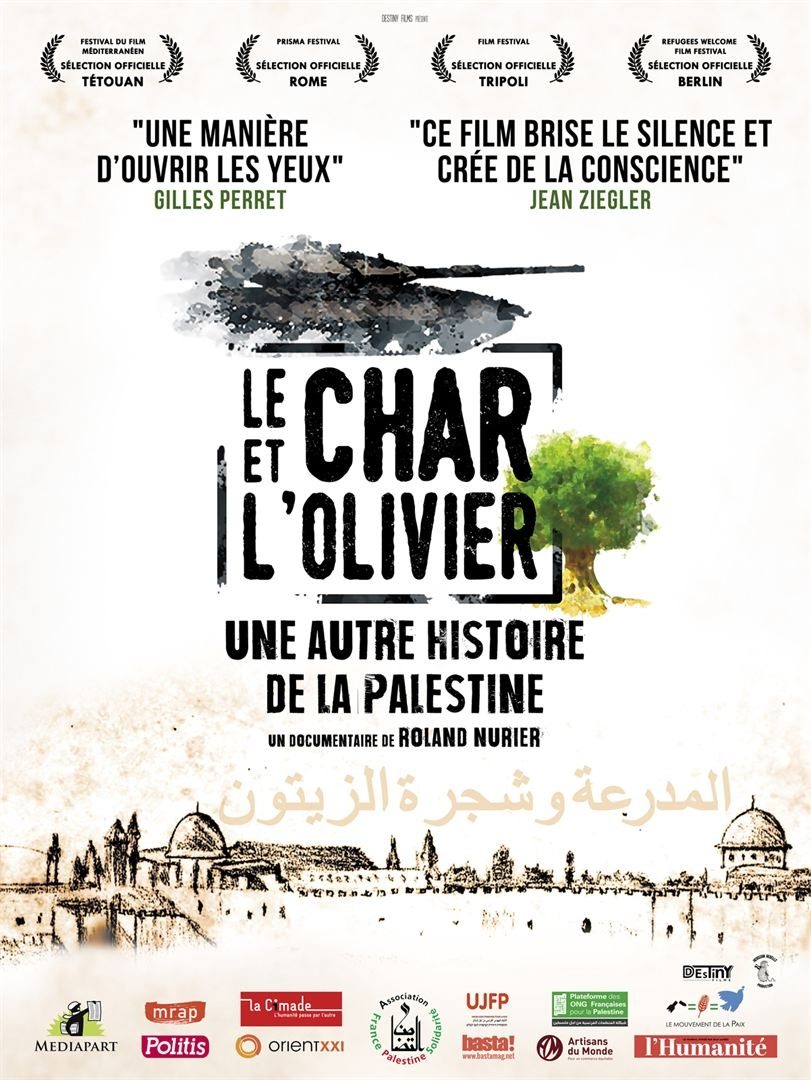
The Tank and The Olive Tree recalls a certain number of forgotten fundamentals and sheds new light on the history of Palestine. By combining geopolitical analysis, interviews with international personalities who are experts on the subject and testimonies from Palestinian and French citizens, this documentary offers the keys to understanding what the media call the Israeli-Palestinian conflict. Enough to rid people's minds of clichés and prejudices! If The Chariot and the Olivier is intended to be educational, it speaks above all of a magnificent territory, and of a people who constantly affirm that “to live is already to resist”...
This highly kinetic tableaux of uprooted sights and sounds works most earnestly to expose the racial biases concealed in familiar images. Relying on valuable snippets from feature films such as "Exodus", "Lawrence of Arabia", "Black Sunday", "Little Drummer Girl", and network news shows, the filmmakers have constructed an oddly wry narrative, mimicking the history of Mid East politics.
A documentary about the Israeli-Palestinian conflict that has lasted for more than 50 years. Contains some interviews with the children in this conflict.
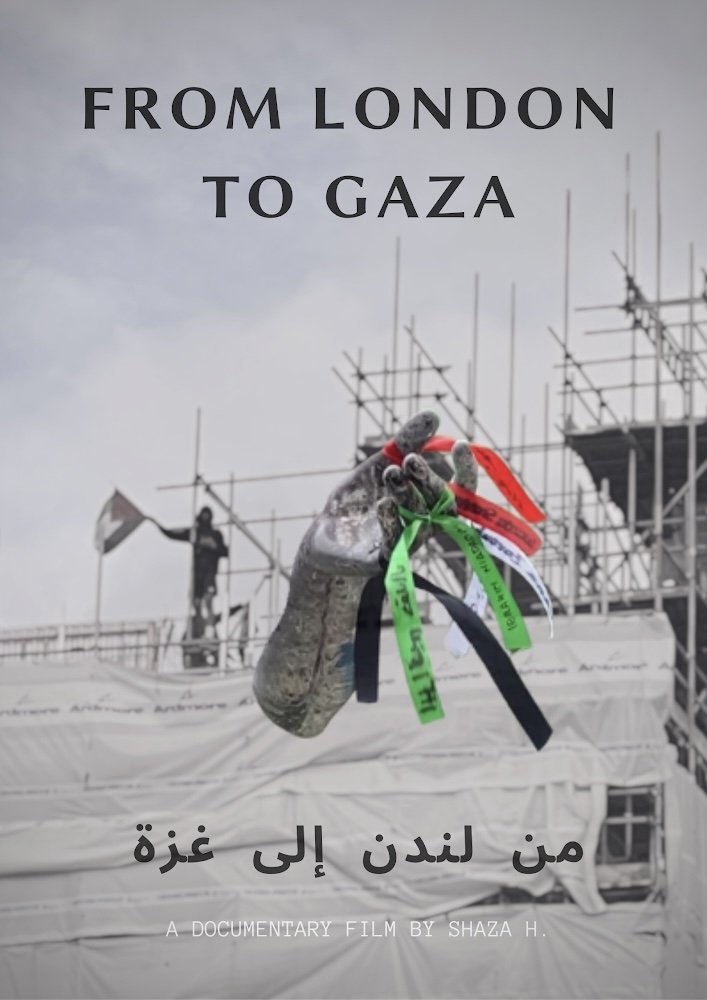
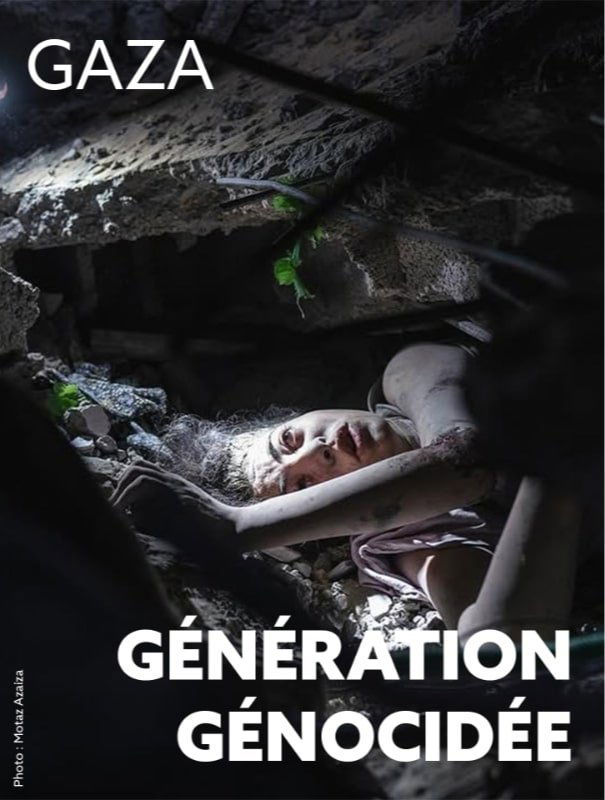
London students and academics protest the genocide in Gaza.
Hasan Hourani, a Palestinian poet and illustrator, died aged 29 in Jaffa while trying to rescue his nephew from the sea. Shortly after, the filmmaker Mais Darwazah discovers his drawings and poems and feels drawn to Hourani's world— a universe outside space and time; a place of wonder, discovery, and freedom. Motivated by this kinship, Darwazah embarks on a journey to her homeland, Palestine: a place she has never known.
Liat Atzili was kidnapped from her kibbutz on October 7. What begins as a chronicle of her parents, sister, and children's efforts to secure her return, becomes a portrait of conflicting impulses towards anger, indifference, and compassion straining the bonds of one grieving family.
The film follows journeys of observational tours solicited by the Palestinian Museum and conducted by two professors from Birzeit University to collect photos of and information on the Palestinian Flora. The title is adapted from a collection of 123 images (circa 1900 to 1920) of wild flowers in Palestine found in the Matson Collection in the Library of Congress. Despite the tendency to trace the wild plants, the text in general aims at questioning the territorial extension of what is meant by the term “Palestinian”, while standing on insignificant topographical features of the (postcolonial) landscape in West Bank. Furthermore, it addresses photography as a practice and a tool of distributing and restricting information at once.