Ireland’s great houses, towers and castles, including Yeats’ Tower House, Bunratty Castle, Butler Castle and Castletown House.
Social & External
Narrator
Documentary about Queen Elizabeth Square, Sir Basil Spence's block of Brutalist style flats built to replace the Gorbal's tenements in Glasgow during the 1960s. His vision was based on architect Le Corbusier's ideas and inspired him to transform the Gorbals into a Modernist Utopia. The film is about the life and times of one building told by some of the people involved in its history. The block was dynamited in 1993 amidst controversy and the death of a spectator. It is mentioned in Pevsner's Notable Buildings of Britain. This film was shown on BBC Scotland's Ex-S strand in 1993. Produced by May Miller and directed by Conrad Blakemore. This film is posted for educational and research purposes only and is copyright of BBC Scotland. Archive material courtesy of the Scottish Film Archive and the film's contributors.
A core group of architects embraced the West Coast from Vancouver to LA with its particular geography and values and left behind a legacy of inspired dwellings. Today, architects celebrate the influence established by their predecessors.
More than 2.000 years ago, Narbonne in today's Département Aude was the capital of a huge Roman province in Southern Gaul - Gallia Narbonensis. It was the second most important Roman port in the western Mediterranean and the town was one of the most important commercial hubs between the colonies and the Roman Empire, thus the town could boast a size rivaling that of the city that had established it: Rome itself. Paradoxically, the town that distinguished itself for its impressive architecture, today shows no more signs of it: neither temples, arenas, nor theaters. Far less significant Roman towns like Nîmes or Arles are full of ancient sites. Narbonne today is a tranquil town in Occitania
DEVOUT reveals an archaic utopia, a timeless spiritual sphere that is as beautiful and harsh as the mountain terrain of the Caucasus, tempting but unforgiving, a riddle like God and faith as mysterious as the human condition.
A short documentary about everyday objects, the people who used them, and the beauty of that use. From the video description: "An encounter with the past. The introductory film for visitors to the National Museum of Ireland (NMI) - Country Life. It tells a story about Irish traditional folk life, the self-sufficiency and community spirit by which people's lives were played out against a challenging physical environment. That environment quite often dictated the materials, crafts and traditions by which lives were lived. The museum's collection of 'ordinary things', on display in Turlough Park, illustrate these stories." Written and narrated by Irish writer and broadcaster Theo Dorgan. Made in association with the NMI — Country Life. Available online on the Youtube channel of the NMI — Country Life: https://www.youtube.com/watch?v=GCYrq8yWSSQ
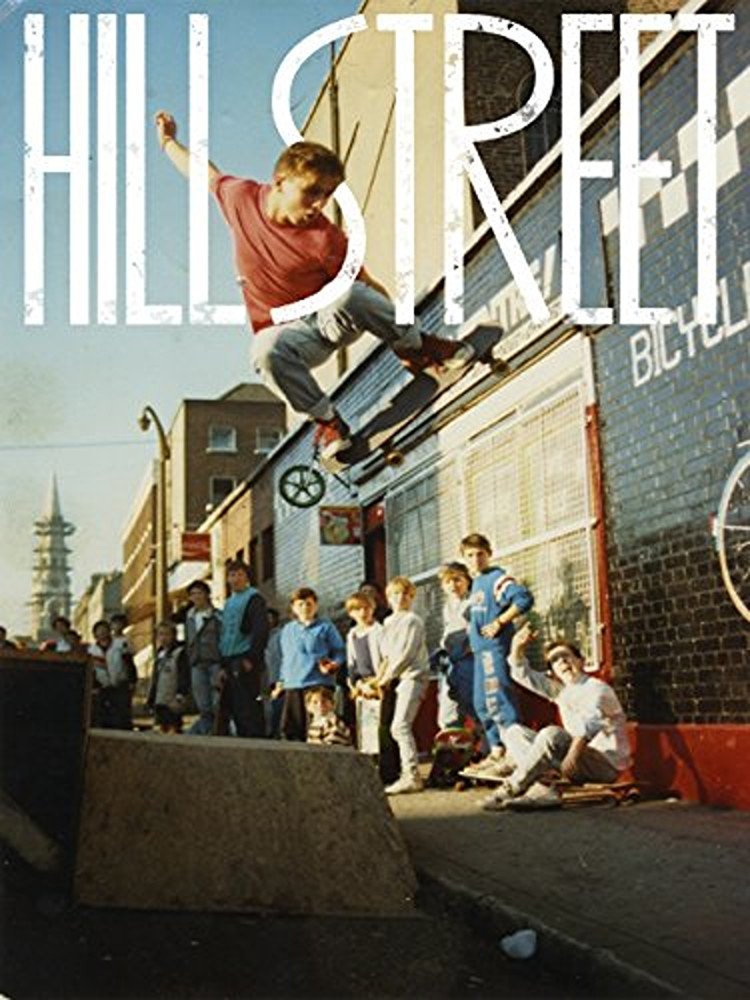
The evolution of skateboarding culture in Ireland since the late 1980s.
A biography of the poet W. B. Yeats and his contribution to the Irish independence movement as a Protestant nationalist.
Through economic necessity, an Aran Islander is forced to travel to England to work on building sites so that he can earn money to support his family back on the Islands.
Ornithologist Seán Ronayne from Cobh, Co. Cork is on a mission to record the sound of every bird species in Ireland – that’s nearly 200 birds. Often joined by his partner Alba, he travels to some of the country’s most beautiful and remote locations to capture its most elusive species and soundscapes: the busy seabird colony of Skellig Michael; a native woodland free from road noise in the Burren; the corncrake stronghold of Tory Island; a solitary nest in the Donegal uplands. Along the way we get to know Seán, whose hypersensitivity to sound has proven both a struggle and a strength. At once inspiring and cautionary, Seán’s journey illustrates the beauty and importance of sound, and what listening can tell us about the state of our natural world.
Narrated by Oscar-winning actor Jeremy Irons, The Genius of George Boole assembles academics and industry leaders from across the globe to explore the life and importance of one of the world’s greatest unsung heroes.
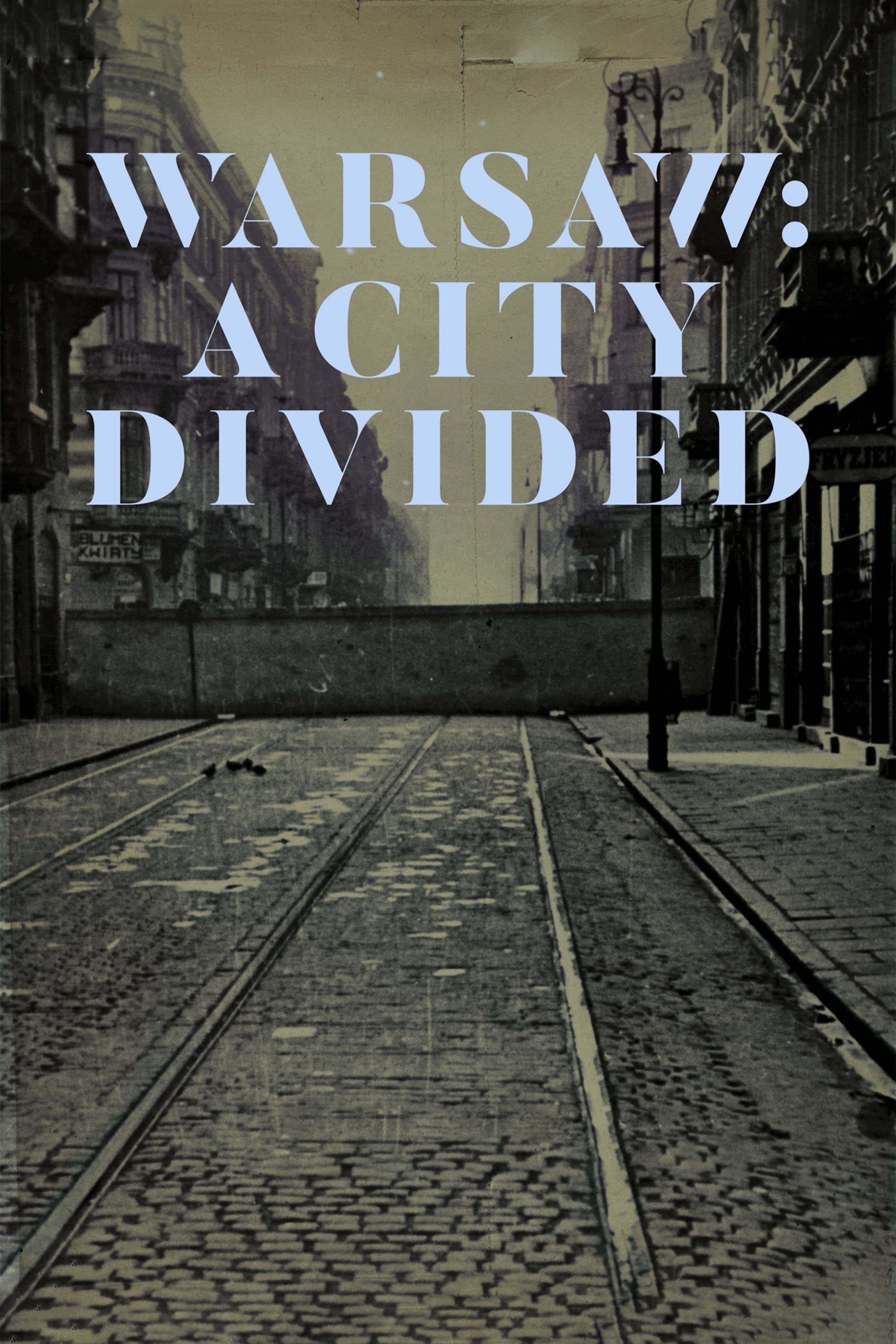
The history of the Warsaw Ghetto (1940-43) as seen from both sides of the wall, its legacy and its memory: new light on a tragic era of division, destruction and mass murder thanks to the testimony of survivors and the discovery of a ten-minute film shot by Polish amateur filmmaker Alfons Ziółkowski in 1941.
Mise Éire ("I am Ireland") is a 1912 Irish-language poem by the Irish poet and Republican revolutionary leader Patrick Pearse. In the poem, Pearse personifies Ireland as an old woman whose glory is past and who has been sold by her children. The poem inspired this 1959 film of the same name by George Morrison. Here, Morrison painstakingly assembled historical footage of the events surrounding the 1916 Rising from archives across Europe and deals with key figures and events in Irish Nationalism between the 1890s and the 1910s. The narration is by Liam Budhlaeir and Padraig O'Raghallaigh and the musical score is by Seán Ó Riada.
Six friends document their trip from Cork to Portmagee, County Kerry for the May the 4th Sci-fi film festival where one of their short films is screening.
Explorations in 21st Century American Architecture Series: Ray Kappe has long been a cult figure in the architectural scene in and around Los Angeles. In 1972, he founded the influential, avant garde Southern California Institute of Architecture (SCI-ARC), where many of the younger-generation architects have studied or taught.
No understanding of the modern movement in architecture is possible without knowledge of its master builder, Mies van der Rohe. Together with documentation of his life, this film shows all his major buildings, as well as rare film footage of Mies explaining his philosophy. Phyllis Lambert relates her choice of Mies as the architect for the Seagram building. Mies's achievements and continuing influence are debated by architects Robert A.M. Stern, Robert Venturi, and Philip Johnson, by former students and by architectural historians. Mies is seen in rare documentary footage.
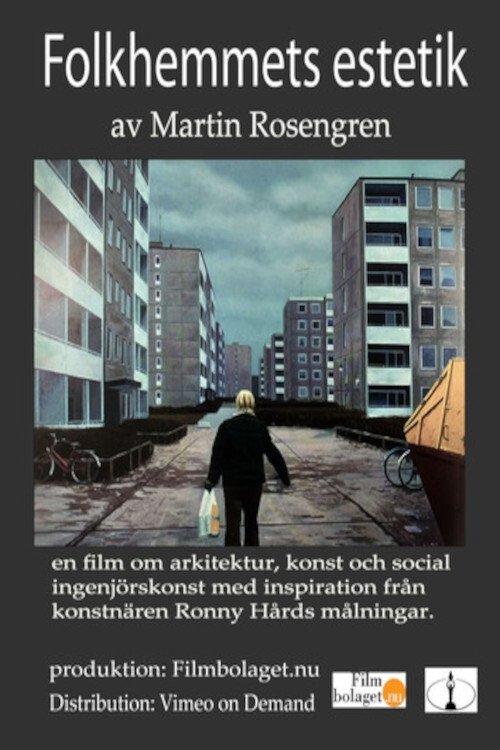
Documentary about the architecture of the Swedish housing boom in the 1960s and how it's viewed today.
Before the summer of 2022, Ireland had never beaten the All Blacks in New Zealand. Using behind the scenes footage and interviews with players and coaches this documentary reflects on the experience of triumphing in New Zealand for the first time.
Affectionate but honest portrait of Thin Lizzy, arguably the best hard rock band to come out of Ireland. Starting with the remix of the classic album Jailbreak by Scott Gorham and Brian Downie, the film takes us through the rollercoaster ride that is the story of Thin Lizzy. From early footage of singer Phil Lynott in Ireland in his pre-Lizzy bands the Black Eagles and Orphanage, it follows his progress as he, guitarist Eric Bell and drummer Brian Downie form the basic three-piece that was to become Thin Lizzy - a name taken from the Beano. Using original interviews with Bell, Downie, the man who signed them and their first manager, it traces the early years leading to the recruitment of guitarists Brian 'Robbo' Robertson and Scott Gorham - the classic line-up. The film uses a number of stills, some seen on TV for the first time, archive from contemporary TV shows and a range of tracks both well known and not so famous.