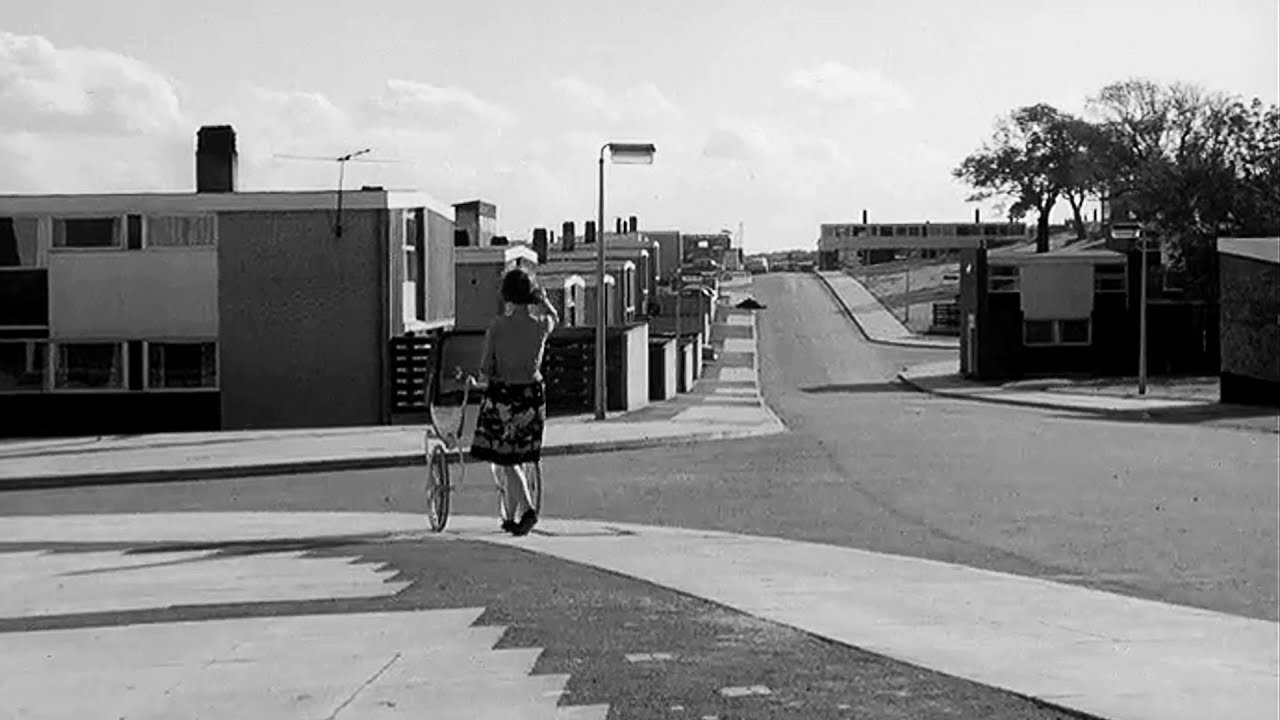
A visit to Peterlee, Co. Durham.
Social & External
A new uranium mill -- the first in the U.S. in 30 years -- would re-connect the economically devastated rural mining community of Naturita, Colorado, to its proud history supplying the material for the first atomic bomb. Some view it as a greener energy source freeing America from its dependence on foreign oil, while others worry about the severe health and environmental consequences of the last uranium boom.
Illustrates the reconstruction and electrification of the main railway line between Manchester and Sheffield. Showing the plan for the modernisation and re-equipping of British Railways. This film was produced for televising by the BBC during the evening that the plan was debated in parliament.
Tunahaki is the extraordinary story of nine gifted orphans who are acrobats. We follow their journey as an American volunteer takes them from Africa to study with Cirque du Soleil in Las Vegas. They end up touring the States and raising hundreds of thousands of dollars, more than enough to build a permanent home. But how have the kids' experiences in America affected them? And how will it change things back home in Tanzania? Tunahaki's heartfelt journey gives us something new to ponder as we reach across the world to help those less fortunate—is it always the right thing to do?
An investigation into the unfolding history of nuclear testing, uranium mining, and nuclear waste disposal on indigenous lands in the US. It raises the voices of those who witnessed and experienced the consequences of nuclear colonialism and those who still resist.
A light and somewhat satirical look at the problems and pleasures of Continental holiday travel. A passenger on the Hook Continental Express from Liverpool St. imagines the possible destinations of his fellow passengers.
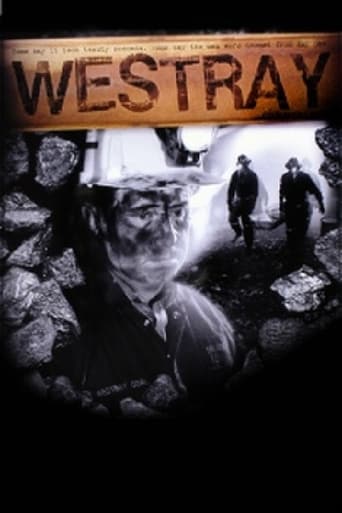
In this feature documentary, filmmaker Paul Cowan offers an innovative, moving account of the Westray coal mine disaster that killed 26 men in Nova Scotia on May 9, 1992. The film focuses on the lives of three widows and three miners lucky enough not to be underground that day when the methane and coal dust ignited. But their lives were torn apart by the events. Meet some of the working men, who felt they had no option but to stay on at Westray. And wives, who heard the rumours, saw their men sometimes bloodied from accidents and stood by them, hoping it would all turn out all right. This is a film about working people everywhere whose lives are often entrusted to companies that violate the most fundamental rules of safety and decency in the name of profit.
A talented group of orphaned children in Swaziland create a fictional heroine and send her on a dangerous quest.
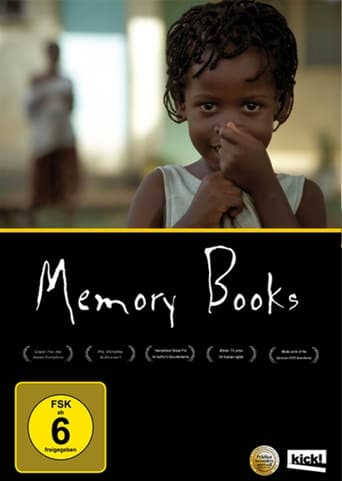
In Uganda, AIDS-infected mothers have begun writing what they call Memory Books for their children. Aware of the illness, it is a way for the family to come to terms with the inevitable death that it faces. Hopelessness and desperation are confronted through the collaborative effort of remembering and recording, a process that inspires unexpected strength and even solace in the face of death.
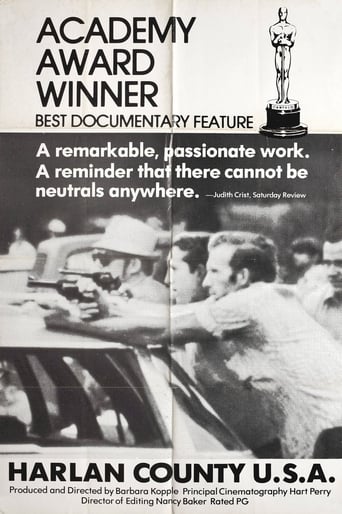
This film documents the coal miners' strike against the Brookside Mine of the Eastover Mining Company in Harlan County, Kentucky in June, 1973. Eastover's refusal to sign a contract (when the miners joined with the United Mine Workers of America) led to the strike, which lasted more than a year and included violent battles between gun-toting company thugs/scabs and the picketing miners and their supportive women-folk. Director Barbara Kopple puts the strike into perspective by giving us some background on the historical plight of the miners and some history of the UMWA. Preserved by the Academy Film Archive in partnership with New York Women in Film & Television in 2004.
The mining industry, which always had been “sponsor” and “financier” of the soccer clubs in the Ruhr valley during the post-war period, doesn’t exist anymore nowadays in that form. Many of the once glorious clubs which dominated German soccer until the 1970s faded into obscurity without financial backers. The documentary “Im Westen ging die Sonne auf" ("The sun had risen in the west“) shows the history of the “Revierfußball” from after the second World War until the decline of the mining industry and recalls legendary players and forgotten clubs. The film shows especially how deeply rooted the sport was back then in the entire lifestyle of the Ruhr area - in private life as well as in society - and how structural change also left clearly visible marks in sports. With pictures from back then, interviews with contemporary witnesses, and footage of original locations nowadays, a contemporary document of German post-war history, by taking the example of soccer, has been created.
Ten years after an enormous open-pit gold mine began operations in Malartic, the hoped-for economic miracle is nothing more than a mirage. Filmmaker Nicolas Paquet explores the glaring contrast between the town’s decline and the wealth of the mining company, along with the mechanisms of an opaque decision-making system in which ordinary people have little say. Part anthropological study, part investigation into the corridors of power, Malartic addresses the fundamental issue of sustainable and fair land management.
A documentary about Nain, a Labrador Inuit community located near the world's largest nickel and copper deposits. As commercial mining interests prepare to exploit the resources, local residents consider the potential environmental and cultural impact. Meanwhile longstanding Aboriginal land claims are unsettled.
In 1906, the Arlberg Railway, which connects the Austrian cities of Innsbruck and Bludenz, is the only east-west mountain railway in Austria. This 340-second "ghost railroad ride" shows the view from the back of a train, though I'm not sure if it's heading east or west. This kind of film, in vogue at the time, is an intermediate form of short reality, which often showed a train engaging in a bend, and a feature documentary. Its editing is live, linear and temporal, and the cuts are very apparent. Indeed, the choices of where to place the cuts seem to have avoided the less populated stretches. There are plenty of buildings to see, even when the train is not at the station.
A West Yorkshire story of rewilding wetlands in a landscape once dominated by deep coal mining.
"It's still men who win coal": a look at the past, present and future of the coal industry.
Documentary about a Finnish mining company struggling with production and environmental management problems.
150 underprivileged and orphaned students in the remote jungle of Thailand attending the country's first democratic school prepare a special celebration to honor their remarkable adoptive mother on Mother's Day.