A botany of cookie packaging.
Social & External
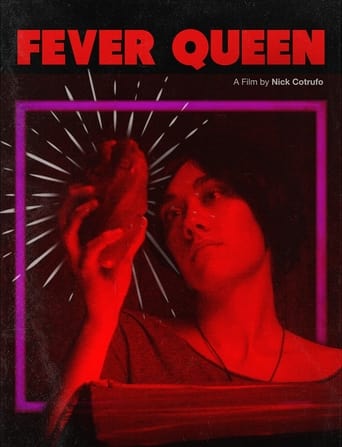
A woman on the run from the mob is reluctantly accepted in a small Colorado community in exchange for labor, but when a search visits the town, she learns that their support has a price.
A lone passenger is reflected in the windows of a train crawling through layers of textures towards Minsk. During his absence, the city has not changed: all the streets are frozen, long-gone voices can be heard in the empty rooms and around the corner you can find yourself in a video game from your childhood.
Experimental short movie mostly made of still photos. An old assassin lives on a yacht, in a port city. One day, the sister of a woman he killed appears.
A young man visits a Buddhist temple in the hopes of quenching his thirst.
Reworking and alteration of Soviet sports films from the 1980s depicting wrestling and pole vaulting.
A personal reflection on hands, the word "tear," and caring for oneself that experiments with sound, silence, and definitions.
This is a story about a man who believes that he has two “selves” - external and internal. That is, an organism is a certain conglomerate of cells, each of which is a separate individual. This hybrid creature has a certain common personal “I” that uses the entire organism, and is the organism itself, which has its own will. According to the character, one can communicate with him, which is what he is trying to do. He wants to reach him and comes up with different ways of communication: injecting substances under the skin or intravenously, tattooing texts on the body, swallowing objects. The answer would come in the form of a rash or other physical manifestation that had to be interpreted. As a result, communication is carried out and the second “I” agrees to die.
After his death, a young man stuck in purgatory attempts to cope with the afterlife.
A short film about a US business man who came to Africa, Namibia, to finalize a very important business deal. Unfortunately, his brief case—which had important documents—was snatched or robbed from him and he is determined to get it back. Go into a journey with Mr. Tom as he fights to get his important documents back.
The word “me” sinking into a bubbling puddle of metallic goo. The piece is about how narcissistic artists have to be to make their work, but by admitting their narcissism, they can at least take some steps to control it.
The model’s feet are uncomfortably squeezed into the heels, and her movements are slippery on slick silver liquid, before she slowly and ominously destroys the glass pane separating the subject from the viewer.
Placing a word widely acknowledged as amongst the most offensive in the English language into the hands of each of the women in her video, Minter reclaims it from chauvinistic associations and rescues it from centuries of censorship and degradation.
2 flatmates unfold the layers of their relationship on a random Sunday afternoon after they encounter a power cut.
IDFA and Canadian filmmaker Peter Wintonick had a close relationship for decades. He was a hard worker and often far from home, visiting festivals around the world. In 2013, he died after a short illness. His daughter Mira was left behind with a whole lot of questions, and a box full of videotapes that Wintonick shot for his Utopia project. She resolved to investigate what sort of film he envisaged, and to complete it for him.
A mother consumes abnormal objects in the hopes of granting her child desirable traits. While she has good intentions, her actions may not be good for her baby.
BLUR tells the story of Iago, who's had health problems and speech impediments, until he meets Isabela, who will help him find meaning after surgery.
Today, analogue video is attractive primarily thanks to the distinctive aesthetic quality of its pixelated image and raster errors. But for Czech artists who first explored the possibilities offered by video art in the late 1980s, this medium represented a path towards freedom. Through a portrait of her grandfather Radek Pilař, one of the pioneers of Czech video art, the director explores her own legacy of imperative creative fascination. Her film’s main story, i.e., the process of reconstructing the 1989 exhibition Video Day, contrasts this enchantment with life in the final days of the totalitarian regime, which different sharply with the adventures of those who decided to emigrate – whom the filmmaker also visits in order to discover forgotten works, get to know their creators, and re-establish broken ties.