Successfully completed your studies - now what? Raffly already has a lucrative job offer from a large German company, but neither an apartment nor a work permit.
Social & External
Raffly
A day in the city of Berlin, which experienced an industrial boom in the 1920s, and still provides an insight into the living and working conditions at that time. Germany had just recovered a little from the worst consequences of the First World War, the great economic crisis was still a few years away and Hitler was not yet an issue at the time.
The film is a story about the deep connection of the life and art of the artist. It takes you on a journey through Berlin like you have never seen before. Take a deep dive behind the scenes of the famous red and blue graffiti letterings that cover the heart of the city and tune into the connection between art, letters and spirituality.
A documentary produced by the French armed forces which chronicles the way of France’s “1ere armée” in the second world war from the days it first crossed the Rhine in March of 1945, through the liberation of a POW-camp in Swabia, until the forces reached the Danube and the Alps at the end of the war and the day French troops marched in the victory parade in Berlin.
A documentary about the clashes between squatters and the police in Berlin in early 1981. Despite the absence of commentary, this is an openly partisan film that aims less for political analysis than for an up-close description of the situation and mood.
The film chronicles the story of how the Nazis and the IOC turned, to their mutual benefit, a small sports event into the modern Olympics. The grand themes and controversial issues from the 1936 Games have continued to this day: Monumentality, budget overruns, collusion with authoritarian regimes, corruption and sometimes even bribery.
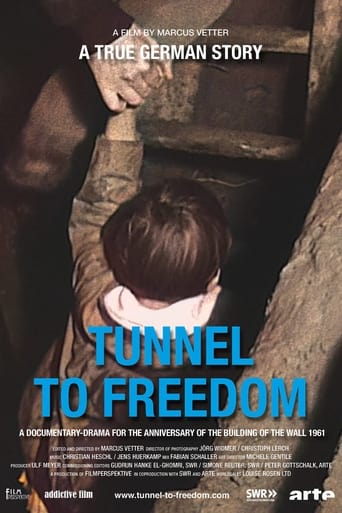
13 August 1961: the GDR closes the sector borders in Berlin. The city is divided overnight. Escape to the West becomes more dangerous every day. But on September 14, 1962, exactly one year, one month and one day after the Wall was built, a group of 29 people from the GDR managed to escape spectacularly through a 135-meter tunnel to the West. For more than 4 months, students from West Berlin, including 2 Italians, dug this tunnel. When the tunnel builders ran out of money after only a few meters of digging, they came up with the idea of marketing the escape tunnel. They sell the film rights to the story exclusively to NBC, an American television station.
The intricate history of UFA, a film production company founded in 1917 that has survived the Weimar Republic, the Nazi regime, the Adenauer era and the many and tumultuous events of contemporary Germany, and has always been the epicenter of the German film industry.
Homelessness in the United States takes many forms. For Elizabeth Herrera, David Lima and their four children, housing instability has meant moving between unsafe apartments, motels, relatives’ couches, shelters, the streets and their car. After 15 years of this uncertainty, the family moved into their first stable housing — an apartment in the San Francisco Bay Area — in the midst of the coronavirus pandemic.
The film accompanies Jenny Gröllmann, a German actress, during the last two years of her life.
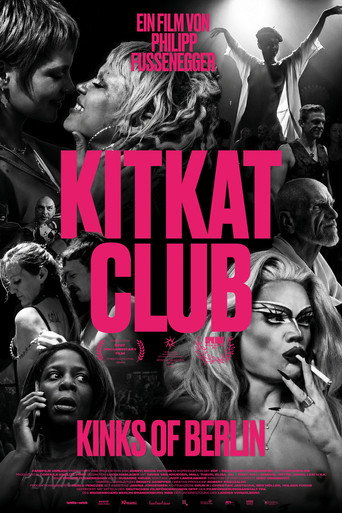
Berlin queer community members mourn the substance abuse-related loss of their friends by sharing memories and rituals. Resembling glow-in-the-dark fungi, they radiate light together as a network of support and care.
In the 1960s, a white couple living in East Germany tells their dark-skinned child that her skin color is merely a coincidence. As a teenager, she accidentally discovers the truth. Years before, a group of African men came to study in a village nearby. Sigrid, an East German woman, fell in love with Lucien from Togo and became pregnant. But she was already married to Armin. The child is Togolese-East German filmmaker Ines Johnson-Spain. In interviews with Armin and others from her childhood years, she tracks the astonishing strategies of denial her parents, striving for normality, developed following her birth. What sounds like fieldwork about social dislocation becomes an autobiographical essay film and a reflection on themes such as identity, social norms and family ties, viewed from a very personal perspective.
Twenty-five films from twenty-five European countries by twenty-five European directors.
Documentary about the social microcosm of Hasenheide, a 50 hectar green area in Berlin, located between Kreuzberg and Neukölln. In this park, you'll find old women with their dogs, young football players, Turks at the barbecue, as well as nudists. For the residents, Hasenheide is sports area, living room, pub and runway all at once. A refutation of the media panic surrounding the park as a place of drug dealing and violence.
Bosom buddies BeV StroganoV, Ovo Maltine, Ichgola Androgyn and Tima die Göttliche are four Berlin drag queens who met in the mid 1980s. These four queens became Germany’s most popular drag performers and have been busy fertilizing the German cultural scene. Besides being performers, they are also political activists – in AIDS awareness, anti-gay violence, the sex workers movement and the struggle against the extreme right and racism. The film tells their story.
Journey with the musicians of the Berlin Philharmonic and their conductor Sir Simon Rattle on a breakneck concert tour of six metropolises across Asia: Beijing, Seoul, Shanghai, Hong Kong, Taipei and Tokyo. Their artistic triumph onstage belies a dynamic and dramatic life backstage. The orchestra is a closed society that observes its own laws and traditions, and in the words of one of its musicians is, “an island, a democratic microcosm – almost without precedent in the music world - whose social structure and cohesion is not only founded on a common love for music but also informed by competition, compulsion and the pressure to perform to a high pitch of excellence... .” Never before has the Berlin Philharmonic allowed such intimate and exclusive access into its private world.
Leyla and her six-year-old daughter Nila live in the holy city of Mashhad in Iran. Nila is the result of a temporary marriage, which allows a man to marry a woman even if he is already married. Children born from such a relationship are legally non-existent. As long as the father does not recognize the child, no birth certificate can be issued and Nila cannot attend school. The documentary depicts Leyla's tireless efforts to clarify Nila's legal status in order to offer her a perspective for her future. In a never-ending bureaucratic battle, Leyla fights not only against the legal system, but also against a judgmental society.
Five floors. Forty apartments. Rats, leaks and debts. In Pantin, I live in a building with a danger order. Under court order, we have to renovate it. Between Dantesque arguments, missing money and humor as a fire extinguisher, I film our collective rescue.
A documentary essay film about coincidences, shattered lives and posthumous fame. A found footage family film about love and passion, friendship and heartbreak in Berlin between the wars. But a film also about self-sufficiency and recycling, about the green movement and the environment – before these notions had yet been properly invented. And it touches the utopian potential of ideas that have lain buried in the ground of an island for the past 70 years. The film’s protagonist, Martin Elsaesser, was one of the most prominent modernist architects of Weimar Germany.