Documentary film about Ordzhonikidze (now Vladikavkaz)
Social & External
Self
Though both the historical and modern-day persecution of Armenians and other Christians is relatively uncovered in the mainstream media and not on the radar of many average Americans, it is a subject that has gotten far more attention in recent years.
An auteur-director who wishes to make a documentary about Armenia imagines a fictitious character that has the ability to travel through bodies. The latter will alternatively embody: a young farmer that dreams to flee from the countryside to more urban spheres, a prostitute who is a survivor of rape, a narcissistic client, a fallen artist and finally, a resisting deserter.
The film tells the story of ancient Ingush lullabies - Ingush women and men tell the lullabies of their families and the stories associated with them: love, friendship, blood feud.
The film is dedicated to the ethnogenesis of a small people, preserving their traditions and language, the Udi people
Documentary film about the labor activity of residents of Chechen-Ingush ASSR
Documentary film about ethnic cleansing in the Prigorodny district in October-November 1992.
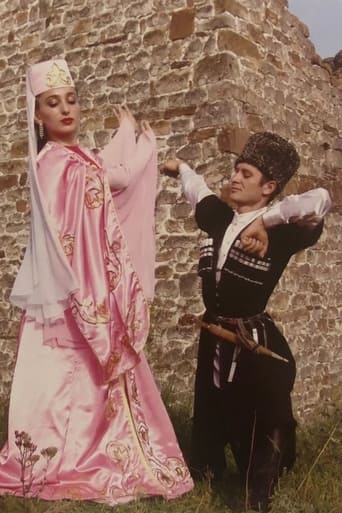
Film about the singing and dancing culture of the Ingush people
A feature documentary presented and directed by former Royal Marines Commando Emile Ghessen. The documentary tells the story of the 2020 war between Armenia and Azerbaijan over the disputed region of Nagorno Karabakh. In the fall of 2020, Armenia and Azerbaijan fought a brutal bloody war. Azerbaijan won, decisively. The feature documentary 45 Days: The Fight for a Nation tells the story of this conflict, from the Armenian perspective, focusing on the human cost of war and its impact on the large Armenian diaspora.
In a decaying Soviet-era retirement home, a vibrant group of elders cling to life by staging Shakespeare. Yet loneliness lingers beyond the theater’s doors, until drama begins to blur with reality.
About 30 ethnic groups live in the Republic of Dagestan, each with its own language and customs. The prevalence of the Muslim way of life is a distinctive feature of this republic. The number of men taking second and third wives has increased. However, according to the Constitution of the Russian Federation, a man can only be married to one wife. So, being both a law-abiding citizen and a model Muslim is not yet possible.
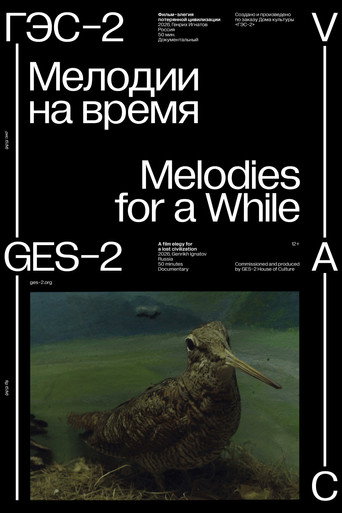
The main protagonists of this slow-paced film are abandoned or suspended spaces associated with the production, distribution, and viewing of cinema in various localities across North Ossetia. The discussion of the decline of the film industry also serves as a way of pointing to the ambiguous position in which the progressive modernist project found itself in the late twentieth and early twenty-first centuries. Ignatov proposes poetic ways of establishing new relations with this project in response to the need to reinvent the links between past and future. The abandoned spaces are brought to life by two visiting musicians playing the uadynz, traditional Ossetian flutes.
In the capital of Ingushetia, at the memorial, there is a carriage. This is a carriage from the 40s, a carriage of memory. One of those in which the Ingush were transported back in 1944 to Kazakhstan and Central Asia. February 23 is the day when the whole country celebrates Defender of the Fatherland Day; mourning takes place in Ingushetia. And on this day, the old people gathered in this carriage to remember and tell each other how it was.
A film about the Doukhobor community that has lived in the village of Gorelovka in the Republic of Georgia since the 19th century. The few Russians who remained there live in their own closed world of rituals, prayers, and psalms.
A documentary film about the expedition of Czechoslovak mountaineers led by Vladimír Procházka to Mount Elbrus in 1958.
Short documentary about the Georgian Military Road. Captures Ingush and Ossetian settlements of the early 20th century
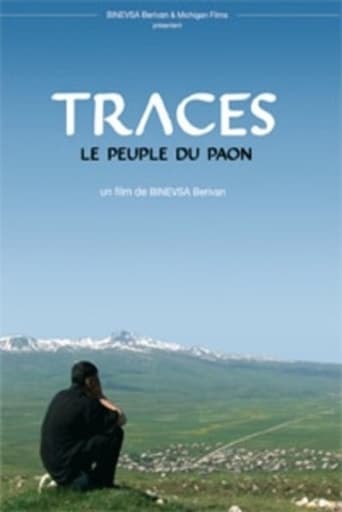
Filmmaker Binevsa Bêrîvan travels to Armenia to capture the daily life, customs, and history of the country's Yazidi Kurdish community.
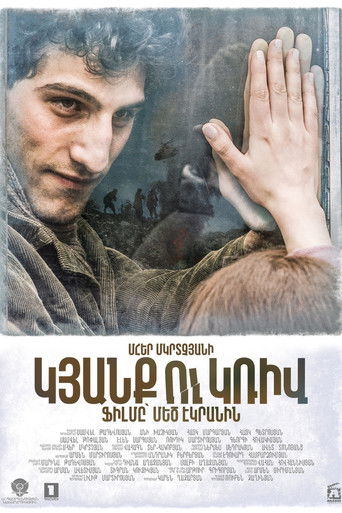
Taking place in 1991, Tigran, who teaches math at a village school to avoid the army, loses the girl he loves. Consumed by abject wretchedness, he decides to enlist as a volunteer in the Nagorno‑Karabakh war to give meaning to his hollow life.
Two Russian soldiers, one battle-seasoned and the other barely into his boots and uniform, are taken prisoner by an anxious Islamic father from a remote village hoping to trade them for his captured son.
The youngest son returns home to help his father and brothers meet the targets for a profitable order on cut wood. During his absence nothing has changed: the same back-breaking toil for the sake of a piece of bread, the same resistance from the neighbouring settlement, the same inability of the family members to express their love and understanding for their kin. And the river, which may rise at any time and wash away the parental home that stands on its banks.
Washed up British film director, Emil, who is invited by a nascent state to make a national Epic in an obscure Caucasus Republic ruled by an eccentric and corrupt dictator. When down and out Academy award winning British film director Emil Miller receives an invitation to the Embassy of the Autonomous Republic of Karastan, little does he know that he will be embarking on one of the wildest journeys of his already diverse and colourful career.
A documentary about how a dominant cultural and demographic institution both sustains their traditional activities and adapts to the digital revolution.
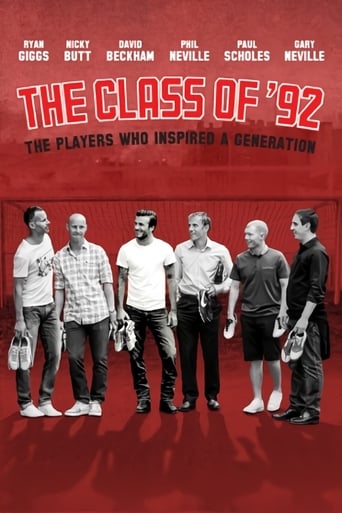
A detailing of the rise to prominence and global sporting superstardom of six supremely talented young Manchester United football players (David Beckham, Nicky Butt, Ryan Giggs, Paul Scholes, Phil and Gary Neville). The film covers the period 1992-1999, culminating in Manchester United's European Cup triumph.
This documentary by Joe Berlinger and Bruce Sinofsky details the murder trial of Delbert Ward. Delbert was a member of a family of four elderly brothers, working as semi-literate farmers and living together in isolation from the rest of society until William's death.
In 1999, Internet entrepreneur Josh Harris recruits dozens of young men and women who agree to live in underground apartments for weeks at a time while their every movement is broadcast online. Soon, Harris and his girlfriend embark on their own subterranean adventure, with cameras streaming live footage of their meals, arguments, bedroom activities, and bathroom habits. This documentary explores the role of technology in our lives, as it charts the fragile nature of dot-com economy.
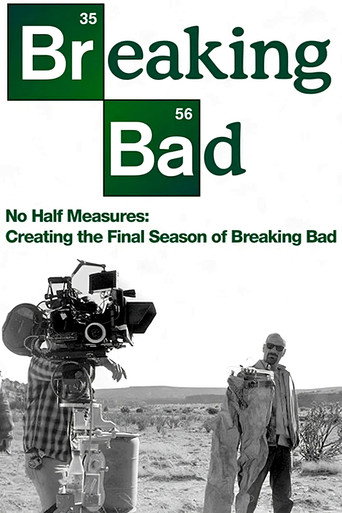
A documentary about the making of season five of the acclaimed AMC series Breaking Bad.
Through deeply personal interviews with her siblings and an examination of the photographs, letters, and belongings left behind, Mariska assembles a new portrait of her mother Jayne Mansfield, an extraordinary and complex woman.
A documentary that explores the downloading revolution; the kids that created it, the bands and the businesses that were affected by it, and its impact on the world at large.
A visual montage portrait of our contemporary world dominated by globalized technology and violence.
Acclaimed for his unfiltered reporting and deadpan humor, Andrew Callaghan brings his gonzo style reporting to the undercurrents that led to the January 6 Capitol Riot. As one of the best-known and hardest working journalists of his generation, the 25-year-old ventures on a wild RV journey through America to take the pulse of a divided nation.
A documentary chronicling Queen and Lambert's incredible journey since they first shared the stage together on "American Idol" in 2009.
A compilation of over 30 years of private home movie footage shot by Lithuanian-American avant-garde director Jonas Mekas, assembled by Mekas "purely by chance", without concern for chronological order.
The life and career of an actor, artist, and icon. His own journey through his own camera.
Those who knew iconic funnyman John Candy best share his story, in their own words, through never-before-seen archival footage, imagery, and interviews.
Martin Scorsese’s portrait of writer and social commentator Fran Lebowitz, celebrated for her sharp wit and observations on modern life. Filmed at New York’s Waverly Inn and intercut with archival footage and interviews, the documentary captures Lebowitz’s distinctive worldview through her spontaneous monologues and public appearances.
In this documentary, recovering addict and amputee John Wood finds himself in a stranger-than-fiction battle to reclaim his mummified leg from Southern entrepreneur Shannon Whisnant, who found it in a grill he bought at an auction and believes it therefore to be his rightful property.
This documentary promoting the joys of life in a Soviet village centers on the activities of the Young Pioneers. These children are constantly busy, pasting propaganda posters on walls, distributing hand bills, exhorting all to "buy from the cooperative" as opposed to the Public Sector, promoting temperance, and helping poor widows. Experimental portions of the film, projected in reverse, feature the un-slaughtering of a bull and the un-baking of bread.
This searing investigative work shadows a group of activists risking unimaginable peril to confront the ongoing anti-LGBTQ program raging in the repressive and closed Russian republic. Unfettered access and a remarkable approach to protecting anonymity exposes this under-reported atrocity–and an extraordinary group of people confronting evil.
A documentary about ten very different lives connected by having appeared onscreen wearing masks or helmets in Star Wars.
A portrait of singer-songwriter Shawn Mendes' life, chronicling the past few years of his rise and journey.
This essential new documentary pays tribute to the legacy of the late, legendary casting director Marion Dougherty and shines a light on one of the most overlooked and least understood crafts in filmmaking.