Social & External
The people behind it
Rosamaria Murtinho
Mulher
Portugal, 1975. A time of rough changes. A young gay artist trapped in a small seaside town ran by communist winds. Al Berto, the writer, embodies an entire moving generation. He and his friends exude youth, eccentricity and hope for the future - but right after the fall of Portugal's dictatorship system, the country is not yet ready for his love story.
Between the depths of grief and the bliss of friendship, Gabriel teams up with his friends to create a film written by his late grandfather, who passed away during the COVID-19 pandemic.
Valentina seeks refuge from the incessant waves of her mind in the pages of her upcoming poetry book Lapislazuli, trying to keep her life from slipping away like sand through her fingers. With words from her poem Citrino, we journey through a range of emotions and feel the ups and downs of her Borderline Personality Disorder.
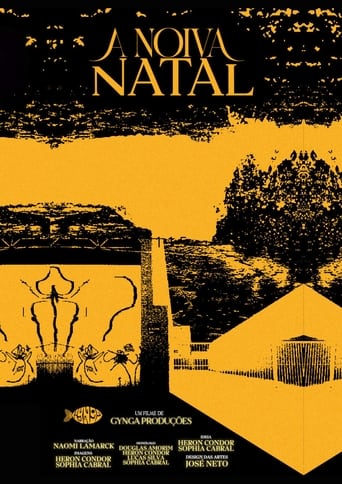
“A Noiva Natal” is a photo film narrated by the city of Natal itself, the capital of Rio Grande do Norte, in the first person. The short film, divided into three parts alluding to mourning, records a vision of the capital after being neglected and forgotten by the Public Authorities and its inhabitants.
A coroner reunites with a great love from the past, realizing that the memories are more vivid than ever.
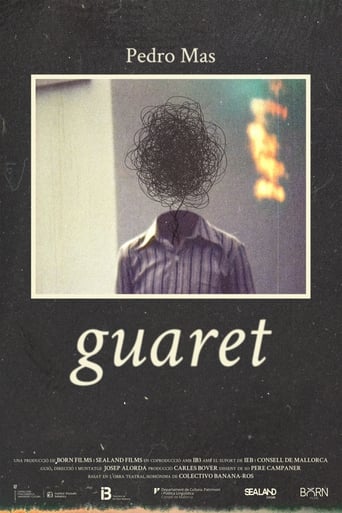
Pedro is Mallorcan, born to a mother from Burgos and a father from Mallorca. Due to his distant relationship with his father, Pedro doesn't fully master Mallorcan as a language. He turns to the works of Damià Huguet to remember his father, as only his poems can fill the void left by his death. The poet's words transport Pedro to his childhood and his roots, even though many of the words are unknown to him, despite them belonging to his language. This becomes the driving force behind the protagonist's search for his own identity, his origins, what it means to be a man, father-son relationships, collective identity, and "mallorquinness". Pedro constantly questions the emotions stirred by Huguet's poetry, and, most importantly, who he is and where he belongs.
Cecilia arrives in Guadalajara for the first time to study at the Faculty of Literature and become a writer. There she meets Nicolás and Aristeo, young men who claim to be the founders—though in reality the only members—of the Underground Ultraism, a literary movement that aims to change Mexican literature. Through them, she meets Pita, an irreverent and openly bisexual poet with whom she forms a genuine bond. Cecilia finds a new sense of belonging in this group, until the friendship holding it together begins to fracture under the weight of envy.
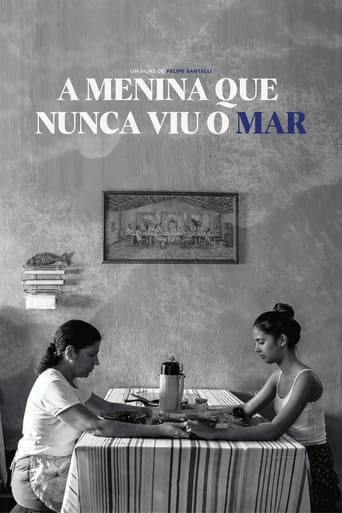
Iara, a girl who is about to come of age, dreams of seeing the ocean, but lives in Rio Grande do Norte's countryside with her mother, a woman who's dreams were swallowed by the waves and who fears of losing her daughter.
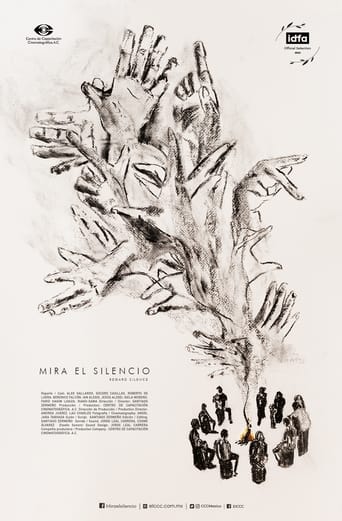
“I love poetry because it makes me feel like my mind expands.” In Regard Silence, that's the very first sentence expressed—in sign language of course. Watching the poems signed by deaf people in this film has a similarly mind-expanding effect. That’s because sign language—the Mexican version in this case—is a very different means of communication than written or spoken language.
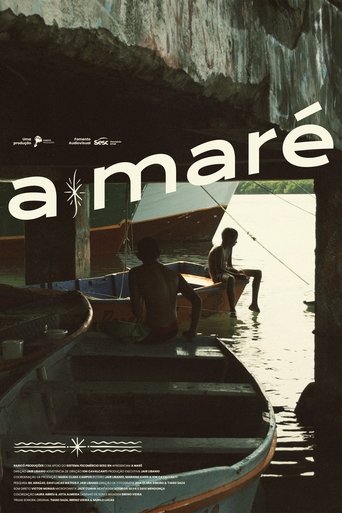
The stories told by those who live from the Rio Potengi reveal the rhythm of the tides, flowing through memories, silences, and the strength of a river that resists between the mangrove, time, and the city.
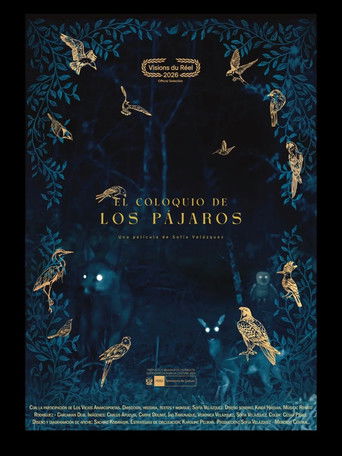
There was once a group of Peruvian anarchist poets forced into hiding who, during their secret meetings, sought to assume a non-human identity. Drawing on the famous Persian fable of the same name, the filmmaker translates the power of poetry and friendship into images and sound, serving as def iant stances against the established order.
On social media, Marcos can be whatever he wants. This can get out of control, as dependence increases and interest in reality decreases. Direction Kell Allen Road map Barbaro Xavier Photography Luiz Magnos Production John Evangelista Editing and editing Franklin Mateus Direct Sound and editing João Victor Dantas Executive production Barbaro Xavier Cast Barbaro Xavier John Evangelista Kell Allen Suzana Nascimento
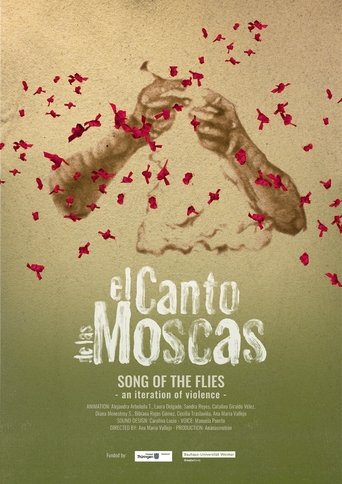
The experimental animated film Song of the Flies (El Canto de las Moscas), translates the desolation caused by the violence of the Colombian armed conflict through the poetic voice of Maria Mercedes Carranza (1945–2003) and the audiovisual dialogue between 9 Colombian women. In 24 places, as a transit over the course of a day (Morning, Day, Night) a map of terror is drawn where massacres took place in Colombia in the 1990s. Archival images, the artists’ personal memories and the use of loops and analogue materials bring to life the landscapes ravaged by violence and build a polyphony of memory and mourning, a universal song of pain.
94-year-old Eleanor Morgenstein tries to rebuild her life after the death of her best friend. As a result, she moves back to New York City after living in Florida for decades.
A troubled young woman becomes obsessed with her mysterious new neighbor, who bears a striking resemblance to the girl's dead mother.
A street smart runner develops an intense rivalry with an equally ambitious wealthy young athlete.
When Tragedy Strikes three Families, their Destiny forces them on a coverging path and mercy as the challenges of their fate could also resurrect their beliefs
The relationship of a couple who meet by chance in New York City is put to the test when they encounter a life or death circumstance.
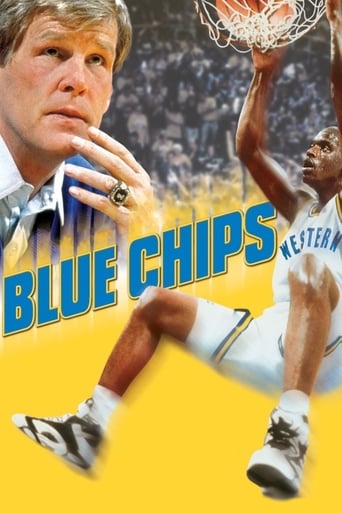
Pete Bell, a college basketball coach is under a lot of pressure. His team isn't winning and he cannot attract new players. The stars of the future are secretly being paid by boosters. This practice is forbidden in the college game, but Pete is desperate and has pressures from all around.
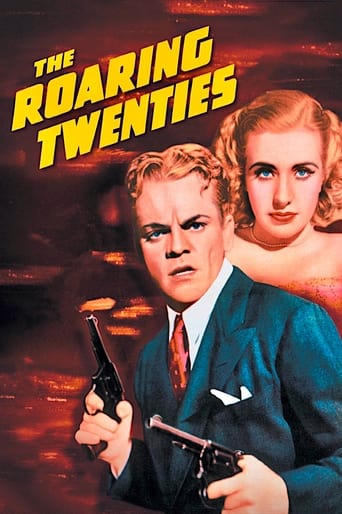
After World War I, Armistice Lloyd Hart goes back to practice law, former saloon keeper George Hally turns to bootlegging, and out-of-work Eddie Bartlett becomes a cab driver. Eddie builds a fleet of cabs through delivery of bootleg liquor and hires Lloyd as his lawyer. George becomes Eddie's partner and the rackets flourish until love and rivalry interfere.
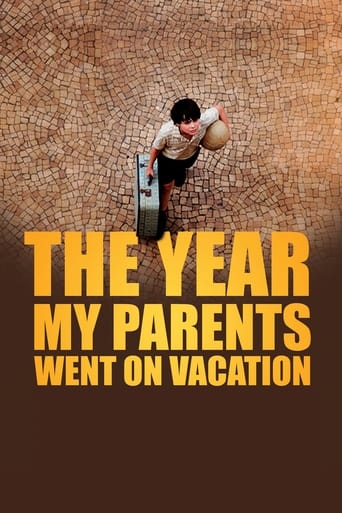
Zé is a very poor man whose most prized possession is his donkey. When his donkey falls terminally ill, Zé makes a promise to Saint Bárbara: If his donkey recovers, he will carry a cross - like Jesus - all the way from his city to Saint Bárbara's church, in the state capital. Upon the recovery of his donkey, Zé leaves on his journey. He makes it to the church, but the priest refuses to accept the cross once he discovers the context of Zé's promise.
An examination of the machinations behind the scenes at a real estate office. Unscrupulous salesmen try to hawk dubious real estate to suckers.
Russ Millings has just been released from prison after serving 21 years for a 3rd strike conviction for possessing an ounce of marijuana. As he tries to adapt to a world he doesn’t recognize – including trying to learn how to use the internet – he finds an abandoned baby in a dumpster behind the fast food restaurant where he works as a dishwasher. Unsure of what to do, and caught between impulses of kindness and panic, Russ soon realizes this could be his chance at redemption.
An uninterrupted rehearsal of Chekhov's 'Uncle Vanya' plays out by a company of actors. The setting: their run-down theater with an unusable stage and crumbling ceiling. The play is shown act by act with the briefest of breaks to move props or for refreshments. The lack of costumes, real props and scenery is soon forgotten.
An optimistic, talented teen clings to a huge secret: she's homeless and living on a school bus. When tragedy strikes, can she learn to accept a helping hand?
The year is 1955, and a great flood is coming to Northfork, Montana. A new hydroelectric dam is about to be installed in the mountains above the town, ready to submerge the valley in the name of progress. It is the responsibility of a six-man Evacuation Committee to relocate the townsfolk to higher ground. Most have duly departed, but a few stubborn stragglers remain – among them a priest caring for a sickly orphan, a boy whose fevered visions are leading him to believe he is a member of a roaming band of lost angels desperately searching for a way home.
Jamie Fitzpatrick and Nona Alberts are two women from opposites sides of the social and economic track, but they have one thing in common: a mission to fix their community's broken school and ensure a bright future for their children. The two women refuse to let any obstacles stand in their way as they battle a bureaucracy that's hopelessly mired in traditional thinking, and they seek to re-energize a faculty that has lost its passion for teaching.
The life story of Brazilian football legend, Pele.
At the end of WWII, Jimmy Picard, a Native American Blackfoot who fought in France, suffers from unexplainable symptoms and is admitted to a military hospital. When doctors suspect schizophrenia, an eccentric psychoanalyst takes up the case and starts a conversation with the veteran.
During the harrows of WWII, Jo, a young shepherd along with the help of the widow Horcada, helps to smuggle Jewish children across the border from southern France into Spain.
A young woman lives a life filled with bad choices. At a young age she marries and has a child--with an abusive thief who quickly ends up in prison. Left alone, she takes up with the guy's mate, another thief, who seems to give her some happiness but who also ends up locked up. She then takes up with a series of seedy types who offer nothing but momentary pleasure--if that.
The profound story of husband and wife Raynor and Moth Winn, who embark on a 630-mile trek after being forcibly removed from their home. Hoping that in nature they will find solace and a sense of acceptance, they walk through the beautiful but rugged coastlines of South West England - a journey that is exhilarating, challenging, and liberating in equal measure. THE SALT PATH is a powerful portrayal of home, and how it can be lost and rediscovered in the most unexpected ways.
Stephen Glass is a staff writer for the respected current events and policy magazine The New Republic and a freelance feature writer for publications such as Rolling Stone, Harper's and George. By the mid-90s, Glass' articles had turned him into one of the most sought-after young journalists in Washington, but a bizarre chain of events - chronicled in Buzz Bissinger's September 1998 Vanity Fair article - suddenly stopped his career in its tracks.