Social & External
Él mismo
Narrator dreams of Madrid while being caught in a repetitive loop somewhere in Paris. He questions if his interlocutor is a real human being, as their dialogue, mostly built of citations, doesn't seem to be helping with breaking the loop.
When looking at Pedro Almodóvar’s filmography, it becomes evident that women are everywhere; in fact, his work revolves around them. His divas are the best to create a real portrait of Almodóvar and evoke the emotional power of his films. These women are the ideal observers of a cinematic career that, from La Mancha to Hollywood, has changed the image of Spain in the world.
Born in Campo de Criptana, a small village in the Spanish region of La Mancha, Sara Montiel (1928-2013) conquered Mexico, Hollywood, and the hearts of people. The recognition of an unparalleled professional career, an intimate dialogue with a tireless worker who took the stage at the age of twelve and never got off. A movie star who seduced millions of viewers around the world, a singer who reinvented a musical genre, a woman who broke the mold…
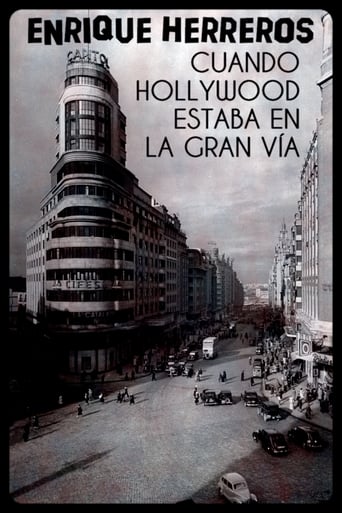
The story of Enrique Herreros (1903-1977), cartoonist, advertiser, poster designer, talent manager, actor, producer and filmmaker, and the most daring of mountaineers; the man who, along with his companions from the so-called “other Generation of '27,” brought Hollywood to Madrid's Gran Vía, turning a grey and sinister post-war city into the capital of an incipient and ambitious cultural industry.
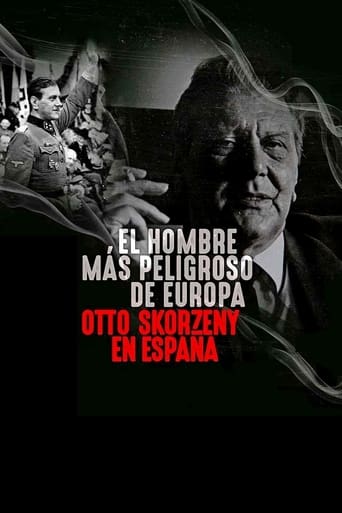
Waffen-SS officer Otto Skorzeny (1908-75) became famous for his participation in daring military actions during World War II. In 1947 he was judged and imprisoned, but he escaped less than a year later and found a safe haven in Spain, ruled with an iron hand by General Francisco Franco. What did he do during the many years he spent there?
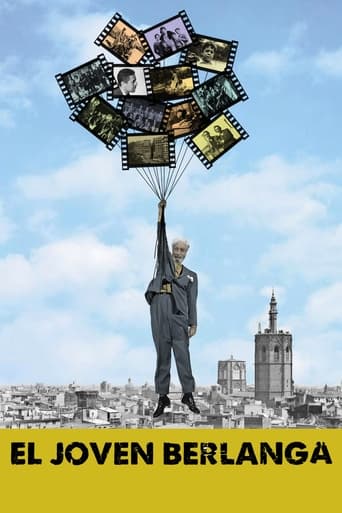
The early days of the future genius of Spanish cinema Luis García Berlanga, from his birth in Valencia in 1921 to his departure to Madrid in 1947 to become a filmmaker.
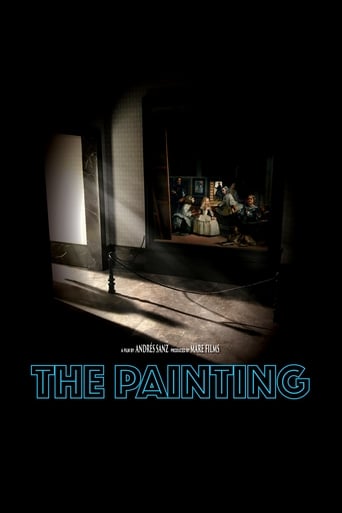
For three and a half centuries, from the same day that Diego Velázquez (1599-1660) applied his last brushstroke to the canvas, the enigma of “Las meninas, o La familia de Felipe IV” (1656) has not been deciphered. The secret story of a painting unveiled as if it was the resolution of a perfect crime.
Madrid, Spain, March 2020. As the merciless disease that plagues the world spreads through the increasingly deserted streets of the city, people barricades themselves in their homes and move on with their lives…
For the first time, an unprecedented journey into the life of Marco Pantini. Set against the backdrop of his beloved Cesenatico, with public and private archive material and intimate conversations with family members and close friends. With tenderness, empathy and love, The Natural tells the story, from the inside, of the man and the sportsman.
In 1968, Brazil’s military government convened the National Security Council to enact Institutional Act No. 5, ushering in the most violent period of the dictatorship. The meeting was recorded, but remained secret for decades. The filmmakers delved into the archives and now reveal the recordings.
Upon the outbreak of the Spanish Civil War in July 1936, the anarchist union CNT socialized the film industry in Spain, so in Madrid and Barcelona film workers took over the production assets and, between 1936 and 1938, numerous films on a wide variety of topics were released, composing a varied mosaic that gives rise to one of the most unusual and original moments of Spanish cinematography.
Short film about the spanish national photography prize winner Pablo Perez-Mínguez.
On the morning of 3rd March 2004, Spain experienced the worst terorist attack in Europe since the Lockerbie bombings of 1988. A series of explosions in Madrid killed 191 people and injured over 1, 500.
A series of visual paradoxes between the names of the streets of Madrid and those of the shops located in them.
The Spanish author Enrique Jardiel Poncela (1901-1952) was one of the best comedy writers of all time, a novelist and newspaper columnist, misunderstood, even censored, both by the Second Republic government and Francoism, an outsider ahead of his time; also a filmmaker and screenwriter in Hollywood, architect of a revolutionary theatrical building and scenographer, cartoonist and illustrator. An implausible genius.
Finally, 33 years later, the whole truth behind the attempted coup d'état that shook Spain on the afternoon of February 23, 1981, is revealed by those who lived through those dreadful hours; a deep look behind the heavy curtain which hides the real mastermind, waiting to be unmasked.
Morir en Madrid brings together several papers on the Spanish Civil War and integrates capturing different points of view, intended to represent the continuity of the suffering of the Spanish during the Franco regime. The death of Federico Garcia Lorca, Guernica, the defense of Madrid, the International Brigades, are some of the items comprised in this document.