Social & External
Sean and Adrian, a Two-Spirit couple, are determined to rewrite the rules of Native American culture through their participation in the “Sweetheart Dance.” This celebratory contest is held at powwows across the country, primarily for heterosexual couples … until now.
Lakota people from the Pine Ridge Indian Reservation and the Rosebud Indian Reservation in South Dakota describe the ongoing struggle of their people.
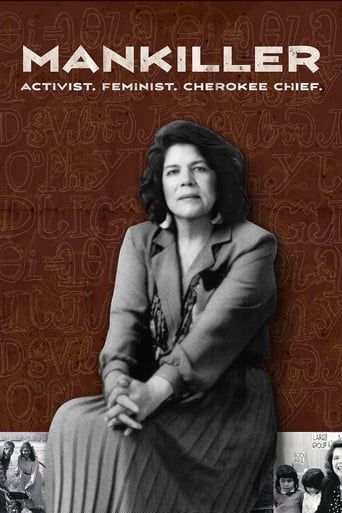
The story of an American hero and the Cherokee Nation's first woman Principal Chief who humbly defied all odds to give a voice to the voiceless.
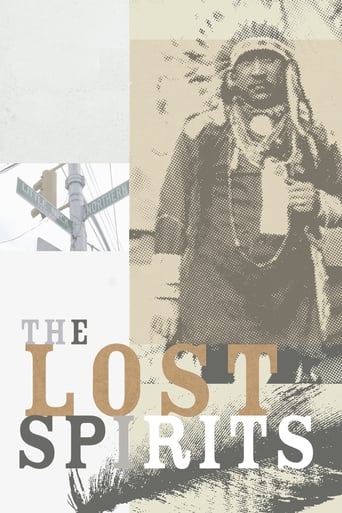
The last surviving Native Americans on Long Island are the focus of The Lost Spirits. The film chronicles their struggles as an indigenous people to maintain their identity amidst relentless modernization and a heartless bureaucracy.
Examines the impact a century of struggling for survival has on a native people. It weaves the Crow tribe's turbulent past with modern-day accounts from Robert Yellow-tail, a 97-year-old Crow leader and a major reason for the tribe's survival. Poverty and isolation combine with outside pressures to undermine the tribe, but they resist defeat as "Contrary Warriors," defying the odds.
A Danish writer travels to Mexico with the purpose of locating a mysterious Apache tribe that fervently seeks to remain in obscurity.
An experimental look at the origin of the death myth of the Chinookan people in the Pacific Northwest, following two people as they navigate their own relationships to the spirit world and a place in between life and death.
The American Southwest holds a dark legacy as the place where nuclear weapons were invented and built. Navajo people have long held this place sacred, and continue to fight for a future that transcends historical trauma. This is their story.
On May 16th, 2019, the State of Maine made history by passing LD 944 An Act to Ban Native American Mascots in All Public Schools, the first legislation of its kind in the country. For Maine's tribal nations, the landmark legislation marked an end to a decades long struggle to educate the public of the harms of Native American mascotry. Fighting Indians chronicles the last and most contentious holdout in that struggle, the homogeneously white Skowhegan High School, known for decades as "The Home of the Indians". This is the story of a small New England community forced to reckon with its identity, its sordid history, and future relationship with its indigenous neighbors. It is a story of a small town divided against the backdrop of a nation divided where the "mascot debate" exposes centuries old abuses while asking if reconciliation is possible.
This documentary addresses the legacy of the military dictatorship in Chile by sharing the story of young fighters killed by the Pinochet regime as a backdrop to the history of the military dictatorship and the ongoing social conflict in that area. The larger story unfolds in three shorter parts, which explore the student movement, the history of the towns that became centers of armed resistance against the dictatorship, and the indigenous Mapuche conflict.
Professional, native and antiquarian researchers combine to investigate the archaeological history and modern legacy of Eastern Native civilization near Turners Falls, Massachusetts. They uncover possible evidence of a vast astronomical construct that covered a large area of what is now the northeastern United States.
In the spring of 2005, Jim Miller, a Native spiritual leader and Vietnam veteran, found himself in a dream riding on horseback across the great plains of South Dakota. Just before he awoke, he arrived at a riverbank in Minnesota and saw 38 of his Dakota ancestors hanged. At the time, Jim knew nothing of the largest mass execution in United States history, ordered by Abraham Lincoln on December 26, 1862. Now, four years later, embracing the message of the dream, Jim and a group of riders retrace the 330-mile route of his dream on horseback from Lower Brule, South Dakota to Mankato, Minnesota to arrive at the hanging site on the anniversary of the execution. This is the story of their journey - the blizzards they endure, the Native and Non-Native communities that house and feed them along the way, and the dark history they are beginning to wipe away.
Documents the cultural and ecological impacts of coal stripmining, uranium mining, and oil shale development in Utah, Colorado, New Mexico, and Arizona – homeland of the Hopi and Navajo.
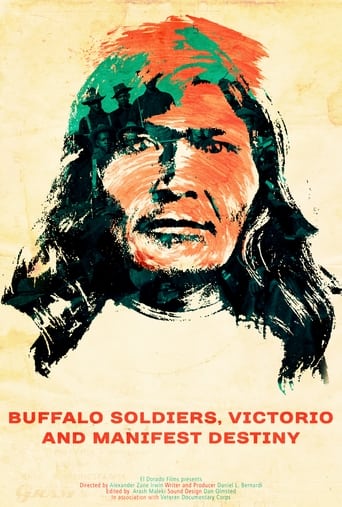
Legendary Apache warrior Geronimo was loved by his people for his fierce courage while pioneers feared him as a cold-blooded murderer. This program searches for the truth behind the myth through the use of memoirs, letters, photographs and interviews with the descendants of those who fought alongside Geronimo. Learn the mysteries of the Apache tribe that helped them stand up to any outside threats and escape danger.
In decades past, Native American artists who wanted to sell to mainstream collectors had little choice but to create predictable, Hollywood-style western scenes. Then came a generation of painters and sculptors led by Allan Houser (or Haozous), a Chiricahua Apache artist with no interest in stereotyped imagery and a belief that his own rich heritage was compatible with modernist ideas and techniques. Narrated by actor Val Kilmer and originally commissioned as part of an exhibit of Houser’s work at the Oklahoma History Center, this program depicts the artist’s tribal ancestry, his rise to regional and national acclaim, and the continuing success of his sons as they expand upon and depart from their father’s achievements. Key works are documented, as is Houser’s tenure at the Santa Fe–based Institute of American Indian Arts.
An intimate and thrilling portrait of a young Siksika woman and the deep bonds between her father and family in the golden plains of Blackfoot Territory as she prepares for one of the most dangerous horse races in the world… bareback.
Red Fever is a witty and entertaining feature documentary about the profound -- yet hidden -- Indigenous influence on Western culture and identity. The film follows Cree co-director Neil Diamond as he asks, “Why do they love us so much?!” and sets out on a journey to find out why the world is so fascinated with the stereotypical imagery of Native people that is all over pop culture. Why have Indigenous cultures been revered, romanticized, and appropriated for so long, and to this day? Red Fever uncovers the surprising truths behind the imagery -- so buried in history that even most Native people don't know about them.
In this evocative meditation, a disturbing link is made between the resource extraction industries’ exploitation of the land and violence inflicted on Indigenous women and girls. Or, as one young woman testifies, “Just as the land is being used, these women are being used.”
A chronicle of legendary Native American poet/activist John Trudell's travels, spoken word performances, and politics.
Black Snake Killaz is a feature-length documentary film about the resistance to the Dakota Access Pipeline. This film explores actions taken by water protectors to stop the construction of the oil pipeline and highlights actions taken by law enforcement, military, and corporate mercenaries to quell the months-long protest. Black Snake Killaz timelines the historical events that unfolded in Standing Rock throughout 2016 and brings you the raw experience from many frontline actions to protect the water. Although the Dakota Access Pipeline is completed, the impact of the movement will be long-lasting. As fossil fuel extraction projects continue to impact some of the most vulnerable communities throughout the United States of America, the importance of the water protectors story grows.