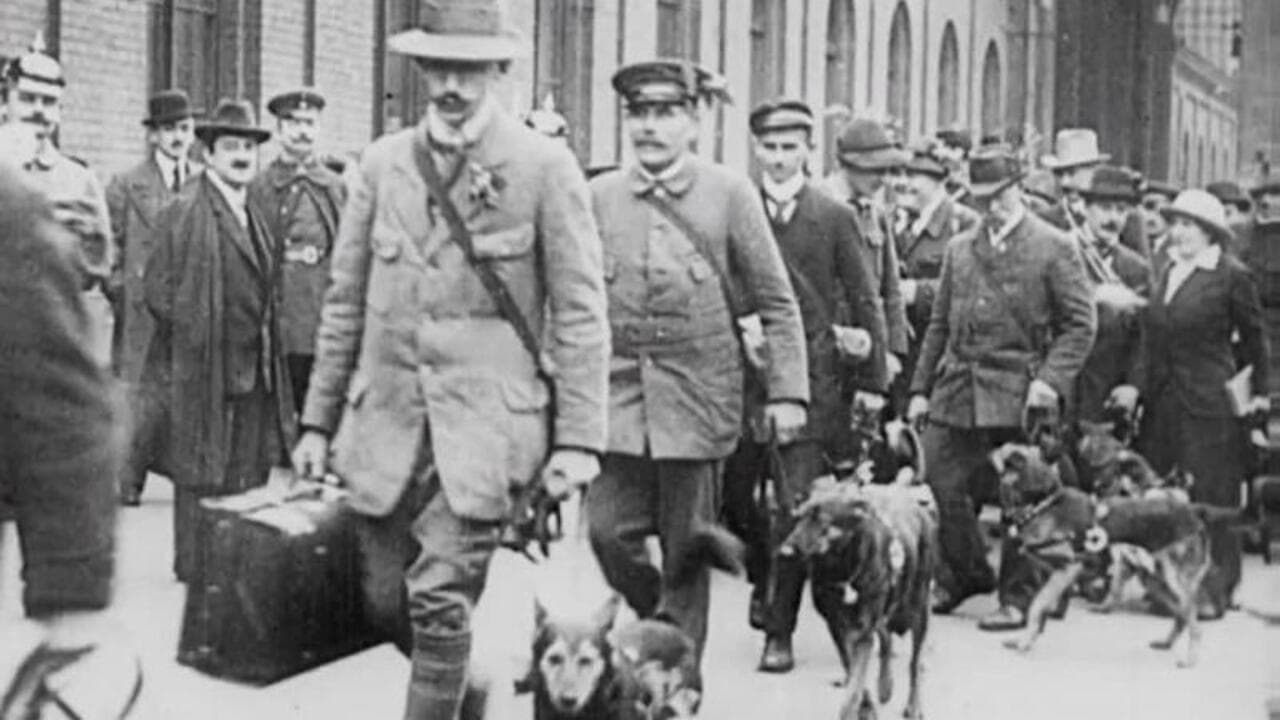
Talented and obedient Red Cross dogs prepare to rescue Berlin's wounded from the Front.
Social & External
The events in Sarajevo in June 1914 are the backdrop for a thriller directed by Andreas Prochaska and written by Martin Ambrosch, focusing on the examining magistrate Dr. Leo Pfeffer (Florian Teichtmeister) investigating the assassination of Archduke Franz Ferdinand. Trying to do his job in a time of lawlessness and violence, intrigues and betrayal, Leo struggles to maintain his integrity and save his love, Marija, and her father, prominent Serbian merchant. But the events of Sarajevo have set into motion an inescapable course of events that will escalate to become … the Great War.
August 1914. While the German army is gaining ground in the North of France, four boys aged 10 to 15, LUcien, LUcas, LUigi and LUdwig are left behind during the evacuation of their orphanage. Without the protection of Abbé Turpin and the schoolteacher Leutellier, the Lulus are now stranded on their own behind the enemy front line. Soon joined by LUce, a pretty young girl separated from her parents, they decide to reach the neutral country of Switzerland by all means possible... they embark on an adventure for which nothing and no one has prepared them!
The story of the film is about the Gallipoli Campaign during World War I on the Gallipoli Peninsula in Turkey in 1915. The film covers the resurrection of Turkey following its defeat in the Balkan War, through depictions of Sergeant Mehmet Ali (Ali Ersan Duru) from Biga, Corporal Seyit and many others. To help Russia and threaten Constantinople, the Allies try to force through the Dardanelles Straight with a large fleet. Through a series of historical sketches, the film documents how they were defeated despite many difficulties and hardships.
A fascinating insight into the role of the bicycle in the First World War - from reconnaissance to transporting ammunition, historian and cycling enthusiast Jeremy Banning explores stories from the battlefield. Ollie Bridgewood discovers the role cycle scouts played in the Army Cycling Corp and rides the original bikes used in the conflict. Mark Beaumont meets the grandson of a WW1 soldier who rode for the Highland Cyclist Battalion and survived brutal combat on the front line.
Jozo and Mujo are mobilized in the Austro-Hungarian Army. Reluctantly drawn into the war they make a bond of unbreakable friendship. To realize the plan to leave hated Army, Jozo are pretending to be deaf and dumb. But his firm determination comes into question when his friend's life comes into mortal peril.
In 1915, two Turks in Australia make a living by selling ice cream. When they hear war has broken out, they decide to go to Çanakkale. Authorities don't let them leave the island, so the two decide to put up a fight in Australia.
Martin Clunes explores the secret lives of Britain’s heroic army of guide dogs, inspired by a podcast story of a blind woman whose life had been changed by her guide dog but who now faces the daunting task of finding a new dog.
Young Terwilliger, an orphan boy in New York City, "adopts" Old Archer, the caretaker of Gramercy Park, after the man is arrested for beating Terwiliger for picking a flower for his dead mother. As Terwilliger grows up, he falls in love with Helen Raymond, a pretty neighborhood girl, but finds a rival for her in Harvey Livermore. When World War I breaks out both boys enlist in the army and are sent to the front lines. Complications ensue.
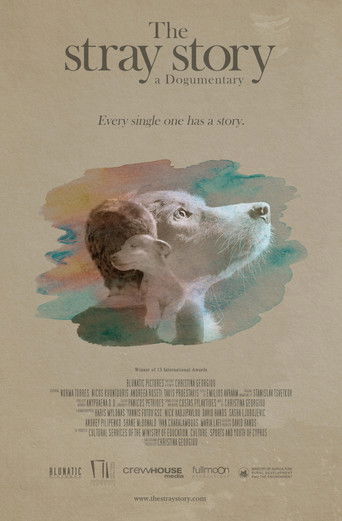
Starting from Claudia's incredible connection with dogs, the relationship she has with her past and the changes she experiences thanks to these animals are explored. The daily activities of the shelter where she volunteers are shown, and Blanca, the shelter's owner, highlights the difficulties they face in keeping the place running.
Two modern Red Arrows pilots take on the challenges faced by World War I pilots by performing photo reconnaissance, artillery ranging, and bombing missions in period aircraft - culminating in a classic dogfight.
Zoo-archeologists, biologists, ethologists and geneticists are leading the investigation. For one thing is certain, the dog is still far from revealing all its secrets.
Destitute in a crater in the heart of no man's land, two men await their fate as soldiers and human beings amid a great war of conscience.
Called a maverick, a miracle-worker, and a quack, Dr. Marty Goldstein is a pioneer of integrative veterinary medicine. By holistically treating animals after other vets have given up, Goldstein provides a last hope for pet owners with nothing left to lose.
In the Škoda factory, where they are feverishly rearming in 1914, works the foreman Kalina, the father of the young men Pavel and Jan. Pavel is a supporter of the monarchy, while Jan, on the contrary, defends the idea of our national independence. Just before mobilization, Jan escapes to Russia, where he joins a group of volunteer legionnaires called the "Czech Company", fighting against the Austro-Hungarian monarchy. Pavel enlists in the Austrian army. The brothers do not meet again until July 1917 in the battle of Zborov in Ukraine, which marked a successful breakthrough of the Austro-Hungarian front.
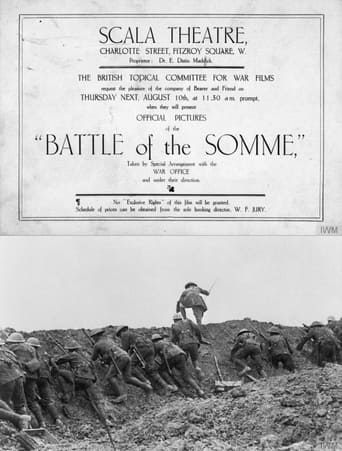
The 1916 Battle of the Somme remains the most famous battle of World War I, remembered for its bloodshed and its limited territorial gains. What is often overlooked, however, is the literary importance of the Somme: more writers and poets fought in it than in any other battle in history. Narrated by Michael Sheen, War of Words: Soldier-Poets of the Somme details the experiences of the poets and writers who served in the battle. The work of Siegfried Sassoon, Robert Graves, David Jones, Isaac Rosenberg and JRR Tolkien (who arrived at the Western Front with ambitions to be a poet) was informed and transformed by the battle. Taken together, their experiences allow us to see this dreadful historical event through multiple points of view. The film uses animation, documentary accounts, surviving artefacts, battalion war diaries and the landscape itself to reconnect this literature to the events that inspired it.
It is 1911 when the birth of Aviation happens in Siam. Siam is the first country to start an aviation program in Asia. A program to train Thai pilots to fight in World War I by the side of the Allies, but after having several setbacks, will they prove to be qualified enough to go to war as not everyone in Siam believes in it?
Germans colonized the land of Namibia, in southern Africa, during a brief period of time, from 1840 to the end of the World War I. The story of the so-called German South West Africa (1884-1915) is hideous; a hidden and silenced account of looting and genocide.