Pilot chapter of the film series 'Ikuska', a compilation of shorts on the Basque Country’s culture and politics. A documentary about the referendum on the Spanish constitution.
Social & External
An attempt to create a bridge between the different political positions that coexist, sometimes violently, in the Basque Country, in northern Spain.
Departing from peripheral details of some paintings of the Bilbao Fine Arts Museum, a female narrator unravels several stories related to the economic, social and psychological conditions of past and current artists.
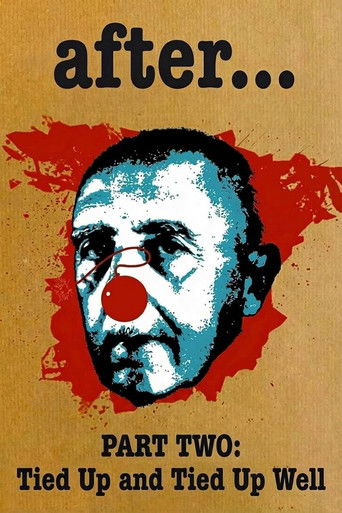
Spanish jurist and republican thinker Antonio García-Trevijano (1927-2018) expounds his political thought and reflects on the recent political history of Spain.
Quebec, on the cusp of the 1960s. The province is on the brink of momentous change. Deftly selecting clips from nearly 200 films from the National Film Board of Canada archives, director Luc Bourdon reinterprets the historical record, offering us a new and distinctive perspective on the Quiet Revolution.
A serious crisis has shaken Spain since the referendum on self-determination and the proclamation of the independence of Catalonia by the government of Carles Puigdemont, bold actions firmly fought by the Spanish government by applying the constitutional article that allows it to place a region under guardianship. While Spain is on the verge of implosion, Europe is holding its breath.
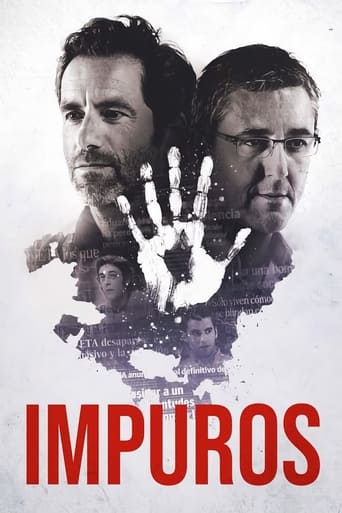
At just 17 years old, Eduardo Madina and Borja Semper decided to enter politics to defend freedom of thought in the Basque Country. This made them a target of the ETA terrorist group for almost two decades.
Spain, 1975. Franco's death opens the door to the possibility of uncensored cinema. After two years of relaxed censorship, it is abolished in 1977, and the “S” rating is created to protect viewers from films that may “offend their sensibilities.”
The story of iconic Spanish artist Susana Estrada's struggle against censorship and sexual repression during the turbulent years following the death of dictator Francisco Franco.
Donostia-San Sebastián, Basque Country, Spain, 2011. Maider, a filmmaker, moves to the very same flat where pedadogist Elbira Zipitria Irastorza (1906-1982) clandestinely established the first ikastola, a Basque school, under the harsh regime of dictator Francisco Franco. Despite of her pioneering work, developed throughout thirty years, her story is not well known, so Maider, intrigued, begins to research…
Not unlike the travel blogs so in vogue today, this film takes us from Ereaga beach to Cape Matxitxako, treating us to an incomparable look at the beaches and towns on the way.
A peculiar in-depth reflection on the concept of homeland reflecting the atmosphere of Basque farmhouses with the participation of emblematic figures in the Basque culture of the period, like the bertsolaris (improvisers of Basque verse) Valentin Enbeita and Jon Lopategi and the Basque dancer Victor Olaeta. To avoid the censorship in place at the time, Elortza entitled the film 'Erria' (Country) rather than 'Aberria' (Homeland).
With a national vote approaching to enshrine Indigenous peoples voice in the constitution, a dynamic Indigenous youth group travel on a pilgrimage across Australia to commemorate a historic civil rights victory. Buoyed by the imminent referendum, the group voyage through ephemeral Australian landscape in the microcosm of a minibus, sharing the rich, multilayered stories of their personal histories, as they dream up a hopeful new vision for Australia. As the results of the vote are counted, it’s impact on their future offer two paths – a hopeful breakthrough or another chapter in the long fight for recognition.
The film follows five people from different origins as they move anonymously around the streets of Berlin. Each of them with another life somewhere else, trying to ascertain where to go.
Forty years later, Guillermo Montesinos, the actor who played José María el Cepa in The Cuenca Crime (1980), directed by Pilar Miró, returns to the various locations where the shooting of the mythical film, narrating the infamous Grimaldos case (1910), took place.
San Sebastián de los Reyes Bullring, Madrid, Spain, March 27, 1977. In response to the strange political alliances that were taking place between antagonistic forces in search of a self-serving consensus, the anarcho-syndicalist union CNT organizes a rally to denounce the reprehensible machinations of its adversaries. (Documentary shot in 1977; edited and released in 2011).
This documentary updates the life experiences of victims of ETA terrorist activity, twenty years after the multi-award-winning documentary Sin libertad (Without Freedom, 2001). With an experimental intent, it seeks to link the present and the future through five young journalism students in their twenties who have not experienced ETA terrorism and are responsible for interviewing the victims.
In 2007, Ecuadorian President Rafael Correa proposed not to exploit the ITT block in the Yasuní National Park in exchange for $3.6 billion in international compensation. However, rising oil prices led to the reactivation of the project in 2013. The film documents the struggle of the Yasunidos group to call for a referendum to reverse the exploitation. The documentary, through archival material and current recordings, follows the effort and the legal battle against corporate interests throughout three governments, left and right. The documentary is part of a diptych with Toroboro: the name of the plants.
Spain. 1978. Year of the first democratic elections following the dictatorship, and of the birth cine quinqui (delinquent movies): films that rapidly became a big commercial success, showing things that were banned by the censorship not too long before.