Social & External
Henri Krasucki
Pierre Thomas
Jean Auroux
On May 1st, unions all over Japan celebrate May Day, the international day for workers. Workers gather together at parks and hold demonstrations and parades. May Day has its origins in a strike that occurred in the United States on May 1, 1886, a strike that called for an eight-hour workday. Prokino recorded the May Day every year from 1927 to 1932. Among these films, this work is the only one that has survived. However, only its first part has survived. The original film depicts the march to the Ueno Park where the rally was dismissed. Iwasaki Akira coordinated the entire Tokyo Prokino organization as it photographed the 1931 May Day celebrations. They shot in both 16mm and 35mm (other 35mm productions were planned, but this is the only one that achieved completion). A 16mm print was circulated around the countryside by mobile projection units, and a 35mm print was shown at Soviet film nights in Tokyo and Osaka.
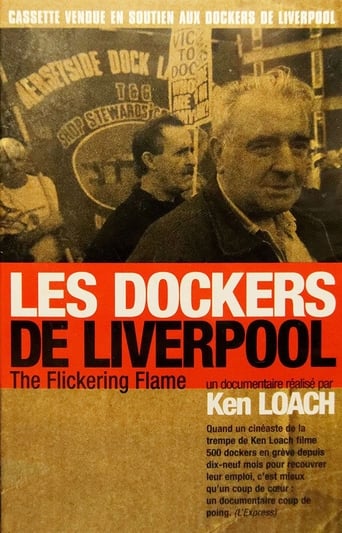
Documentary following dockers of Liverpool sacked in a labour dispute and their supporters’ group, Women of the Waterfront, as they receive support from around the world and seek solidarity at the TUC conference.
During World War II, many Japanese immigrants in Santos, Brazil, were forced to move to another place. Matsubayashi draws attention to the fact that 60% of the immigrants were from Okinawa. Based on testimonies from interviewees, this film reveals the hidden historical relationship between Okinawa and Brazil.
Sometime, Somewhere sheds light on the challenges faced by Latino communities in Charlottesville, Virginia against the backdrop of immigration driven by factors like climate change, poverty, and drug-related violence.
The encounter with a growing, and mostly undocumented, brazilian community allows us to bear witness to its energy, its vivacity, and its diversity. This film attempts to work for a larger acceptance of foreigners in their land of exile.
The Dawn is Too Far: Stories of Iranian-American Life poetically narrates the story of a community of Iranian Americans who have made the San Francisco Bay Area their home over the past five decades. The film explores Iranian immigration through turbulent histories of dissent, revolution, war, and separation, and the reinvention of identity in a new land and culture. The Dawn is Too Far highlights how Iranian students, activists, and artists have navigated displacement while drawing on and influencing Bay Area culture. This community offers a more nuanced story of the Iranian diaspora—the ways that this community enriches the region where they live, work, and build families. The Dawn is Too Far undermines the tired and overplayed news headlines that are dominated by narratives of enmity and mistrust between the government of Iran and the U.S., to offer a more humane understanding of the how people's lives and the sacrifices they make are part of the larger story of immigration.
The Cossack and the Gypsy takes us to the heart of intimate worlds of Lev Chayka and Régine Gabrysz, illustrating their memories, interior views composed of the stories about their childhood and devotion to their country of origin (Ukraine and Soviet Union). The wars and dictatorship of the past in the Eastern Europe is set in contrast with the Far North of Quebec in a forgotten boom town. Vera and Jack, the last miner, Régine and Lev are among the last first immigrants. Their Slavic voices and accents still lull the Abitibi sonorous landscapes, but for how long...
A documentary film that follows the lives of first-generation retired immigrants living in Finland.
In his second international bestseller, "Arc de Triomphe," author Erich Maria Remarque explores his own experience of exile and his decisive encounter with Marlene Dietrich. From Paris and Antibes to Los Angeles and New York, the documentary traces the moving genesis of this highly autobiographical novel, now considered a major work of European exile literature, and the literary legacy of the long-standing passion between two global stars.
This is the story of an ordinary man transformed by history. A simple baker from Besançon who became a political symbol of resistance. That of a France that knows how much it needs others to grow. Of working classes rejecting the siren calls of populism. He says: "I was nothing and I became a monster" to express the vertigo of his transformation. And so the baker entered politics, visited the United States in the footsteps of Martin Luther King, brought aid to the Ukrainians, and ran for legislative elections. Fearless. Fighting with all his heart. It is this inspiring, touching, and funny human epic that Pedro da Fonseca's camera followed closely, capturing his doubts, his hesitations, and his emotions.
A poetic retelling of the experiences of Joseph Murakami, a fourteen-year-old boy from Darwin, who is summarily rounded up and interned by his government on the basis of his ethnicity, leaving wounds unhealed to this day.
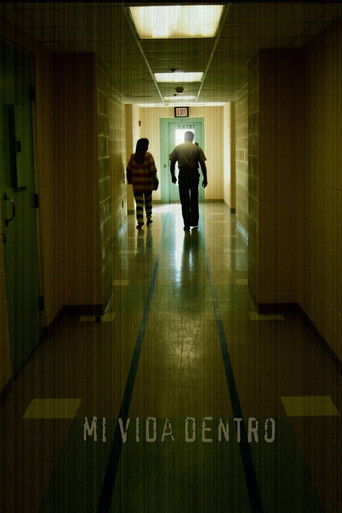
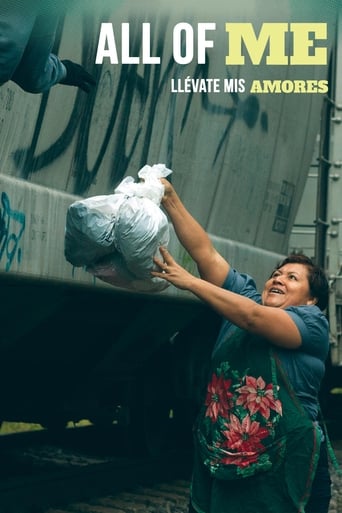
Rosa is a Mexican woman who, at the age of 17, migrated illegally to Austin, Texas. Some years later, she was jailed under suspicion of murder and then taken to trial. This film demonstrates how the judicial process, the verdict, the separation from her family, and the helplessness of being imprisoned in a foreign country make Rosa’s story an example of the hard life of Mexican migrants in the United States.
The Fall of the I-Hotel brings to life the battle for housing in San Francisco. The brutal eviction of the International Hotel's tenants culminated a decade of spirited resistance to the razing of Manilatown. The Fall of the I-Hotel works on several levels. It not only documents the struggle to save the I-Hotel, but also gives an overview of Filipino American history.
Documentary that shows the changing attitude towards immigrant labor in The Netherlands. The documentary follows three immigrants that arrived in Holland 30 years ago to work in a bakery.
Twenty-five films from twenty-five European countries by twenty-five European directors.
When 90% of Iceland’s women walked off the job and out of their homes one morning in 1975, they brought their country to its knees and catapulted Iceland to the forefront of today's global fight for gender equality. Unexpectedly funny, laced with evocative animation and powerfully told by the women who lived it – this is the true story of 12 hours that launched a revolution.
Set during the Lebanese revolution, WE NEVER LEFT portrays a heart-wrenching duality between Beirut and New York, an impassioned testament to the Lebanese diaspora’s unrequited but irrepressible love for their homeland.
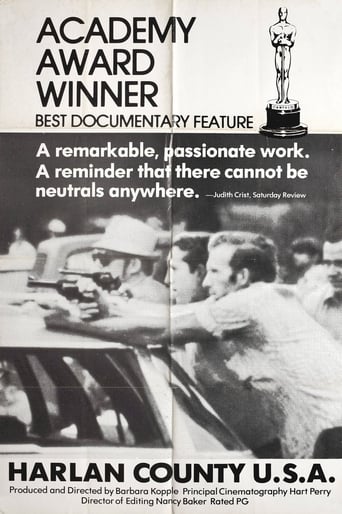
This film documents the coal miners' strike against the Brookside Mine of the Eastover Mining Company in Harlan County, Kentucky in June, 1973. Eastover's refusal to sign a contract (when the miners joined with the United Mine Workers of America) led to the strike, which lasted more than a year and included violent battles between gun-toting company thugs/scabs and the picketing miners and their supportive women-folk. Director Barbara Kopple puts the strike into perspective by giving us some background on the historical plight of the miners and some history of the UMWA. Preserved by the Academy Film Archive in partnership with New York Women in Film & Television in 2004.
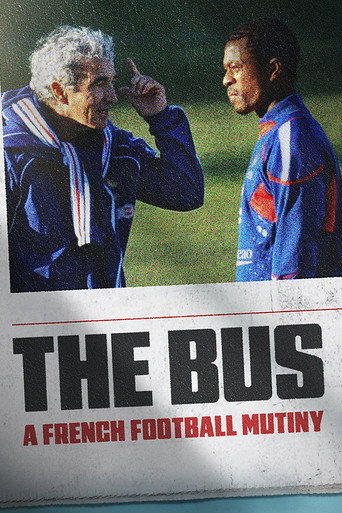
This documentary revisits the French football team's controversial 2010 World Cup and the bus strike that sparked global headlines and national outrage.
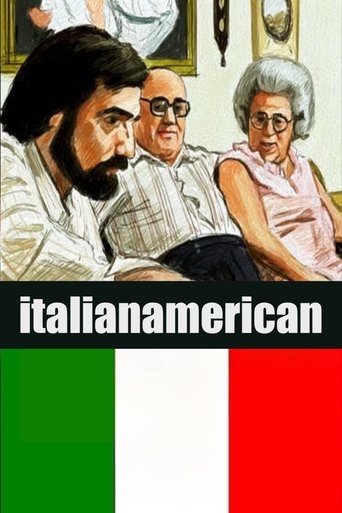
Filmmaker Martin Scorsese interviews his mother and father about their life in New York and family history back in Sicily.
Through deeply personal interviews with her siblings and an examination of the photographs, letters, and belongings left behind, Mariska assembles a new portrait of her mother Jayne Mansfield, an extraordinary and complex woman.
Those who knew iconic funnyman John Candy best share his story, in their own words, through never-before-seen archival footage, imagery, and interviews.
This documentary focuses on the actors and their journey over two summers to create the remake to the original IT, by Stephen King. The documentary originally released as bonus material, bundled with IT: Chapter Two.
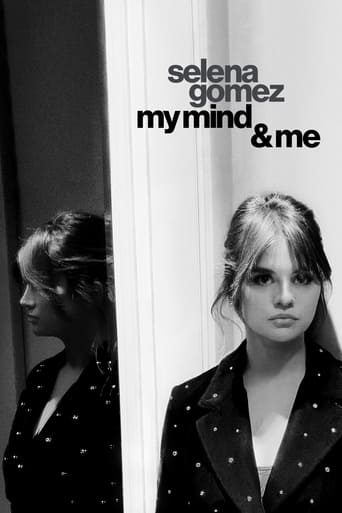
After years in the limelight, Selena Gomez achieves unimaginable stardom. But just as she reaches a new peak, an unexpected turn pulls her into darkness. This uniquely raw and intimate documentary spans her six-year journey into a new light.
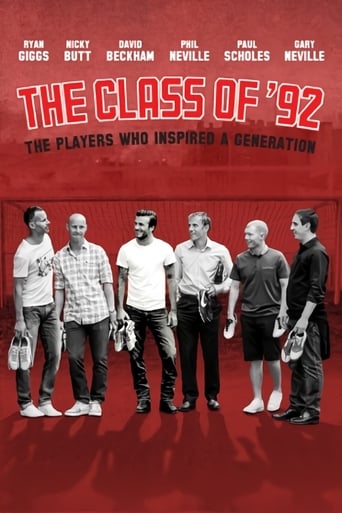
A detailing of the rise to prominence and global sporting superstardom of six supremely talented young Manchester United football players (David Beckham, Nicky Butt, Ryan Giggs, Paul Scholes, Phil and Gary Neville). The film covers the period 1992-1999, culminating in Manchester United's European Cup triumph.
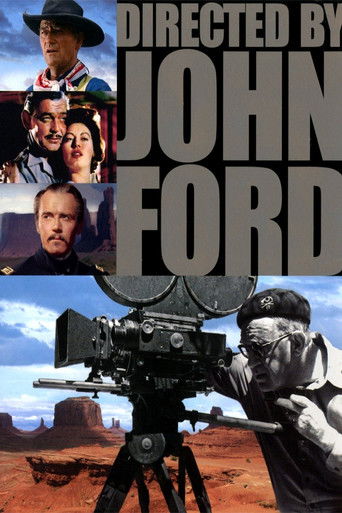
A documentary about the life and films of director John Ford.
The film follows adventurer Jeff Johnson as he retraces the epic 1968 journey of his heroes Yvon Chouinard and Doug Tompkins to Patagonia.
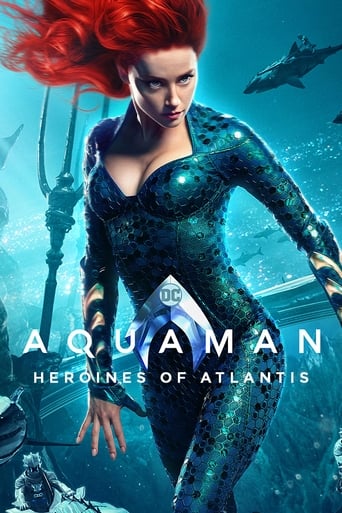
Amber Heard and Nicole Kidman discuss their characters Mera and Atlanna.
In 1999, Internet entrepreneur Josh Harris recruits dozens of young men and women who agree to live in underground apartments for weeks at a time while their every movement is broadcast online. Soon, Harris and his girlfriend embark on their own subterranean adventure, with cameras streaming live footage of their meals, arguments, bedroom activities, and bathroom habits. This documentary explores the role of technology in our lives, as it charts the fragile nature of dot-com economy.
Raise the voice, speak eloquently, construct and argue a discourse. Tools so necessary in life as exciting to build. In Paris, the date of Eloquentia, an oratory contest where young people —not exactly privileged— will measure their strength, is approaching.
From a prolific career in film and television, Anton Yelchin left an indelible legacy as an actor. Through his journals and other writings, his photography, the original music he wrote, and interviews with his family, friends, and colleagues, this film looks not just at Anton's impressive career, but at a broader portrait of the man.
A documentary on the expletive's origin, why it offends some people so deeply, and what can be gained from its use.
In post-industrial Ohio, a Chinese billionaire opens a new factory in the husk of an abandoned General Motors plant, hiring two thousand blue-collar Americans. Early days of hope and optimism give way to setbacks as high-tech China clashes with working-class America.
JB Smoove and Martin Starr host a celebration of 20 years of "Spider-Man" movies, from the Sam Raimi trilogy to Marc Webb's movies and the trio from Jon Watts.
Al Pacino's deeply-felt rumination on Shakespeare's significance and relevance to the modern world through interviews and an in-depth analysis of "Richard III."
A compilation of over 30 years of private home movie footage shot by Lithuanian-American avant-garde director Jonas Mekas, assembled by Mekas "purely by chance", without concern for chronological order.
A dreamlike conversation with the past and the present, reimagining Latasha Harlins' story by excavating intimate memories shared by those who loved her.