Social & External
The film is close to the experiences of men and women forced to survive on the streets of São Paulo in the early 1990s, a time of deteriorating living conditions for workers, high unemployment and increasing urban poverty. Between approaching the problem as something structural and a sensitive look at the characters, the documentary portrays the lives of people who lost their work, distanced themselves from their affections and saw their identity disintegrate.
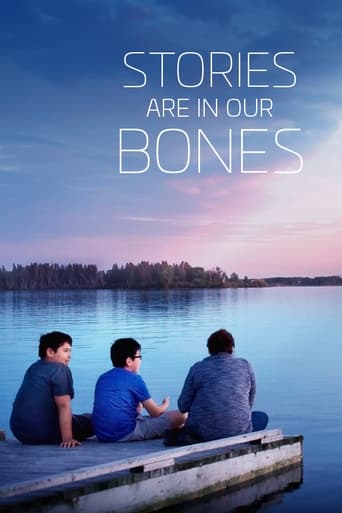
In this layered short film, filmmaker Janine Windolph takes her young sons fishing with their kokum (grandmother), a residential school survivor who retains a deep knowledge and memory of the land. The act of reconnecting with their homeland is a cultural and familial healing journey for the boys, who are growing up in the city. It’s also a powerful form of resistance for the women.
Whenever a mother asks, there is an obligation to look for an answer, whatever it takes… Spurred by the economic crisis, with no job, with no projects in sight and unable to afford the due payments on my mortgage, I leave my house in the city and go back to the village where I was born, to my octogenarian parents’ home. My mother does not understand what is happening and is looking for answers that I must find, even if I need to tramp half of the world.
A documentary that takes an in depth look at a government sanctioned art school in Cuba and its students. Interviews of various artists attending the school allow viewers a glimpse into their personal and professional lives.
From the shadows of a Guatemalan neighbourhood scared into silence, two sisters lead a luminous rebellion—unleashing joy, art, and radical truth in a fight for survival.
A tender exploration of friendship, identity, and transformation, this film follows Brahel and Andoeni, who met as children and grew up together in Guadalajara. Though their romantic relationship eventually ended, their deep friendship endured. Years later, after Brahel’s gender transition, the two reconnect and rediscover their bond. Through a rich tapestry of archival footage, music, intimate moments, and unspoken emotions, the narrative unfolds as a heartfelt journey of reconnection, vulnerability, and lasting affection.
A look at the daily life of midwives across Quebec.
Their words had never been heard before. Co-directed by French-Rwandan musician and author Gaël Faye and director Michael Sztanke, this movie records with sensitivity and for the first time the testimonies of Prisca, Marie-Jeanne and Concessa about their lives during the genocide and after. The three Tutsi women tell the camera about their daily lives during the genocide and in the refugee camps of Murambi and Nyarushishi, where they lived a nightmare under the guard of the French soldiers of the Opération Turquoise who, under a UN mandate, where supposed to protect them. While the French army denies any rape accusation, the three women filed complaints with the French justice system in 2004 and 2012. The investigation is now at a standstill.
After four years away, Huiju returns home to South Korea. Exchanges with her loved ones are awkward and clumsy. Huiju turns once again to her familiar rituals: pruning the trees, preparing a sauce, tying a braid.
In her attempt to escape her past, Huiju relocated to the UK over 11 months ago. However, even after moving to a new country, she found that her nightmares from Korea continued to haunt her. Determined to move forward, she made the decision to confront her memories head-on in a very contemporary way, using dating apps to push the boundaries she had set due to her sexual trauma.
Through the unsolved murder of Ulises Nava in the midst of conservative political environment of Aguascalientes, the power of beliefs, tradition and colective hatred is showcased.
Departing from peripheral details of some paintings of the Bilbao Fine Arts Museum, a female narrator unravels several stories related to the economic, social and psychological conditions of past and current artists.
Through intimate stories and day-to-day routines we get a naturalistic glimpse into the lives of individuals with disabilities in the bustling urban landscape of São Paulo. The film captures personal moments and how modern societies confront (or fail to confront) ableism and inclusion.
Fabrizio, Dante and Roberto have 14 years old and they live in Palermo in the ZEN. How is their life, their universe?
In this 21st century, under the cloak of capitalism, governments, and other systems by which society is governed, this short film shows the true social reality of many people “on the street”.
This feature-length film tells the story of the passion between Marie de l’Incarnation, a mid-seventeenth-century nun and God, her "divine spouse." Fusing documentary and acting by Marie Tifo, whom we follow as she rehearses for this demanding role, the film paints an astonishing portrait of this mystic who abandoned her son and left France to build a convent in Canada, where she became the first female writer in New France.
Documentary about sexual harassment and rape cases in French Universities and Superior Education. Many women come forward about their personal cases and how, despite the many reports, barely no action is taken.
Nose and Tina are a couple in love. The film captures the domestic details of their life together and documents their hassles with work, money and the law. The unusual bit: He is employed as a brakeman, and she as a sex worker.