The story of computers: from electronic tape and punched cards, to austere-looking robots.
Social & External
Self - Commentator
What is Bitcoin? With the advent of Bitcoin, the world's first digital currency, for the first time in history money is no longer controlled by banks or governments, but by the people who use it. But where did this currency come from? How does it work? And is it truly the way forward, or just a flash in the pan? Magic Money answers these questions and more as it explores the mysterious origins of Bitcoin, its role in society, and how it could shape the future.
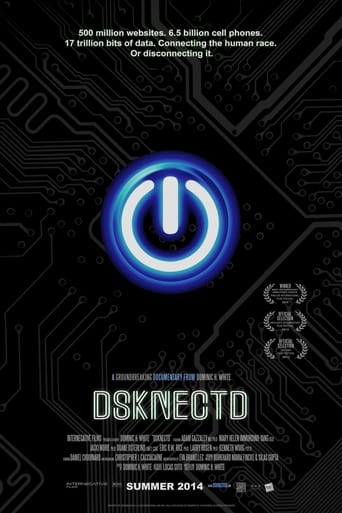
As clichés go, in 1999 the World as we knew it was about to change - and we'd been expecting it. Since childhood we'd been promised that the 21st century would bring us dramatic new technologies like flying cars and Utopian cities. Instead it bought us the smart-phone, social media, and virtual societies. And as it turns out these technologies began to transform society almost as dramatically as the moon colonies we'd been expecting. Now over a decade into the revolution, 'DSKNECTD' explores how digital communication technology is profoundly changing the way we interact and experience each other - for the good and for the bad.
A story about the world's best Cyber spies. Their training in Israel's military, and their impact on the world we live in.
Familiar radio voice Ben Grauer leads the viewer on a behind the scenes tour of the National Broadcasting Company studios -- both radio and television -- in Rockefeller Center and Hollywood. The original 25-minute film previewed by network execs and affiliates in the fall of 1948 was cut down to 20 minutes before its first broadcast, reportedly to excise high-profile stars and programs such as Amos 'n' Andy, Jack Benny, and Edgar Bergen that had since left NBC for other networks.
Conservation biologist Tim Shields sees urgency in the field and finds that traditional conservation practices are lacking when it comes to saving desert tortoise populations from ravens. He goes rogue, employing an arsenal of lasers, exploding model turtles, drones and desert rovers as a means of protecting the tortoise's dwindling numbers.
In a culture immersed in technology, Instagram is reviving adventure, face to face community and real relationships. Through sharing the stories of friends old and new, "Instagram Is" sets out to discover the answer to the question "How can something so digital get people out from behind their devices and into the analog world?"
Chemical engineer and inventor Maria Telkes worked for nearly 50 years to harness the power of the sun, designing and building the world's first successful solar-heated modern residence and identifying a new chemical that could store solar heat like a battery. Telkes was undercut and thwarted by her (male) boss and colleagues at MIT, but she persevered. Upon her death in 1995 Telkes held more than 20 patents, and now she is recognized as a visionary pioneer in the field of sustainable energy whose work continues to shape how we power our lives today.
In the early 1960s, computers were still science-fiction to most people; those who did grasp computers knew them as room-filling behemoths. A small team at the Italian company Olivetti would thus astonish everyone in 1965 when they unveiled a computer small enough to fit on a desk and usable by regular people: Programma 101, considered by many the world’s first personal computer.
REVOLUTION OS tells the inside story of the hackers who rebelled against the proprietary software model and Microsoft to create GNU/Linux and the Open Source movement.
Second Skin takes an intimate look at three sets of computer gamers whose lives have been transformed by online virtual worlds. An emerging genre of computer software called Massively Multiplayer Online games, or MMOs, allows millions of users to interact simultaneously in virtual spaces. Of the 50 million players worldwide, 50 percent consider themselves addicted.
William Shatner presents a light-hearted look at how the "Star Trek" TV series have influenced and inspired today's technologies, including: cell phones, medical imaging, computers and software, SETI, MP3 players and iPods, virtual reality, and spaceship propulsion.
LIKE is an IndieFlix Original documentary that explores the impact of social media on our lives and the effects of technology on the brain. The goal of the film is to inspire us to self-regulate. Social media is a tool and social platforms are a place to connect, share, and care … but is that what's really happening?
In the first decades of the 20th century, when life was being transformed by scientific innovations, researchers made a thrilling new claim: they could tell whether someone was lying by using a machine. Popularly known as the “lie detector,” the device transformed police work, seized headlines and was extolled in movies, TV and comics as an infallible crime-fighting tool. Husbands and wives tested each other’s fidelity. Corporations routinely tested employees’ honesty and government workers were tested for loyalty and “morals.” But the promise of the polygraph turned dark, and the lie detector too often became an apparatus of fear and intimidation. Written and directed by Rob Rapley and executive produced by Cameo George, The Lie Detector is a tale of good intentions, twisted morals and unintended consequences.
"Welcome to Macintosh" is a documentary that mixes history, criticism and an unapologetic revelry of all things Apple. Whether a long time Mac fanatic or new to computers, Welcome to Macintosh explores the many ways Apple Computer (now Apple, Inc.) has changed the world, from the early days of the Apple-I to the latest the company has to offer.
Once upon a time there was a large Finnish company called Nokia that manufactured the world’s best and most innovative mobile phones. Nokia’s annual budget was larger than that of the Government of Finland and their phones spread everywhere and changed the whole culture of communication. But then something changed. Film portrays the rise and fall of Nokia and the Finnish mobile phone industry. Nokia engineers, designers and managers tell their story about the creation, success and downfall of the Finnish mobile phone.
The Chinese company Huawei wants to expand 5G worldwide and is well advanced in the development of the technology. With the help of 5G, entire communities can function wirelessly, self-driving cars become possible and advanced medical care can be performed remotely in real time. However, many are worried that Huawei is incorporating backdoors that allow vast amounts of data to be collected and then used by China for espionage.
The Cost Of Convenience examines how internet platforms are impacting our mental health, restructuring our communities, threatening our democracy, and violating our human rights.
Focusing on the vulnerability of digital data, Digital Amnesia ponders the sustainability of modern artifacts that have no material state. Notable archivists share their perspectives on the Digital Age and whether it poses great promise or threat to the longevity of digital information and our collective memory.
Cold War film illustrating the defense capacity of America's telephone network, highlighting AT&T's role in the design and construction of the nation's integrated defense structure, including the Distant Early Warning Line and the North American Air Defense Command. In the dramatic ending, rockets and missiles are fired at hostile forces in a readiness exercise and score a direct hit.
The story of the Commodore PET, VIC-20, C64 and Amiga from engineers, games developers and how Commodore influenced the first 8-bit generation users.