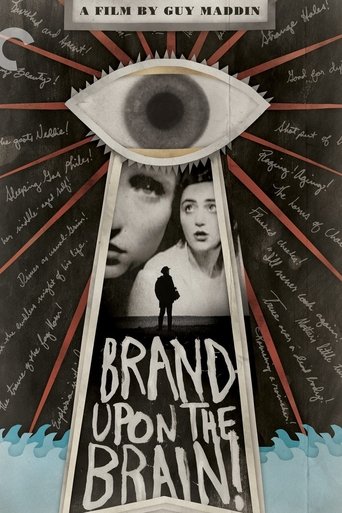
Silent film about five girls, dealing with the dream of beauty, despair of revolution, broken Gretchen love, absurd self-discovery, and on the heels of Dürer's Melancholia, the future and a massacre vision.
Social & External
First ever Bangladeshi feature film. The film about a conflict between two family members.
An adventure film with Benshi performers. Sometimes considered the 'first Japanese feature film', it survives today as a compilation of scenes from various different 1910s adaptations totaling nearly three hours in length. The bulk of the content comes from the 1911 adaptation by legendary Japanese filmmaker Makino Shozo.
Daughters of Today was a 1928 silent film from Lahore, in present-day Pakistan (then British India). It was produced by G.K Mehta and directed by Shankradev Arya. This was the first feature film made in Lahore, and helped to establish the city of Lahore as one of the centers of filming in India. The Lahore film industry is now known as Lollywood. Production started in 1924 and took three years to complete, mainly due to financial problems. Two participants later became prominent personalities of the South Asian film industry: A.R. Kardar was one of the most famous Bombay film directors in the 1930s, 1940s and 1950s; and actor M. Ismael's film career spanned over five decades.
An expelled horse owner clears his name and wins the Grand National.
It was the first film version of the Hunchback of Notre Dame.
Released in five parts (The Persecution of the Children of Israel by the Egyptians, Forty Years in the Land of Midian, The Plagues of Egypt and the Deliverance of the Hebrews, The Victory of Israel, The Promised Land), 4 December 1909 to 19 February 1910. A Vitagraph advertisement in the Moving Picture World (31 Dec. 1909) refers to The Life of Moses as a "Biblical Film-de-Luxe". It is preserved in the Library of Congress collection.
In 1908, Director/Producer Shozo Makino (father of Japanese cinema) directed and produced the first dramatic film in Kyoto. “Honnô-ji Gassen” was shot at Shinnyo-Do Temple. Considered a lost film.
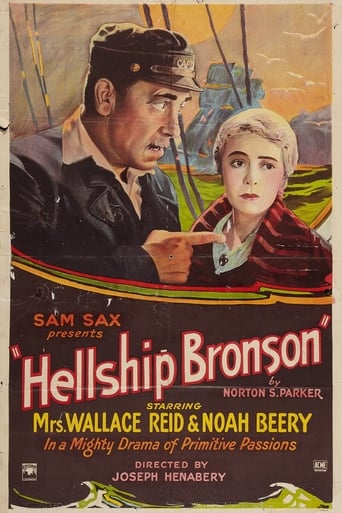
Adrift in the vast expanse of the ocean, a solitary boat carries three castaways—a man and two women. Stranded and devoid of any glimmer of rescue, they find solace in recounting the tales of their lives to one another. As they delve into their personal narratives, reminiscing about the circumstances that led them to this desolate predicament, they navigate through the depths of three distinct destinies. Bound by the confines of their shared space, every aspect of their existence becomes a boundary, underscoring their plight.
Wanting his son to get away from his many girlfriends and buckle down to work, the New York industrialist father of a playboy sends him to an obscure village in Spain to find samples of a rare mineral. When the son gets to Spain, he runs afoul of the local police chief - who has a secret that he tries to keep the young man from discovering.
When her grandson is kidnapped during the Tour de France, Madame Souza and her beloved pooch Bruno team up with the Belleville Sisters—an aged song-and-dance team from the days of Fred Astaire—to rescue him.
In times of World War I, a group of boisterous young ladies occurs to them that they could help the boys of the front writing letters to them and, thus, becoming their godmothers of war. Madeleine writes to the soldier Jacques Bertin, but, out of prudence, instead of giving her true identity, she impersonates her late grandmother. When the soldier comes on leave and wants to see her, the mistake will bring humorous consequences.
Denise lives with her grandparents on a farm and secretly meets Robert. When she tells her grandparents that she wants to marry Robert, they refuse outright, so the two lovers will have no choice but to elope and marry in the nearby town. On the eve of having a child, war breaks out and Robert is mobilized.
Earliest japanese horror film.
When her cotton crop is burned, Barbara Pelham, a beautiful southern girl, comes to New York to find work as a fashion designer, staying with Mrs. Kemp, a woman she meets on the northbound train. In Mrs. Kemp's house, Barbara encounters Peter Heffner, a wealthy stockbroker, and discovers from him that she has taken up residence in a whorehouse. There is a police raid, but Barbara escapes arrest and returns home. Heffner's son, Neil, goes south to inspect some family property and there meets Barbara, with whom he falls in love. They decide to be married, and she accompanies him to New York, where she meets the elder Heffner for a second time. He denounces her as a whore, but Barbara goes to Mrs. Kemp, who explains the misunderstanding to everyone's satisfaction.