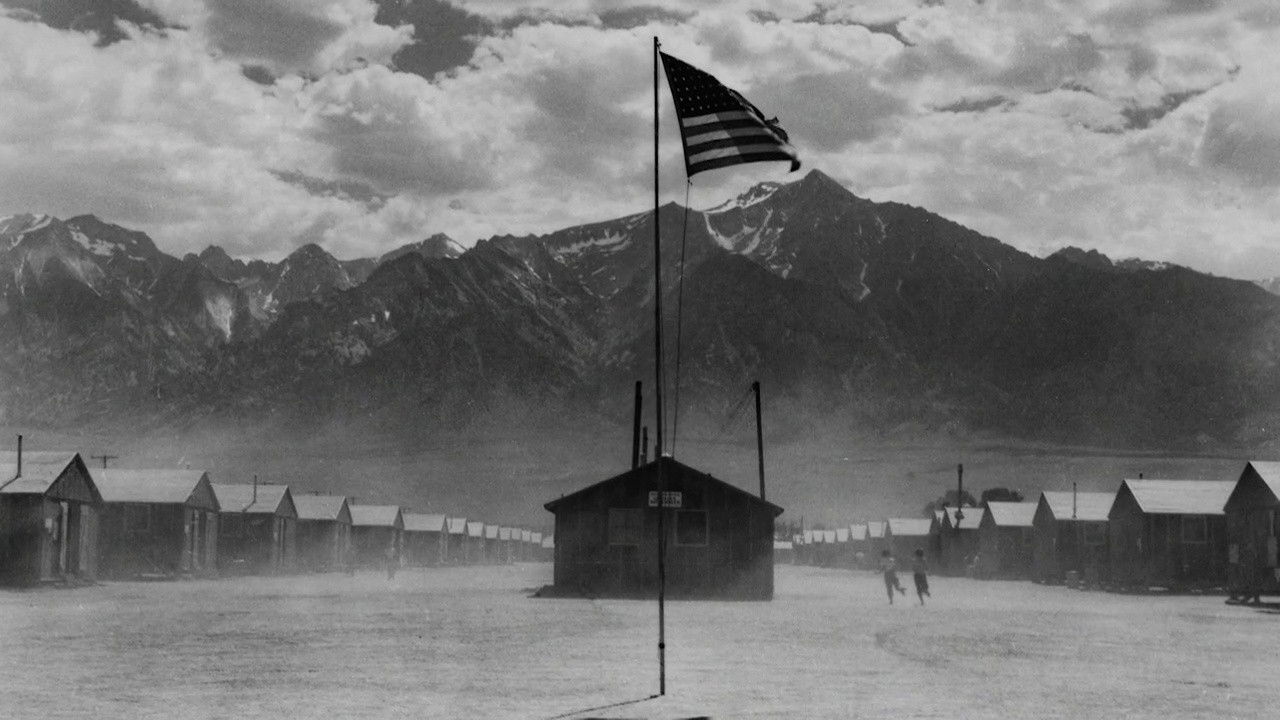
The story of the unjust incarceration of Japanese Americans and the loss of civil rights.
Stream
Social & External
Narrator (voice)
When Georgia Tech came to Michigan in 1934, the Wolverines were forced to bench their best play, Willis Ward, because he was an African-American. The incident infuriated Ward’s best friend on the team, a future president by the name of Jerry Ford, who threatened to quit the team in response. The friendship that began in the Big House lasted all the way to the White House. This is the story of two schools, two friends, and a game that changed everything.
A chronicle of the final chapters of Dr. Martin Luther King Jr.’s life, revealing a conflicted leader who faced an onslaught of criticism from both sides of the political spectrum.
Harvey Milk was an outspoken human rights activist and one of the first openly gay U.S. politicians elected to public office; even after his assassination in 1978, he continues to inspire disenfranchised people around the world.
Documentary shows the variety of tasks assumed by British women since the outbreak of war, and thanks America for sending relief bundles to the victims of the London Blitz. Made for an American audience, the film is edited, narrated and written by three women, with no director credited.
Guy Martin joins the two-year restoration of a Spitfire that was buried in a French beach for decades, and tells the Boy's Own-style story of its pilot, Squadron Leader Geoffrey Stephenson
A rare documentary that shows how Soviet war propaganda presented the events of the Finnish front in 1941–1944. The main emphasis is on the resolution of the war. The film contains plenty of unique footage of the final stages of the Continuation War.
Drawing upon eye-witness accounts from survivors and participants in the bombing of Hiroshima, this programme shows how both Japan and the United States are still facing enormous problems in coming to terms with the legacy of that fateful August day.
Short documentary examining a Black community’s decades-long battle to hold onto their land as city officials wielded eminent domain to establish and expand Christopher Newport University in Newport News, Virginia.
Scholars and eyewitnesses provide a picture of the 75 hours between the atomic bombings of Hiroshima and Nagasaki and document the contradictions, interrelationships, and ambiguities of politics and military strategy in time of war.
New York City's Stonewall Inn is regarded by many as the site of gay and lesbian liberation since it was at this bar that drag queens fought back against police June 27-28, 1969. This documentary uses extensive archival film, movie clips and personal recollections to construct an audiovisual history of the gay community before the Stonewall riots.
CREE CODE TALKER reveals the role of Canadian Cree code talker Charles 'Checker' Tomkins during the Second World War. Digging deep into the US archives it depicts the true story of Charles' involvement with the US Air Force and the development of the code talkers communication system, which was used to transmit crucial military communications, using the Cree language as a vital secret weapon in combat.
A deep dive into the history of the Canadian Government and the Department of National Defence leasing First Nations reserves as practice bombing ranges during World War I and World War II. This documentary follows the Enoch Cree Nation's process of developing it's land claim against the Canadian Government following the discovery of active landmines in the heart of the nation's cultural lands and golf course in 2014, almost 70 years later.
The free, almost naive view from the perspective of a child puts the "68ers" in a new, illuminating light in the anniversary year 2008. The film is a provocative reckoning with the ideological upbringing that seemed so progressive and yet was suffocated by the children's desire to finally grow up. With an ironic eye and a feuilletonistic style, author Richard David Precht and Cologne documentary film director André Schäfer trace a childhood in the West German provinces - and place the major events of those years in completely different, smaller and very private contexts.
Lithuania, 1941, during World War II. Hundreds of thousands of texts on Jewish culture, stolen by the Germans, are gathered in Vilnius to be classified, either to be stored or to be destroyed. A group of Jewish scholars and writers, commissioned by the invaders to carry out the sorting operations, but reluctant to collaborate and determined to save their legacy, hide many books in the ghetto where they are confined. This is the epic story of the Paper Brigade.
July, 1949: four young black men are wrongly accused of rape by a 17-year-old farm wife in rural Lake County, Florida. The case of “The Groveland Four” included a race riot, torture, multiple murders, two trials and a Supreme Court reversal. Though widely covered by the national press, the case has been largely forgotten... even though it helped lay a foundation for the Civil Rights Movement.
50 years on, the Aboriginal Tent Embassy is the oldest continuing protest occupation site in the world. Taking a fresh lens this is a bold dive into a year of protest and revolutionary change for First Nations people.
BERG investigates a historical site through an alternate shift between documentary and fictional representation. A soundscape produced from samples from a series of mainstream Spy Movies overlaps a selection of classic shots, inspired by the most repetitive cinematic clichés that are to be found in the espionage genre.
Narrated by actress Alfre Woodard, this trenchant, eye-opening doc traces the radical civil rights leader’s life from his tumultuous childhood, through his rise in the ranks of the Nation of Islam, to his 1965 assassination.
The story of the only three minutes of footage —a home movie shot by David Kurtz in 1938— showing images of the Jewish inhabitants of Nasielsk (Poland) before the beginning of the Shoah.