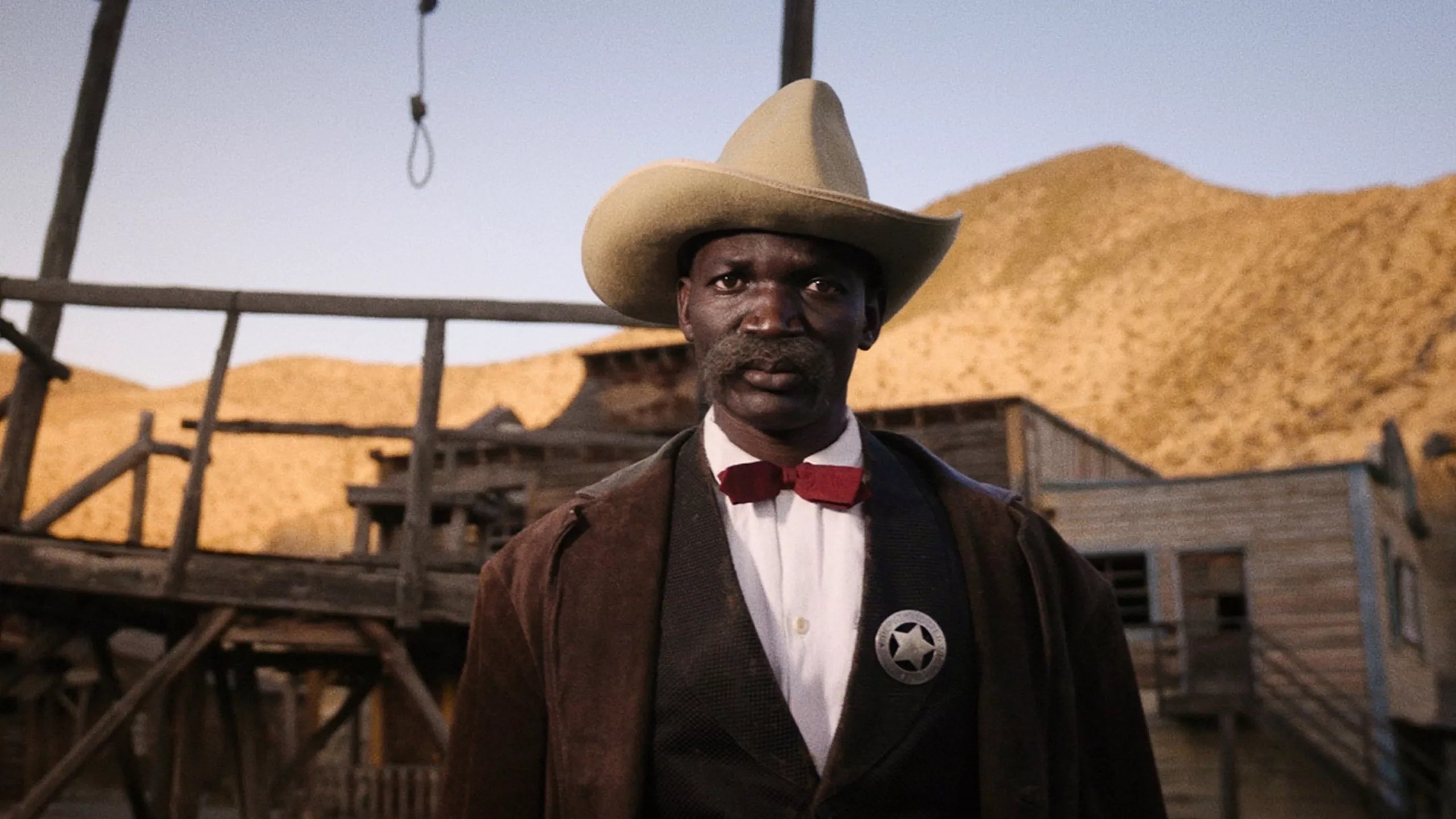
Did you know that the first cowboys were black? Using magnificent archives and testimonies from historians, Cécile Denjean restores justice to African-Americans in the story of the conquest of the West.
Social & External
Narrator (voice)
Robert Gould Shaw leads the US Civil War's first all-black volunteer company, fighting prejudices of both his own Union army and the Confederates.
Thundering across the sky on elegant white wings, the Concorde was an instant legend. But behind the glamour of jet setting at Mach 2 were stunning scientific innovations and political intrigue. Fifteen years after Concorde's final flight, this documentary takes you inside the historic international race to develop the first supersonic airliner. Hear stories from those inside the choreographed effort to design and build Concorde in two countries at once - and the crew members who flew her.
Start where America's mighty Mississippi empties into the Gulf of Mexico... voyage upriver and wonder at the majesty of the Great Lakes... then head west to take in some of our country's most incredible scenic highlights.
A personal look at Black Republicans and the lack of a Two-Party Political System in Urban America.
Ireland, June 1944. The crucial decision about the right time to start Operation Overlord on D-Day comes to depend on the readings taken by Maureen Flavin, a young girl who works at a post office, used as a weather station, in Blacksod, in County Mayo, the westernmost promontory of Europe, far from the many lands devastated by the iron storms of World War II.
Sir John Franklin set off from England in 1845 with two ships and 129 men to be the first to navigate the Northwest Passage, a new trade route over the top of the world, when Franklin’s ships vanished without a trace. Now, a team of explorers attempts to solve the mystery by retracing Franklin’s route in search of his long-lost tomb.
Told in the cinematic tradition of classic westerns, “COWBOYS - A Documentary Portrait” is a feature-length film that gives viewers the opportunity to ride alongside modern working cowboys on some of America's largest and most remote cattle ranches. The movie documents the lives of the men and women working on these "big outfit" ranches - some of which are over one million acres - and still require full crews of horseback mounted workers to tend large herds of cattle. Narrated through first-hand accounts from the cowboys themselves, the story is steeped in authenticity and explores the rewards and hardships of a celebrated but misunderstood way of life, including the challenges that lie ahead for the cowboys critical to providing the world's supply of beef. “COWBOYS” was filmed on eight of the nation’s largest cattle ranches across ten states in the American West.
How did Nazi Germany, from limited natural resources, mass unemployment, little money and a damaged industry, manage to unfurl the cataclysm of World War Two and come to occupy a large part of the European continent? Based on recent historical works of and interviews with Adam Tooze, Richard Overy, Frank Bajohr and Marie-Bénédicte Vincent, and drawing on rare archival material.
In 2001, Jimmy Wales published the first article on Wikipedia, a collaborative effort that began with a promise: to democratize the spreading of knowledge, monopolized by the elites for centuries. But is Wikipedia really a utopia come true?
An exploration of Cologne Cathedral, an emblematic monument and world heritage site. The towering place of worship took over 600 years to complete. Once the tallest building in the world, its ornate facade remains a masterpiece of Gothic architecture - and a reflection of the evolution of Franco-German relations.
The first transatlantic communications cable, traversing the ocean floor from Valentia Island, County Kerry, to Newfoundland, Canada, 165 years ago was an 8 year endeavor that helped lay the foundation of the modern technology industry and explains the fragility of undersea cables today.
Emmett Till was brutally killed in the summer of 1955. At his funeral, his mother forced the world to reckon with the brutality of American racism. This short documentary was commissioned by "Time" magazine for their series "100 Photos" about the most influential photographs of all time.
A sailor prone to violent outbursts is sent to a naval psychiatrist for help. Refusing at first to open up, the young man eventually breaks down and reveals a horrific childhood. Through the guidance of his doctor, he confronts his painful past and begins a quest to find the family he never knew.
The sinking of the RMS Titanic remains one of the most enduring and mysterious tragedies of the 20th century. For decades, investigators and amateurs alike have floated theories for why it occurred and who was to blame for the extraordinary loss of life, but no one answer could fully explain what happened. Until now. To mark the 100th anniversary of the infamous disaster, Smithsonian Channel will premiere Titanic's Final Mystery. The two-hour special investigates a century of theories and uncovers astonishing new forensic evidence that proves the most likely theory for the case.
A gripping documentary about the courage and determination of a young English stockbroker who saved the lives of 669 children. Between March 13 and August 2, 1939, Nicholas Winton organized 8 transports to take children from Prague to new homes in Great Britain, and kept quiet about it until his wife discovered a scrapbook documenting his unique mission in 1988. Winton was a successful 29-year-old stockbroker in London who "had an intuition" about the fate of the Jews when he visited Prague in 1939. He quietly but decisively got down to the business of saving lives. We learn how only two countries, Sweden and Britain, answered his call to harbor the young refugees; how documents had to be forged and how once foster parents signed for the children on delivery, that was the last he saw of them.
In 1892, Ellis Island, in New York Bay, became the main gateway to the United States for immigrants arriving increasingly from Europe. The story of immigration to the United States from 1892 to 1954, an enthralling polyphonic narrative that embraces both small and great history.
An in-depth look at the prison system in the United States and how it reveals the nation's history of racial inequality.
The history of cinematic sound, told by legendary sound designers and visionary filmmakers.
Director Claude Lanzmann spent 11 years on this sprawling documentary about the Holocaust, conducting his own interviews and refusing to use a single frame of archival footage. Dividing Holocaust witnesses into three categories – survivors, bystanders, and perpetrators – Lanzmann presents testimonies from survivors of the Chelmno concentration camp, an Auschwitz escapee, and witnesses of the Warsaw Ghetto Uprising, as well as a chilling report of gas chambers from an SS officer at Treblinka.
Oliver Stone charts the history of the United States from the Second World War to the present.
A chronicle of the rise and fall of O.J. Simpson, whose high-profile murder trial exposed the extent of American racial tensions, revealing a fractured and divided nation.
In 1936, Victor H. Green (1892-1960) published The Negro Motorist Green Book, a book that was both a travel guide and a survival manual, to help African-Americans navigate safe those regions of the United States where segregation and Jim Crow laws were disgracefully applied.
A documentary on the expletive's origin, why it offends some people so deeply, and what can be gained from its use.
While The Rolling Stones rehearse "Sympathy for the Devil" in the studio, an alternating narrative reflects on 1968 society, politics and culture through five different vignettes.
This documentary brings to life the stories of four people believed by their family and friends to be “DB Cooper,” a man who hijacked a 727 flying out of Seattle and jumped from the plane over the wilds of Washington State with a parachute and $200,000, never to be heard from again.
Those who knew iconic funnyman John Candy best share his story, in their own words, through never-before-seen archival footage, imagery, and interviews.
A documentary examining the decade of the 1970s as a turning point in American cinema. Some of today's best filmmakers interview the influential directors of that time.
Though legendary lyricist Howard Ashman died far too young, his impact on Broadway, movies, and the culture at large were incalculable. Told entirely through rare archival footage and interviews with Ashman’s family, friends, associates, and longtime partner Bill Lauch, Howard is an intimate tribute to a once-in-a-generation talent and a rousing celebration of musical storytelling itself.
“White Boy Rick”, as he was called, was a novelty: A white teenager seemingly running a major inner-city drug operation. In May of 1987, 17-year-old Richard Wershe Jr. was charged with a non-violent, juvenile drug offense. By the time of his arrest he was already a Detroit legend, frequently making front-page headlines and leading the local television news. In this film, gangsters, hit men, journalists and federal agents struggle to explain why he remains in prison at nearly 50 years old. The possible explanation is more stunning than the crimes Wershe was alleged to have committed.
Twenty-five years after the verdict in the Rodney King trial sparked several days of protests, violence and looting in Los Angeles, LA 92 immerses viewers in that tumultuous period through stunning and rarely seen archival footage.
Documentary about legendary Paramount producer Robert Evans, based on his famous 1994 autobiography.
A portrait of singer-songwriter Shawn Mendes' life, chronicling the past few years of his rise and journey.
Working from the text of James Baldwin’s unfinished final novel, director Raoul Peck creates a meditation on what it means to be Black in the United States.
The story lives forever in this feature-length documentary that charts the making of Star Wars: The Rise of Skywalker.
Experience the iconic rock band's legacy in the first major documentary to tell their story. Directed with the era’s avant-garde spirit by Todd Haynes, this kaleidoscopic oral history combines exclusive interviews with dazzling archival footage.
Cameramen and women discuss the craft and art of cinematography and of the "DP" (the director of photography), illustrating their points with clips from 100 films, from Birth of a Nation to Do the Right Thing. Themes: the DP tells people where to look; changes in movies (the arrival of sound, color, and wide screens) required creative responses from DPs; and, these artisans constantly invent new equipment and try new things, with wonderful results. The narration takes us through the identifiable studio styles of the 30s, the emergence of noir, the New York look, and the impact of Europeans. Citizen Kane, The Conformist, and Gordon Willis get special attention.