A short film about traditional crafts and culture that can still be found in the Wallachian mountains today.
Social & External
Commentary (voice)
Every year in June, the small Bulgarian village of Balgari celebrates St Constantine with a special ritual. Initiated ‘nestinari’ go into a music-induced trance and dance on bonfires in a display of religious passion.
The Gateway Arch: A Reflection of America chronicles for the first time the complete story of this great American symbol… from Thomas Jefferson, Lewis & Clark, and St. Louis’ role in westward expansion; to the eventual construction of the largest stainless steel structure in history.
Amie Siegel’s film installations often reveal the hidden narratives behind architecture and design, investigating the mechanisms by which objects, materials, and spaces accrue meaning and value. The Architects examines the processes of architectural creation, using the artist’s signature slow, parallel tracking shots to offer insight into the inner workings of multiple architecture firms, slicing through them laterally like an architect’s section plan... Siegel not only punctures the myth of the singular “master architect” but also poses questions around creative autonomy, the sociopolitics of labor, and the circulation of capital. (Source: MoMA)
Document about folk ceramic products from Moravian Slovácko and Wallachia.
Children parade through the streets of Hinton St George in Somerset on the last Thursday of October. Children have hollowed out pumpkins or mangelwurzels, a type of animal fodder turnip to make lanterns following a tradition in this part of West Somerset that coincides with Halloween. Punky or Punkie Night is thought to date from the turn of the 20th century or perhaps medieval times chanting rhymes and following a Punkie King and Queen.
A documentary film comparing current / everyday and historical / noble aspects of Prague.
An extraordinary journey through the material that makes up our habitat: concrete and its ancestor, stone. Victor Kossakovsky raises a fundamental question: how do we inhabit the world of tomorrow?
In a remote area of northern Spain, the wind has a name: Tramuntana. Tramuntana takes what it wants—clothes, trees, boats, and the people of the landscape who live with the endless threat of being carried away by its force. This film is a lyrical portrait of this furious wind, woven from the stories passed down by local villagers.
An ethnographic documentary following the Folia de Reis party that is celebrated every year at Morro de Santa Marta on Rio de Janeiro.
In 1959, a government employee named Richard Oyler, living in the tiny desert town of Lone Pine, California, asked world-famous modern architect Richard Neutra to design his modest family home. To Oyler's surprise, Neutra agreed. Thus began an unlikely friendship that led to the design and construction of an iconic mid-century modern masterpiece.
A film essay contrasting the modern metropolis with its "golden age" from 1830-1930, with the participation of some of New York's leading political and cultural figures. Made at a time when the city was experiencing unprecedented real estate development on the one hand and unforeseen displacement of population and deterioration on the other. Empire City is the story of two New Yorks. The film explores the precarious coexistence of the service-based midtown Manhattan corporate headquarters with the peripheral New York of undereducated minorities living in increasing alienation.
This film features some of the most important living Postmodern practitioners, Charles Jencks, Robert A M Stern and Sir Terry Farrell among them, and asks them how and why Postmodernism came about, and what it means to be Postmodern. This film was originally made for the V&A exhibition 'Postmodernism: Style and Subversion 1970 - 1990'.
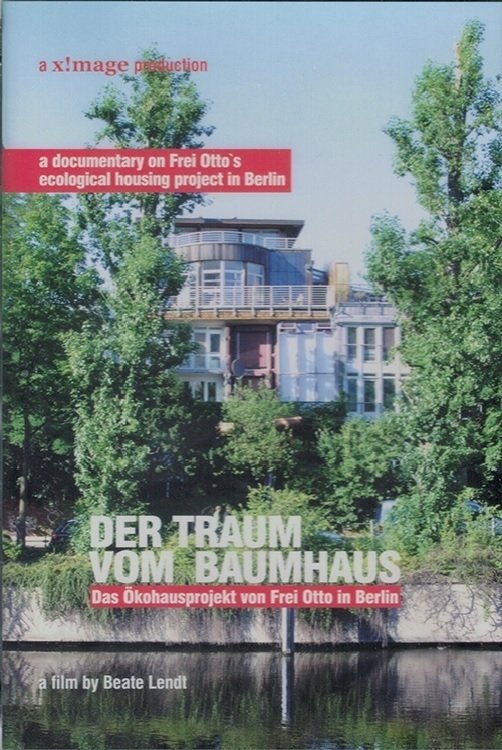
The life and works of Frei Otto told in his own words and by those he inspired. An in-depth look at the rise of lightweight architecture, form finding, and its continued relevance for the future of architecture.
A core group of architects embraced the West Coast from Vancouver to LA with its particular geography and values and left behind a legacy of inspired dwellings. Today, architects celebrate the influence established by their predecessors.